Engine trouble before contact was lost
At least one engine malfunctioned soon after the boat departed from Bailén, in the municipality of Guane, but those aboard chose to press on toward Cancún. No passenger has communicated since the last known contact.
Miami-based Cuban journalist Daniel Benítez publicized the disappearance. He cautioned that the limited information available could not establish either what happened to the migrants or where the boat ultimately went.
Asked by 14ymedio about the case, a Mexican port authority source said, "There is no report." Neither Mexico's government nor Cuba's government has released an official statement.
Weather and possible landing sites
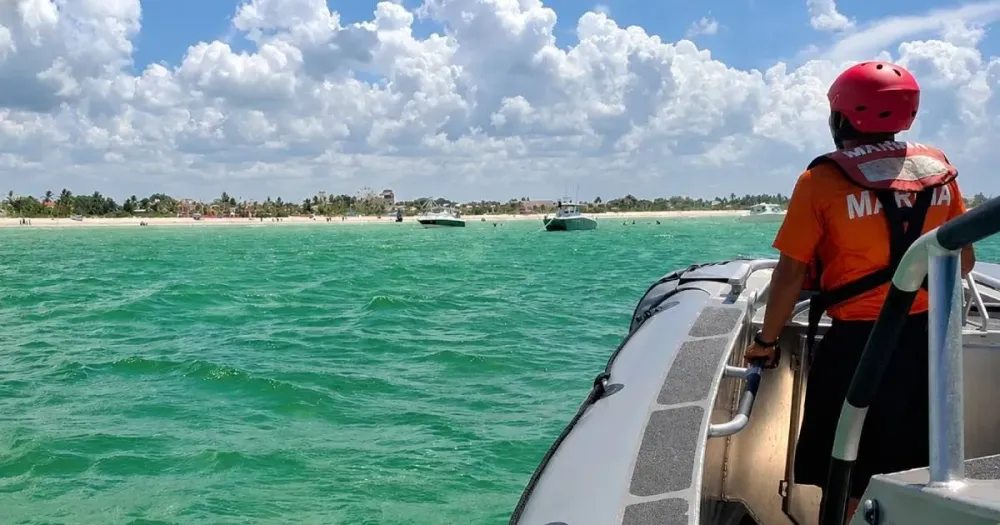
Javier Robles, a local fisherman who works with a tourist catamaran, said the Mexican Navy had issued rough-sea advisories on November 17 without fully closing the ports. "The winds could have pushed the boat out to sea," he said.
Robles suggested that vessels passing near the last reported location might find some trace of the group. He also raised another possibility: a landing at Isla Contoy National Park, north of Cancún. Access restrictions at the protected area could complicate efforts to locate the migrants, he said.
Dagoberto Canul, a former municipal police officer in Isla Mujeres, said evidence of earlier Cuban sea arrivals had been found in the park: "in other occasions, engines, clothing, food, backpacks, identification documents, and rafts made from wood and fuel canisters have been found."
Canul also suggested that traveling by boat rather than makeshift raft could indicate a connection to human trafficking networks that drop off passengers and depart. He said no registration number could be made out in the available image of the vessel. These possible explanations have not established what happened to the missing group.
Other crossings to Mexico
The disappearance follows other deadly or prolonged crossings from Pinar del Río toward Cancún in 2026. In August, Leodannis Sánchez, 17, and Osmaikel, 19, drowned in Sandino after their boat developed a malfunction and several passengers entered the water. Another group of 19 Cubans, including seven minors, endured nine days adrift that month before the Mexican Navy rescued them in Yucatán waters.
A freighter rescued Fermín Izquierdo on October 19, about 352 kilometers (190 nautical miles) northeast of Progreso, Yucatán, according to 14ymedio and CiberCuba. He had spent eight to nine days drifting without fuel, drinking water or food. Izquierdo had departed Mantua, Pinar del Río, with others on October 12; he alone was rescued, and his companions were reported missing.
Not all recent arrivals ended in disappearance. Mexican maritime officials said 11 Cubans reached the country's Caribbean coast in two boats in October, UPI reported. Mexico's National Migration Institute took responsibility for them pending a determination of their legal status.
Regional port authority head Pedro Murillo Garay also reported 28 abandoned vessels subject to administrative proceedings. Seven were removed from Cancún's Nichupté Lagoon during September and October 2026.
Migration patterns and the recorded toll
Canul told 14ymedio that tighter U.S. border restrictions had led more migrants to use Quintana Roo's coast as an alternative route. He described departures from Cuba's Isle of Youth and Pinar del Río, with boats heading for Isla Mujeres, Playa del Carmen and Cancún. UPI cautioned that the claimed increase in use of the route had not been independently confirmed.
CiberCuba reported a historic low in U.S. encounters with Cuban citizens: 1,762 during the first 11 months of fiscal 2026, compared with 217,615 in 2024. The outlet said the shift had redirected Cuban migration toward routes through Mexico.
The independent outlet elTOQUE's Cuban Migratory Risk Index, or IRMC, rose from 0.69, classified as "high" risk, in September 2026 to 0.77 in October, placing it in the highest category, "extreme risk." According to CiberCuba's account, the October tally comprised 16 events involving 112 people across the United States, Mexico, the Bahamas and Guyana. It included four deaths, three missing people and 69 deportations to Africa.
CiberCuba also reported that elTOQUE's cumulative record since 2014 exceeded 278 deaths and 708 disappearances on Cuban migration routes, with the totals continuing to rise month by month.