Caravan leaves Tapachula under safety escort
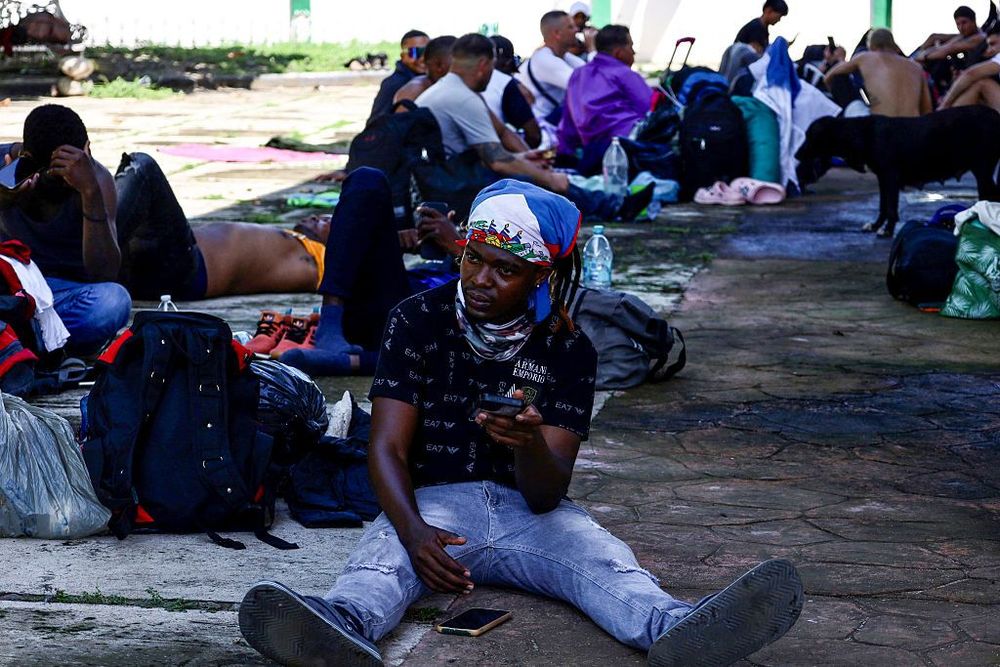
The group departed Tapachula, near Mexico's border with Guatemala, on Oct. 20, 2026. Most of its more than 600 members were Honduran. Young men and families with children walked north toward the U.S.-Mexico border, with some adults pushing strollers along the road.
Mexico's National Guard, local police and the federal migrant-protection group Beta Sur accompanied the migrants to the Pacific coastal highway after their evening departure, The Rio Times reported, citing the Chiapas news outlet Quadratin. The escort was intended to reduce the risk of accidents while the group walked at night, possibly in rain.
The nearest U.S. border crossing remains well over 1,500 kilometers, or roughly 930 miles, from Tapachula by road, according to The Rio Times.
DHS responded on social media to Reuters footage of the march near Tapachula in Chiapas state. The migrants carried a banner reading, "Faith and Hope, Emigrating is not a crime." In its response, the agency said, "We will protect our borders—America is a nation, not an economic zone."
Migrants seek passage and work
Caravan members urged Mexican authorities to issue permits allowing them to continue north. Honduran migrant Gabriela Macias appealed to Mexican President Claudia Sheinbaum for unhindered passage through Mexico and to Trump for entry into the United States, saying the migrants wanted jobs and better opportunities.
Some participants hoped the Trump administration would ease its restrictive border policies after the midterm elections. Honduran migrant Olvin Colin said, "We're going with the hope that there will be a new administration after the upcoming elections [in the United States] that can support migrants like us who are most in need."
The departure comes as organizations in southern Mexico estimate that more than 60,000 migrants are stranded in Tapachula, according to Infobae as cited by The Rio Times. Many have no work and are waiting for decisions from COMAR, Mexico's refugee commission.
U.S. officials reiterate enforcement warnings
DHS's response restated the administration's position that northbound caravans would not be admitted. The agency has previously warned that people who try to enter the United States illegally face arrest, prosecution and deportation.
The State Department has delivered similar messages through U.S. embassies in the region in recent days. In an Oct. 18 post on X, the U.S. Embassy in Honduras said, "Attempting to illegally cross the southern border of the United States of America will only lead to immediate detention and deportation." It added, "Don't fall for false promises. Don't risk your future."
Homeland Security Secretary Markwayne Mullin had also addressed a caravan moving north from Honduras in late September. He said U.S. officials were tracking the group and working with Mexico. According to Mullin, Mexican authorities were helping disperse it because they understood it would create a crisis at their border.
Mullin said he planned to use resources from the Department of War, DHS and the Coast Guard to prevent anyone in that group from crossing the border.
DHS figures cited by The Rio Times put U.S. Border Patrol arrests along the border with Mexico at 8,870 in August 2026, fewer than 300 per day and about 97 percent below the December 2023 peak.
Earlier caravans dispersed in southern Mexico
Mexican immigration authorities dispersed a caravan in September after it had spent nearly three weeks traveling through southern Mexico.
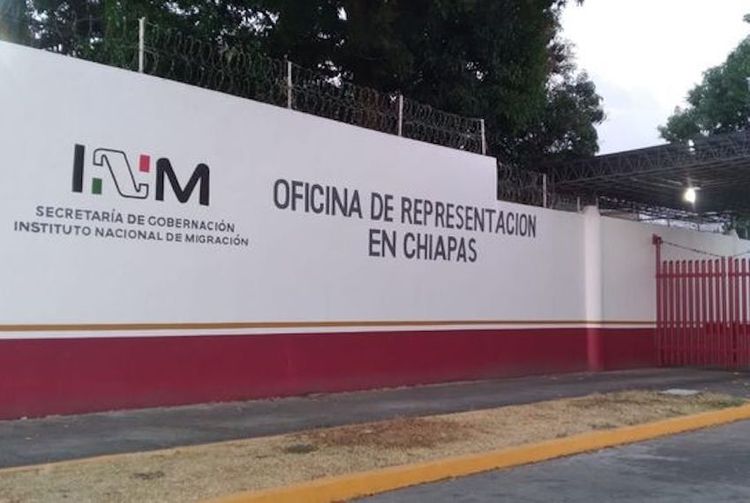
On Oct. 12, 2026, Mexico's National Migration Institute broke up the "Fe y Esperanza con Dios" caravan at Arriaga, Chiapas, on the Oaxaca state line, according to The Rio Times, citing La Jornada. Most members were offered a transit document on the condition that they be moved to Tuxtla Gutiérrez, the Chiapas state capital.
La Jornada, as cited by The Rio Times, reported that about 20 caravans had attempted to leave Mexico's southern border since Sheinbaum took office in October 2024. None succeeded; all were dispersed between Chiapas and Oaxaca.