Mexico disputes the need for tariff threats
Trump issued his warning on Truth Social on Nov. 12, demanding that Mexico halt the caravans immediately. Sheinbaum countered that no caravan had reached the U.S. border since he took office and said Mexico's response was already producing results.
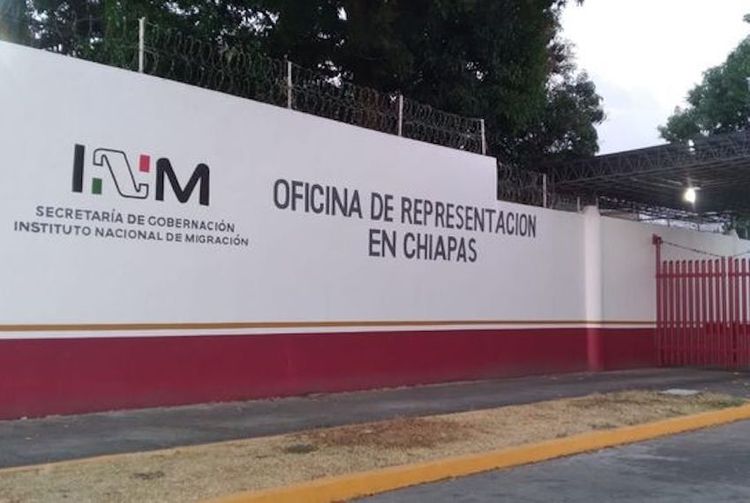
At her Thursday news conference, Sheinbaum pointed to a separate group in Arriaga, Chiapas, that had dwindled from about 500 or 600 people to fewer than 100. Mexican officials were telling migrants that entering the United States was not an available option, she said.
Sheinbaum said the larger caravan that originated in Honduras would receive humanitarian assistance and treatment that respected human rights. Migrants could remain in Mexico under certain conditions and in a designated place, she said, though most return home after learning they cannot cross into the United States.
Recent caravans have traveled only a small part of the route. According to AFP, Mexican authorities broke up similar groups before they left Chiapas, rounding up participants and issuing temporary residence documents. The farthest any of those groups traveled into Mexico was about 250 kilometers. The current caravan is the third from Central America since September 2026.
The legal basis for Trump's tariff threat remained uncertain as of Nov. 12. Texas Public Radio reported that it was unclear what authority he would invoke after the Supreme Court rejected his emergency economic powers in February 2026.
The route from Honduras through southern Mexico
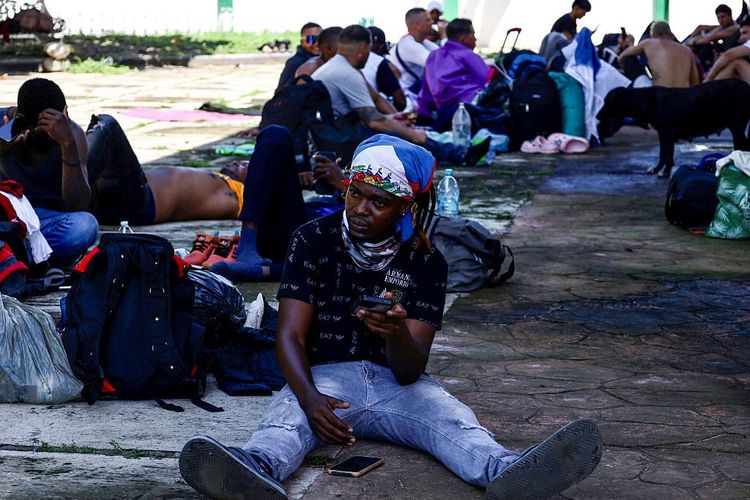
The caravan known as "Dios con Nosotros," or "God With Us," began its journey in San Pedro Sula, Honduras, on Nov. 3, the day of the U.S. midterm elections. Primarily Guatemalan and Salvadoran migrants joined at the Guatemala-Mexico border. The group reached Tapachula on Sunday and departed Tuesday, with many families among its members, including people stranded in Mexico by tighter U.S. immigration restrictions.
Reuters reported that the caravan numbered more than 1,500 when it left Tapachula. Estimates available by Nov. 12 ranged from 1,000 to 2,000; the Spanish news agency EFE said it initially included roughly 2,000 people.
Participants described poverty and violence as reasons for leaving home, while some said the U.S. election results influenced their timing. "Trump is on his way out in these elections. That's why we're taking the risk," Jimena Morazan told AFP. Cesar Sandoval, a 47-year-old Nicaraguan, told AFP he hoped Democratic midterm victories would give him "another chance" to enter the United States.
Before attempting to reach the U.S. border, the group plans to seek protection and assistance from the Mexican government in Mexico City, according to Reuters. The capital is more than 600 miles from Tapachula.
The U.S. Embassy in Tegucigalpa warned migrants not to attempt the journey, accusing traffickers and caravan organizers of misleading them. "No matter how you try, the border is closed. You will be detained, deported, and prosecuted," the embassy said in an online post.
Low border numbers and new visa restrictions
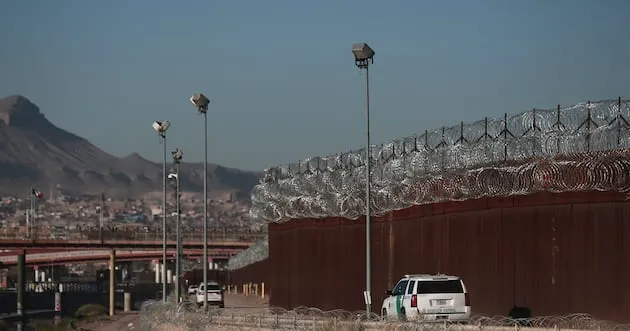
The caravans are moving north after months of historically low migrant encounters at the U.S.-Mexico border. Preliminary U.S. Customs and Border Protection figures put southwest border apprehensions by Border Patrol at 98,708 for fiscal 2026, which ran from Oct. 1, 2025, through Sept. 30, 2026. CBP said that was the lowest total in the agency's history and a 95% decline compared with more than 1.8 million annually under the Biden administration.
CBP reported 379,243 encounters nationwide, a record low and 88% below fiscal 2023. The agency also said fiscal 2026 was the first fiscal year with no Border Patrol releases. September was the 17th consecutive month without releases.
Washington had already taken action against people it accused of supporting the caravans. In October, the State Department imposed visa restrictions on more than 15 unnamed individuals allegedly involved in "organizing, facilitating, or promoting" the groups. It warned that caravan participants seeking visas would receive "additional scrutiny" in the coming weeks, potentially leading to denials or revocations.
Also in October, the U.S. Embassy in Nicaragua said investigations had identified people who recruited, coordinated and directed migrant groups toward the U.S. border. Their names and further details had not been released.
After the midterms, Trump named Stephen Miller, an architect of his hard-line immigration policies, as White House chief of staff, Texas Public Radio reported. The outlet also reported that approval of Trump's handling of immigration stood at 38%, down 9 points since May 2025.
A migration dispute amid stalled trade negotiations
The tariff warning adds migration to an already strained trade relationship. Washington and Mexico City are negotiating after Trump declined to extend the U.S.-Mexico-Canada Agreement, known as USMCA. The negotiations also coincide with a review of the agreement that began in July 2026. Mexico relies heavily on access to the U.S. market, making a doubling of tariffs a serious economic threat.
Mexico has sought substantial cuts to the 10% tariffs on its goods outside USMCA coverage and the 25% duty on medium- and heavy-duty trucks, according to Associated Press reporting carried by Spectrum News. Other subjects include the 50% tariff on steel and aluminum and a 17% countervailing duty on Mexican tomatoes.
Bloomberg News reported, citing people familiar with the negotiations, that progress earlier in the fall gave way to an impasse over steel and aluminum tariffs. The talks cooled after Commerce Secretary Howard Lutnick tried to take control of the negotiations and objected in October to Mexico's requests for lower metals tariffs.
Texas has substantial exposure to any increase. The state traded $301.8 billion in goods with Mexico in the previous year and handles about three-quarters of U.S.-Mexico land trade, according to Dallas Fed economist Roberto Coronado.
Sheinbaum was also preparing to visit China the following week for the Asia-Pacific Economic Cooperation summit, where Economy Secretary Marcelo Ebrard was expected to seek stronger trade and investment cooperation. She said Mexico wanted closer collaboration with China on renewable energy, including solar power, but was not seeking a free trade agreement with Beijing because of its commitments to the United States and Canada.