Two brothers who never called home
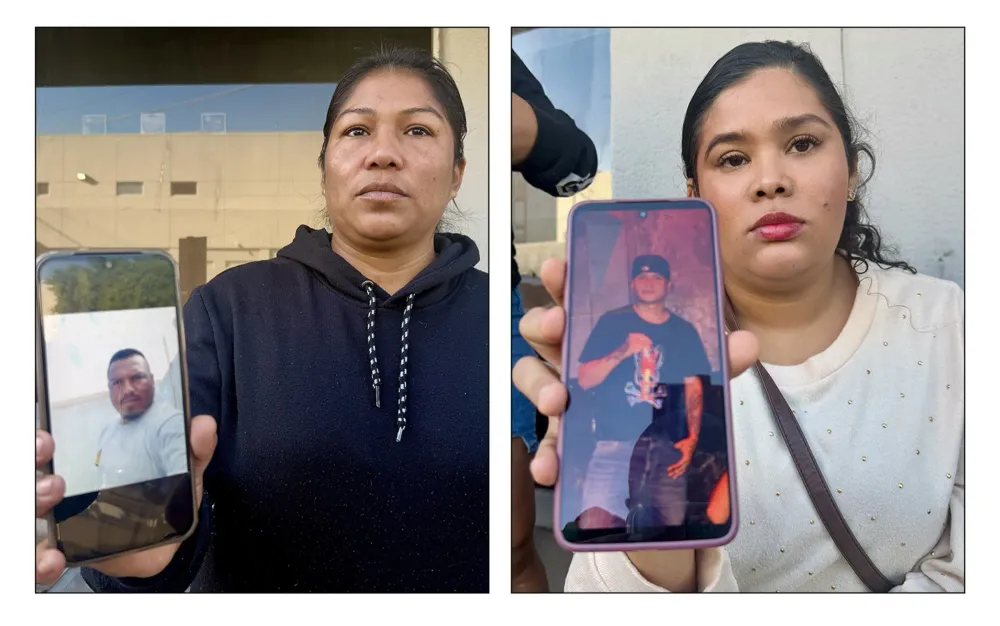
Before his family lost contact with him, Marcos Castro sent his mother a message saying he was about to board a boat for the United States. His sister, Jessica Castro, said the 24-year-old described a yacht trip with other passengers from Ensenada to California, where he hoped to find a better life.
Castro believes her brother was among the 27 people aboard the vessel that sank about 140 miles west of Ensenada. She initially considered the possibility that immigration agents had detained him after he reached the United States. Then, while searching for information, she came across news reports about the sinking on social media.
"I'm looking for answers," she told The San Diego Union-Tribune on Tuesday. "I don't know where my brother is. I don't know if he's alive." She traveled from Sinaloa to Tijuana to report him missing to the Baja California Attorney General's Office.
Another woman seeking help at that office, Matilde Santos, had come from Guerrero to look for her 32-year-old brother, Jorge Santos. He had told his family he wanted better opportunities in the United States. Although he originally planned to cross on foot, he changed his plans at the last minute and said he would travel by boat.
Jorge told his family he would switch off his phone and contact them after arriving in the United States. That promised call never came. Matilde believes he, too, was aboard the vessel that sank.
"These have been days when we can't sleep and can't stop asking ourselves if our family members are among those who have been found or if they're still missing," Santos said.
Sixteen rescued; search suspended for 11 others
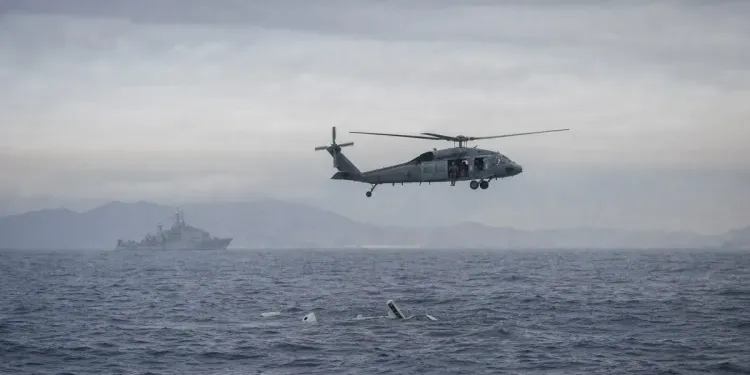
Coast Guard Sector San Diego began receiving distress broadcasts around 1 a.m. on Oct. 16 reporting a vessel taking on water. Responders located wreckage and rescued 16 people, who were taken to San Diego hospitals.
People, citing the Associated Press, reported that Coast Guard rescue swimmer Josh Law, 24, personally pulled all 16 survivors from the water. They had already been at sea for hours when he reached them. Law used a "buddy tow" technique during roughly two hours in waves reaching six to eight feet.
Several survivors had injuries "consistent with shark bites," according to the Coast Guard. Three went to Scripps Mercy Hospital San Diego: one with a suspected shark bite and two who received treatment for cold exposure. San Diego Fire-Rescue initially reported two survivors in critical condition and the others with moderate injuries.
The search for the 11 people believed missing continued until Oct. 19, when the Coast Guard suspended it. U.S. and Mexican crews logged a combined 89 hours of searching across more than 2,441 square miles.
Times of San Diego reported that Coast Guard Air Stations Ventura and Sacramento and the cutter Active participated, along with the U.S. Navy's USS Kingsville and a helicopter from Helicopter Sea Combat Squadron 23. Mexico deployed the ARM Mariano Matamoros, the 50-foot motor lifeboat MLB-101 and the 35-meter buoy tender Sagittarius.
Although the sinking occurred in Mexican waters, the location fell within the Coast Guard's area of responsibility, prompting its response, Coast Guard Petty Officer Charlie Valor told Times of San Diego.
Separate weather observations came from a buoy along the U.S. maritime border, about 80 miles north and roughly 30 miles west of the sinking. National Weather Service meteorologist Miguel Miller told the Union-Tribune that readings around the time of the distress call showed waves of roughly 4.6 feet, about 15 seconds apart. He said those conditions were not considered choppy but could trouble a small vessel. No tropical cyclones were affecting that part of the ocean.
Families struggle to identify survivors
Through comments on social media news reports, Castro connected with other families who believe their relatives were on the boat. They now exchange information in a group chat. Five families could not travel to Tijuana, so she is also making inquiries for them. Families have urged Mexico to continue searching.
Calls to San Diego hospitals have not resolved Castro's questions. She said she was told to appear in person with her brother's documents to obtain more information, but neither she nor her family has a visa to enter the United States. She has also asked the Mexican Consulate for help.
Sharp HealthCare told the Union-Tribune the previous week that it could not disclose patients' injuries or whether any remained hospitalized, citing the need "to protect patient privacy and the safety of our team members."
The Mexican Consulate in San Diego identified the rescued group as 15 Mexican nationals and one Guatemalan national. According to the consulate, five had returned to Mexico, while one remained hospitalized in stable condition with injuries that were not specified. It said it could not release names publicly because of privacy concerns, but relatives could receive that information after documenting their family relationship.
Questions also remain about the survivors' immigration status. Neither the Department of Homeland Security nor U.S. Customs and Border Protection had answered questions about their circumstances or whether anyone had been detained in connection with a possible smuggling investigation. The Coast Guard referred those inquiries to CBP.
For Santos and her family, the search has meant renting a small room in Tijuana rather than trying to reach Mexican and U.S. officials from Guerrero. They wanted to be nearer the area where the boat sank. On some days, she said, desperation has driven them to walk beaches in Rosarito and Tijuana, hoping to find Jorge or learn something about him. "It's been hard," she said.
Investigation and earlier maritime deaths
The Coast Guard confirmed a federal investigation into the sinking without identifying the agencies handling it. Federal officials described the boat's route as one used by maritime smuggling operations.
The Union-Tribune placed the incident in the context of other deadly smuggling voyages off Southern California. In March 2023, two vessels capsized off Black's Beach in La Jolla, killing eight Mexican nationals. A May 2025 panga capsizing near Del Mar killed four people, among them a 10-year-old girl and her 14-year-old brother from India. In November 2025, five people died when a boat overturned near shore in Imperial Beach; one was believed to be the smuggling boat's co-captain.
In August 2026, CBP extended its maritime enforcement jurisdiction in designated waters, including off Southern California, from 12 miles offshore to 24 miles. The Union-Tribune reported that the change targeted smuggling tactics involving operations beyond the 12-nautical-mile boundary.
Coast Guard figures show 1,140 maritime apprehensions in its San Diego sector during fiscal 2026, which ended Sept. 30, down from 1,525 the previous fiscal year. Separately, U.S. Border Patrol data cited by the Union-Tribune recorded at least five deaths in maritime smuggling incidents in the sector during fiscal 2026, compared with seven a year earlier.