Families and young men cross the border
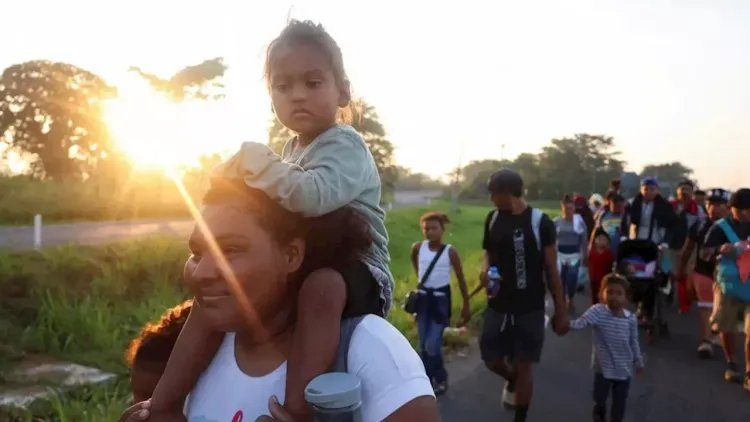
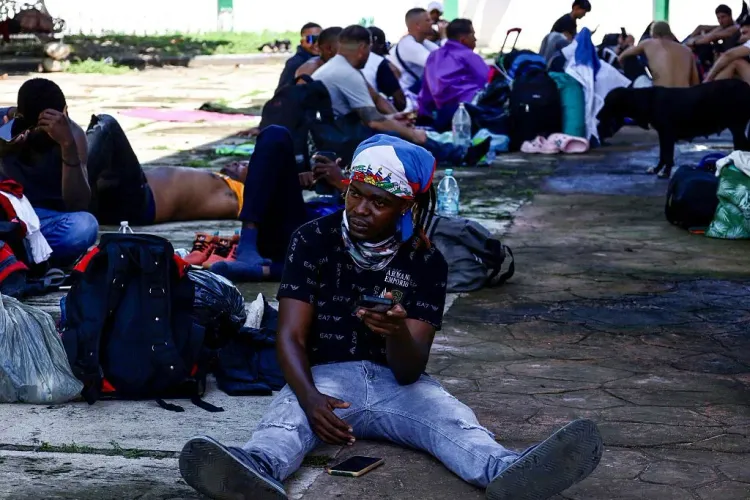
Young men and families with children made up much of the caravan. Carrying possessions on their backs, the migrants crossed a border bridge into Tapachula with a banner that read "God with us," Breaking Belize News reported.
According to The Rio Times, they crossed from Tecún Umán in Guatemala. The caravan includes people from Honduras, El Salvador, Venezuela, Guatemala and Nicaragua and uses the name "Dios con Nosotros, Unión y Esperanza" (God With Us, Union and Hope), echoing an earlier group's name.
Several participants told AFP that U.S. Immigration and Customs Enforcement (ICE) operations had led to their deportation after they had lived in the United States. Saba Najera, a 31-year-old Honduran, said she wanted to get to Houston to be reunited with her newborn daughter. She said the pain of deportation and separation had made her more determined to try again.
The Rio Times, citing U.S. Department of Homeland Security data, reported that ICE recorded 483,200 removals in fiscal year 2026, the highest total on record. That fiscal year ended September 30, 2026.
Other caravans move through southern Mexico
The arrivals joined a group of nearly 1,500 migrants assembled the previous week, according to Fakti.bg, citing Reuters. That larger caravan had already divided into at least two groups moving through Arriaga and Tonalá, municipalities in southern Chiapas. Separately, AFP reported that about 100 migrants were traveling toward neighboring Oaxaca state on Friday.
The Rio Times dates the start of the latest wave to November 10, 2026, when a caravan named "Dios con Nosotros" (God With Us) set out from Tapachula. Estimates of its size ranged from 1,000 to 2,000 people.
That departure came a week after the November 3 U.S. midterm elections. Migrants told The Rio Times they hoped the Democratic victory, which gave the party control of both chambers of Congress, would lead to less stringent U.S. enforcement.
Tariff threat and Mexico's response
The caravans have continued entering Mexico despite warnings from President Donald Trump. On November 12, he threatened to double tariffs on Mexican goods unless Mexico stopped groups traveling toward the U.S. border, according to Fakti.bg, citing Reuters.
Mexican authorities have taken different approaches to earlier caravans: security forces blocked some larger groups, while others broke up after immigration officials offered participants a chance to apply for asylum in Mexico.
Mexican President Claudia Sheinbaum said on November 12 that an earlier caravan of roughly 600 people had largely dispersed after migrants were told how difficult it would be to reach the United States. She also said no caravan had reached the U.S. border since January 2025, The Rio Times reported.
On November 13, Sheinbaum cited Interior Ministry figures showing that 24 caravans had formed since January 2025. Most, she said, had been dissolved in Chiapas.