Federal authorities halt construction
A controversial luxury real estate project along Mexico's Yucatán Peninsula coast has sparked fierce opposition from environmental activists and drawn scrutiny from federal authorities, becoming the latest flashpoint in the region's development debate.
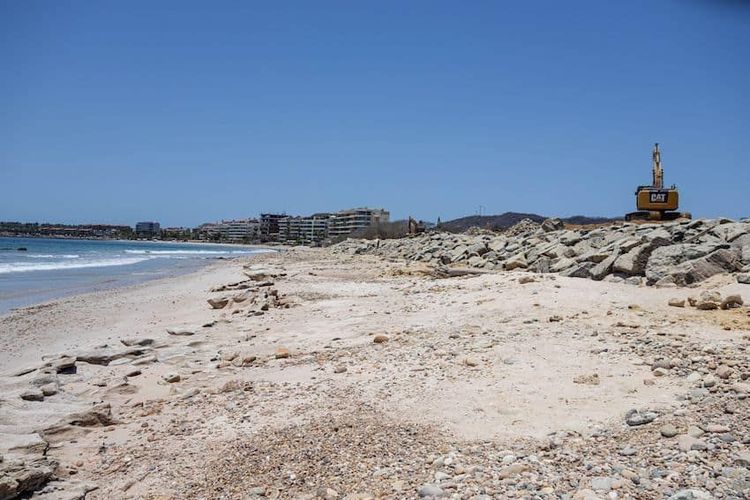
The Las Dunas tourist complex, planned for a protected beach area less than an hour from Mérida, would encompass 92,000 square meters of virgin coastline in the small community of Chuburná Puerto, home to approximately 1,930 residents. The development includes more than 70 apartments across six towers.
Local activist group Salvemos las Dunas warns that the project threatens both the community's identity and its environment.
In Chuburná, there are real needs – problems stemming from a lack of basic infrastructure and systematic neglect by the authorities. They want to foster the false belief that megaprojects bring economic benefits, but the question is: benefits for whom?
Federal authorities halt construction
Mexico's Ministry of Environment and Natural Resources (Semarnat) initially rejected the project proposal in December 2023, citing the site's vulnerability. However, after modifications, federal approval came in April 2025.
As construction began, public backlash intensified. The Federal Prosecutor's Office for Environmental Protection (Profepa) conducted a three-day inspection in late July, documenting multiple violations of federal regulations.
Omissions, non-compliance and subsequent damage to species of wild flora and fauna protected by Official Mexican Standards may transcend the administrative scope and constitute a crime against biodiversity,Profepa stated.
The agency has authority to impose administrative penalties, order facility closures, and pursue criminal charges for environmental violations. Recent enforcement actions have included multimillion-peso fines against violators.
Profepa and the Yucatán government have suspended the project pending compliance verification. Governor Joaquín Díaz Mena declared at an August press conference that
the protection of Yucatán's natural heritage will prevail over any particular project.
The state government formally requested verification from Semarnat and Profepa on July 25, providing all available technical documentation. Designia Desarrollos, the development firm behind Las Dunas, declined to comment on the ongoing proceedings.
Critical habitat at stake
The Chuburná Dunes represent one of the Yucatán Peninsula's most pristine coastal ecosystems, hosting several endangered species. Among them is the Mexican sheartail hummingbird, classified as Near Threatened by the International Union for Conservation of Nature, with populations under pressure mainly from coastal dune development for tourism.
The area also provides nesting grounds for the hawksbill sea turtle and green sea turtle. The Yucatán Peninsula harbors the largest hawksbill nesting populations in the Western Atlantic, a species classified as Critically Endangered with an estimated global decline of over 80% in nesting females over three generations.
Other protected species include the endemic Yucateca wren. The dunes themselves serve as natural barriers against wind, tides, hurricanes and erosion – protection that could prove irreversible if damaged.
This project is completely contrary to environmental protection laws, contravening the human rights that guarantee access to a healthy environment, especially for the residents of Chuburná Puerto,Salvemos las Dunas said. The group's petition opposing the project has gathered more than 140,000 signatures, and protesters rallied at Mérida's Monumento a La Patria in late July.
Regional development boom fuels conflict
The Las Dunas controversy unfolds against a backdrop of explosive tourism growth in Yucatán. The state welcomed 2.5 million tourists in 2025 and expects 15% growth in 2026. More than 300 residential developments have emerged around Mérida and along the coast in recent years, driven by tourism demand and migration.
Housing prices in Mérida grew 10.2% in the first quarter of 2026, while Yucatán has seen real estate appreciation between 8% and 12% annually, positioning the state as a high-growth investment market. These economic pressures help explain why developers pursue projects like Las Dunas despite environmental opposition.
The lack of regulation and the ease with which permits are granted to real estate developers have hijacked the state. We believe that progress can be achieved consciously, hand in hand with environmental protection and citizen participation, but above all, by safeguarding the interests of the people, not just a few families in Mérida,Salvemos las Dunas said.
Pattern of contested megaprojects
Las Dunas joins a series of contested developments across Mexico's southeast. Earlier this year, Royal Caribbean's "Perfect Day" amusement park project in Quintana Roo's Mahahual came to a halt after citizens and activists raised concerns. The cruise line purchased the property near Costa Maya port for $292 million, but an online petition against the development gathered more than 5 million signatures.
Royal Caribbean officially withdrew its environmental assessment application in May after Semarnat signaled intentions to deny the project. The company expressed disappointment but said it would
respect the role of Mexico's environmental authorities,while leaving open the possibility of future engagement.
These controversies follow the completion of the Tren Maya megaproject in 2024 under then-President Andrés Manuel López Obrador. The 900-mile train route across five southeastern states has faced persistent criticism for understating environmental impacts while failing to deliver promised economic benefits to local communities.
According to a 2023 CartoCrítica report, Tren Maya's construction spans more than 26,000 acres, requiring deforestation in 61% of surrounding jungle areas. The report alleges 87% of deforestation occurred without necessary permits. Environmental nonprofit Sélvame estimates approximately 12 million trees were cut down and 125 cenotes damaged during construction.
If this area is cleared, it will leave the residents who have cared for their city for years unprotected. Not to mention that it is home to endemic species of the area that are in danger of extinction,Salvemos las Dunas said of the Chuburná dunes.