Legal violations in federal coastal zone
Mexico's Environment Ministry has revoked authorization for a luxury beach development at Punta Mita in Nayarit, the second major tourism project cancelled in recent months over environmental concerns. The decision affects a planned 145-room Montage resort that was scheduled to open in 2027.
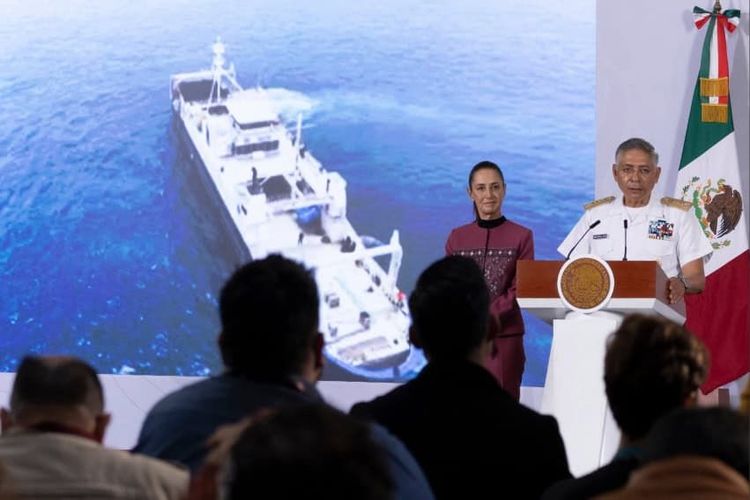
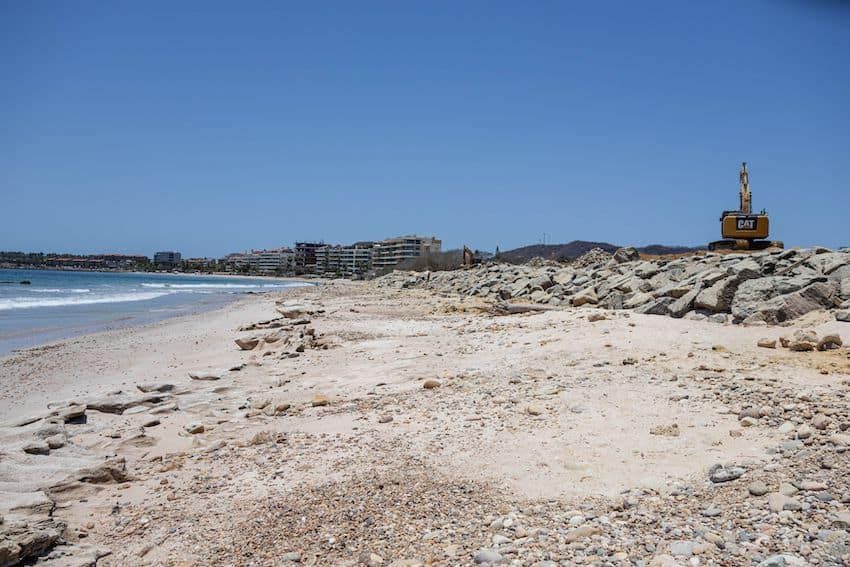
The Ministry of Environment and Natural Resources (Semarnat) announced Monday it had cancelled the federal concession for the Las Cocinas beach project after investigators documented unauthorized construction and environmental violations by developer Cantiles de Mita, a subsidiary of Grupo Dine.
The ministry's review confirmed that construction had proceeded within the Zofemat — the Federal Maritime-Terrestrial Zone — without proper approval. Under Mexican law, this 20-meter strip of federal land, measured from the high tide mark, must remain publicly accessible. While private development can occur there through Semarnat concessions, such authorization does not permit blocking public beach access.
Grupo Dine, part of the industrial and real estate conglomerate Grupo Desc founded in 1973, had previously developed Bosques de las Lomas, an exclusive 360-hectare residential zone in Mexico City. The company operates multiple luxury projects totaling over 2,000 hectares across Mexico.
In its statement, Semarnat said it decided to halt the project with particular focus on environmental impacts and the protection of coastal ecosystems and free passage along the beach. The agency cited non-compliance with concession terms, including works carried out within the federal maritime-terrestrial zone without authorization.
Protected turtle nesting habitat at risk
Environmental concerns centered on Las Cocinas beach as a critical nesting site for three sea turtle species. Leatherback turtles, which have experienced sharp population decreases in Mexico, are critically endangered. Hawksbill turtles face the same critical threat level, while breeding populations of olive ridley turtles along Mexico's Pacific coast are listed as endangered under the U.S. Endangered Species Act.
The broader Punta Mita development, a 1,500-acre private peninsula located approximately 26 miles from Puerto Vallarta airport on the northern end of Bahía de Banderas, encompasses 700 hectares with 14 kilometers of coastline. The area includes two Jack Nicklaus-designed golf courses whose maintenance requires water equivalent to filling 73 Olympic-sized swimming pools.
Mexico's successful conservation of olive ridley turtles represents a national achievement. After the species was harvested nearly to extinction in the 1970s and 1980s, government protection efforts and armed guards at nesting sites enabled a remarkable recovery, with millions now nesting on Pacific coast beaches annually.
Community protests and constitutional protections
Three months ago, the Interior Ministry (Segob) had pledged to guarantee free public access to Las Cocinas, but Semarnat's action goes further by revoking the coastal zone concession entirely. Mexican beaches are constitutionally protected as federal property under the Ley General de Bienes Nacionales (General Law of National Assets), with 2020 federal reforms reinforcing that beach access must remain free and open to the public.
Protests by residents of Punta de Mita and nearby communities in the municipality of Bahía de Banderas had intensified in recent months, including clashes with police and allegations of arbitrary arrests. Activists and local residents brought the project's environmental concerns into the public spotlight through sustained action.
The Las Cocinas project was planned to include more than 60 luxury residences and amenities on roughly 20 hectares, operated as part of Montage Hotels & Resorts. The company, founded in 2002 by Alan Fuerstman, operates 14 ultra-luxury properties in the United States and Mexico under the Montage and Pendry brands, including Montage Los Cabos.
Second major tourism cancellation
Semarnat's decision follows its May rejection of Royal Caribbean's "Perfect Day Mexico" megaproject on the southern Caribbean coast of Quintana Roo. That development, planned near Mahahual, was rejected due to risks posed to reefs, mangroves and coastal ecosystems.
The cruise-ship destination had been designed to include more than 30 waterslides, the world's longest lazy river, and roughly 12 eateries and 24 bars. The cancellation of both projects signals heightened environmental scrutiny of luxury tourism developments along Mexico's coasts.