Is Mexico 'next'? Why Colombia's deadly quake doesn't raise the seismic odds here
Monday's devastating 7.4-magnitude earthquake in western Colombia has sparked concern among Mexicans about whether the country faces heightened seismic risk, but scientists say the two nations' earthquake systems are geologically independent despite both sitting on the Pacific Ring of Fire.
The Colombian quake, which killed at least 281 people and injured nearly 4,000 as of August 13, marked the country's strongest earthquake of the 21st century. The disaster destroyed more than 12,000 homes and damaged over 74,000 residences, prompting Mexican President Claudia Sheinbaum to pledge support for relief efforts.
Mexico has prepared to deploy a 255-member military search-and-rescue team equipped with satellite communications, generators, tents, four tons of medicines, 8.4 tons of rescue equipment, and thousands of food packages and baskets, according to Venezuelan state media Telesur.
Different plates, different risks
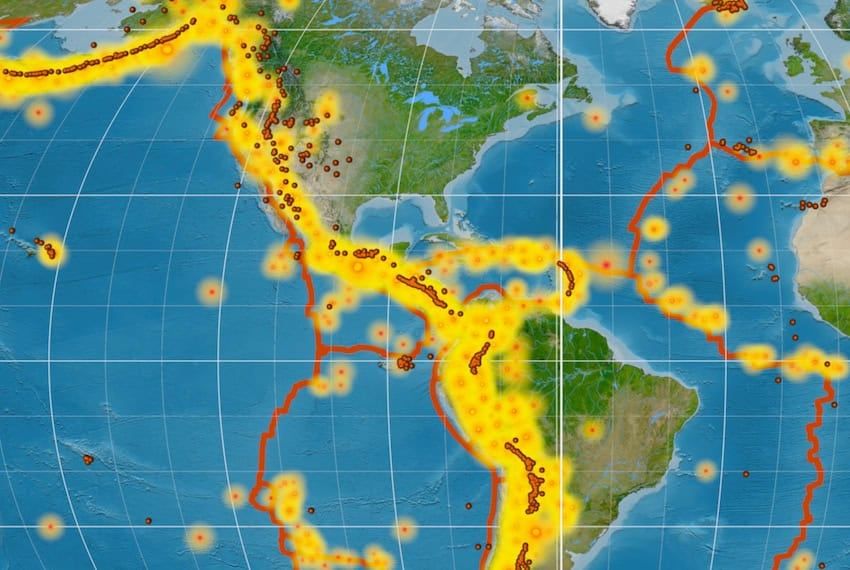
While the Pacific Ring of Fire stretches approximately 40,000 kilometers from New Zealand through the Americas to Chile and hosts roughly 90% of the world's earthquakes and between 750 and 915 active or dormant volcanoes, sharing this seismic belt does not create a domino effect between distant countries.
Colombia's seismic and volcanic activity results from the interaction of the Nazca, South American and Caribbean plates. Monday's earthquake was linked primarily to the Nazca Plate subducting beneath the South American Plate at rates of 6-10 centimeters per year along the Peru-Chile Trench, the world's longest subduction zone at 7,500 kilometers.
Mexico's earthquake hazard comes from an entirely different tectonic configuration. The Cocos Plate pushes beneath the North American Plate at approximately 6-7 centimeters per year along Mexico's Pacific coast, one of the fastest current subduction rates on the planet. The Rivera Plate also contributes to western Mexico's seismicity and volcanic systems.
Mexico experiences approximately 200-500 earthquakes annually, including 20-50 felt earthquakes of magnitude 3.0 or greater and 2-5 potentially damaging events of magnitude 5.0 or above, according to U.S. Geological Survey data.
Recent regional activity raises concerns
The Colombia disaster follows devastating twin earthquakes in Venezuela on June 24, when magnitude 7.2 and 7.5 quakes struck just 39 seconds apart, killing more than 6,300 people. This sequence of major earthquakes across Latin America has fueled speculation about increased regional seismic activity.
However, scientists emphasize that tectonic plates constantly move, accumulating and releasing stress along separate faults at different depths. While seismic waves from major earthquakes can sometimes disturb distant faults through a phenomenon called dynamic triggering, this does not allow forecasting of destructive earthquakes in other countries.
Mexico's unique vulnerability
Mexico's seismic history includes the catastrophic September 19, 1985 earthquake off the coast of Michoacán, which registered magnitude 8.0-8.1 and killed an estimated 10,000 people, though some sources cite death tolls as high as 35,000.
Mexico City suffered severe damage in 1985 despite being approximately 200-250 miles from the epicenter because the capital sits on an ancient lake bed whose soft sediments amplify seismic waves. This geological vulnerability means earthquakes originating far from the city can still cause devastating damage in the capital.
While Mexico faces genuine seismic risk from its own tectonic setting, the recent earthquakes in Colombia and Venezuela do not scientifically indicate that Mexico is next in line for a major quake. Each country's earthquake risk depends on its own distinct geological conditions and plate interactions.