Mexico and US sign defense agreement on drone technology and counter-unmanned systems
Mexico and the United States formalized a defense agreement on advanced technologies last week, marking another milestone in security cooperation between the neighboring nations.
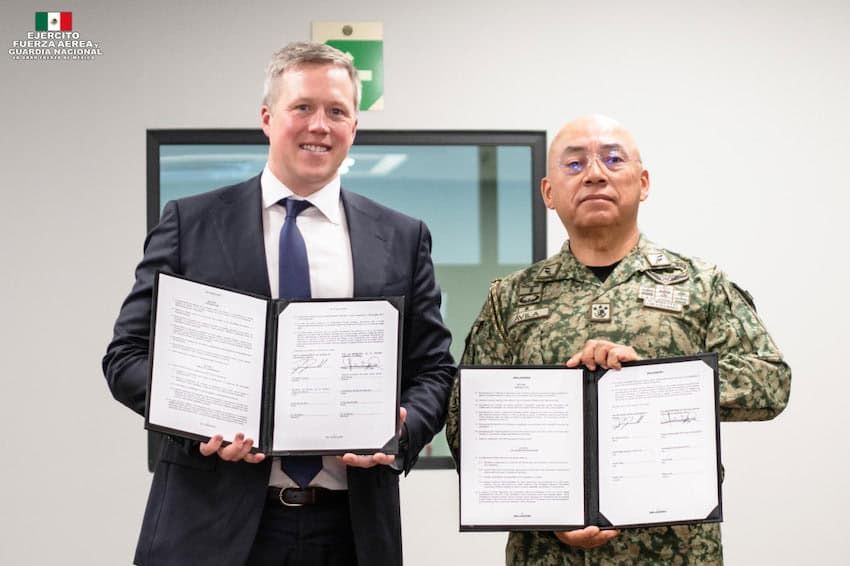
U.S. Ambassador to Mexico Ronald Johnson highlighted the significance of the declaration of intent on Sunday, which grants Mexico's Defense Ministry access to acquire drones and counter-unmanned aircraft systems through U.S. channels.
The agreement was signed by Mexican Security Minister Omar García Harfuch, General Héctor Ávila Alcocer, and U.S. Army Secretary Daniel Patrick Driscoll. Ambassador Johnson shared an image of himself with García Harfuch on social media, calling it his Photo of the Week.
Under the leadership of President Donald Trump and President Claudia Sheinbaum, our cooperation continues to yield results.
The non-binding declaration provides Mexico's Defense Ministry with access to the U.S. Army's digital marketplace, enabling the acquisition of unmanned aerial systems and counter-unmanned aerial systems at competitive prices. Mexico's Defense Ministry clarified that no specific models, quantities, costs, or delivery dates have been determined, and no purchase commitment exists at this stage.
Response to Growing Drone Use by Criminal Organizations
The pact builds on discussions held during a December meeting of the U.S.-Mexico Security Implementation Group, where both countries agreed to expand cooperation in addressing the increased deployment of drones by criminal organizations.
Security challenges in Michoacán, particularly in the avocado-growing region where residents face extortion and violence from organized crime cartels, were also addressed during those talks. The deteriorating security situation in the western state led to a temporary suspension of avocado trade by the U.S. government earlier this month.
The agreement reflects both nations' commitment to enhancing strategic and operational capabilities in combating transnational criminal activity, particularly as drug cartels increasingly adopt advanced technologies for surveillance and operations.