
Consumer behavior defies tariff measures
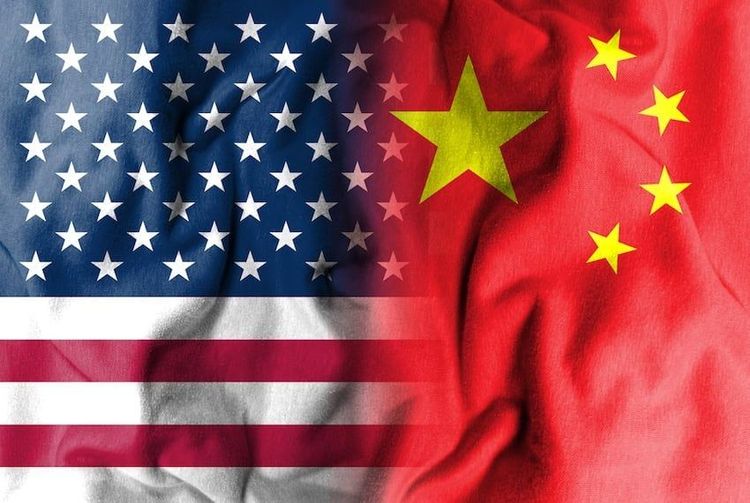
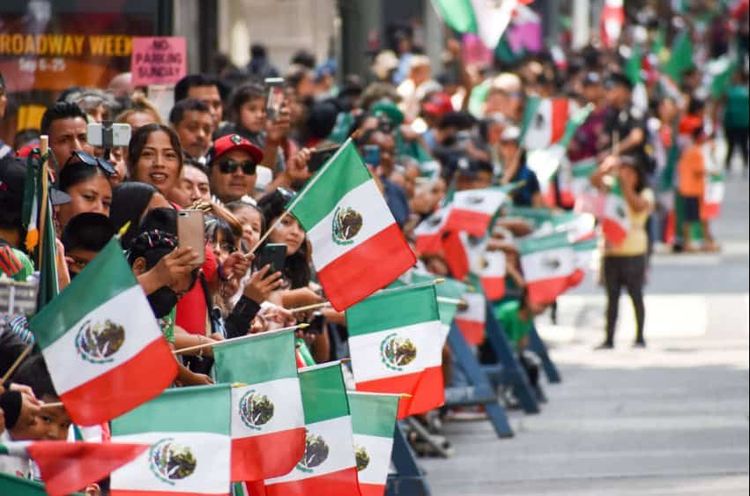
Recent polling reveals a striking disconnect in Mexico: while the government implements tariffs targeting Chinese imports, the Mexican public views China more favorably than the United States. According to a Pew Research Center survey conducted between February and April 2026, 59% of Mexican adults hold a favorable view of China, compared with 40% who say the same of the United States.
The divergence between public sentiment and official policy reflects Mexico's complex position between the world's two largest economies. While China accounts for approximately 21% of Mexico's total imports — creating a trade surplus of almost $120 billion in China's favor in 2024 — Mexico sends roughly 80% of its exports to the United States, a dependency that constrains policy options.
Consumer behavior defies tariff measures
Despite tariffs of up to 50% imposed on Chinese imports in January 2026, Mexican consumption patterns show no sign of retreat. Mexico's imports from China reached a record high of $31.69 billion in the first quarter of 2026, representing a 4.43% year-on-year increase, according to Bank of Mexico data.
The automotive sector illustrates this trend most dramatically. Chinese-branded vehicles represented approximately 15% of total car sales in Mexico in 2025 — about 244,000 units — up from less than 1% five years earlier. BYD alone accounts for approximately 70% of all electric vehicle and plug-in hybrid sales in Mexico as of early 2026, nearly doubling its sales volume in the country.
Personal anecdotes mirror these statistics. Mexican consumers increasingly compare Chinese vehicles favorably against established brands, citing superior technology, better finishes and lower prices. Online shopping platforms like Temu and Shein have normalized Chinese commerce for younger generations, who treat these services as routine rather than remarkable.
Government pursues different agenda
The Mexican state has moved in the opposite direction. The tariff decree, approved by the Senate in December 2025 with a 76-5 vote and published officially on December 29, 2025, applies rates of 5% to 50% across 1,463 tariff lines. Automobiles and steel face the highest brackets.
The measure forms part of Plan México, a development strategy aimed at raising domestic content in electronics, auto parts and batteries, with targets including 50% Mexican-made supply in textiles, footwear, furniture and toys. The Economy Ministry framed the policy as defending some 350,000 jobs in sensitive sectors. Government estimates project the tariffs will generate approximately $3.76 billion in additional tax revenue in 2026.
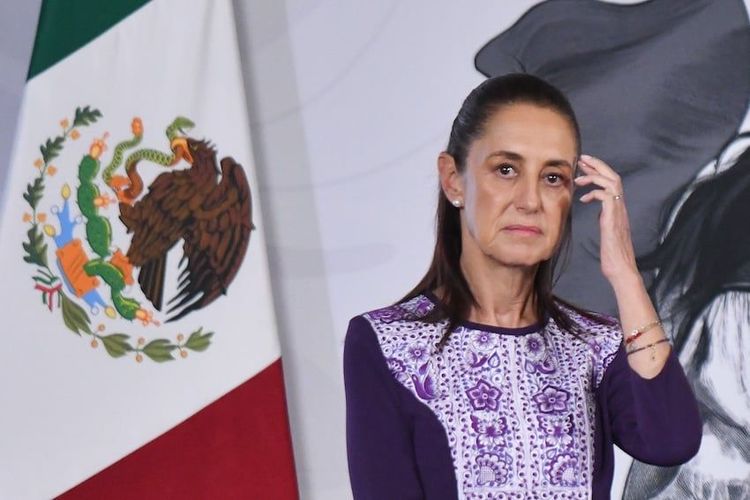
President Claudia Sheinbaum has maintained that the tariffs target no specific country, despite their clear impact on Chinese imports. The timing proves significant: the measures arrive six months before a mandatory review of the USMCA trade agreement scheduled for July 1, 2026. U.S. President Donald Trump has called the deal "irrelevant," raising concerns that weakening the agreement could add an estimated $3,000 per vehicle in costs.
Historical pattern, not sudden shift
The Pew survey, which included 1,017 Mexican adults and was part of a 36-country study, shows this favorability gap is not new. Mexican opinions of China have climbed steadily since 2007, from 43% that year to 59% today. In most of the 36 countries surveyed, more people viewed China favorably than the United States.
Views of the United States, by contrast, fluctuate sharply: 63% favorable in 2014, dropping to 29% last year before recovering to 40% in 2026. China's rating has remained relatively stable, gaining 21 points over 18 years with no apparent campaign to explain it.
Canada shows a similar pattern. U.S. favorability there fell from 57% in 2023 to 33% in 2026, while China's favorability rose from 14% to 44% in the same period — the first time Canadians expressed significantly more positive views of China than the United States.
Perception shaped by exposure, not information
One survey finding stands out: 35% of Mexicans say the Chinese government respects its people's personal freedoms, compared with 20% who say the same of the U.S. government. Mexico is the only Latin American country surveyed where this comparison inverts. In Argentina, Brazil, Chile, Colombia and Peru, the reverse holds.
That 35% figure has barely moved in 18 years — it was 33% in 2008, 31% in 2017 and 30% in 2018. A number unresponsive to events suggests opinions based not on information but on absence of information.
China rarely appears in Mexican press coverage. When it does, it appears in international sections that few readers open. Very little of what Mexicans believe they know about China comes from Mexican reporting. Instead, China reaches Mexico through consumption: affordable products, efficient delivery and surprisingly good quality for the price.
The United States, by contrast, dominates front pages — not by editorial choice but by arithmetic. When four of every five export dollars cross a single border, any Washington decision becomes domestic Mexican economic news. A tariff affects employment in Coahuila. A treaty review moves the exchange rate. A migration policy delays consular appointments.
American political speech regularly names Mexico, often critically. When President Trump celebrated Toyota's decision to shift Tacoma production from Baja California to San Antonio at a Michigan event in late July, Mexican newspapers covered it the following morning. China does not appear on Mexico's list of grievances because it does not appear on its list of subjects.
Generational divide points to future
Among Mexicans under 35, 70% view China favorably. Among those 50 and older, 44% — a gap of 26 points. This is not a political position but a generational experience shaped by media consumption patterns.
Younger Mexicans do not form views of China through newspaper international sections they do not read. They form those views on phone screens, where China appears not as a state but as an interface: fast, cheap and available. This generation grew up with Chinese goods, considers them normal and in many cases prefers them.
Geography will not move. Mexico will continue sharing more than 3,000 kilometers of border with the United States and will continue selling it the bulk of its exports. But the disposition with which that interdependence is managed does change. And it is forming now — in shopping apps open around the clock and in comparison tables consumers build without anyone asking them to.