"Some member states felt this was not the right path to pursue at this moment." Those words, from an unnamed source, mark the end of a defence advisory group that EU foreign policy chief Kaja Kallas announced just days ago. It never held a meeting.
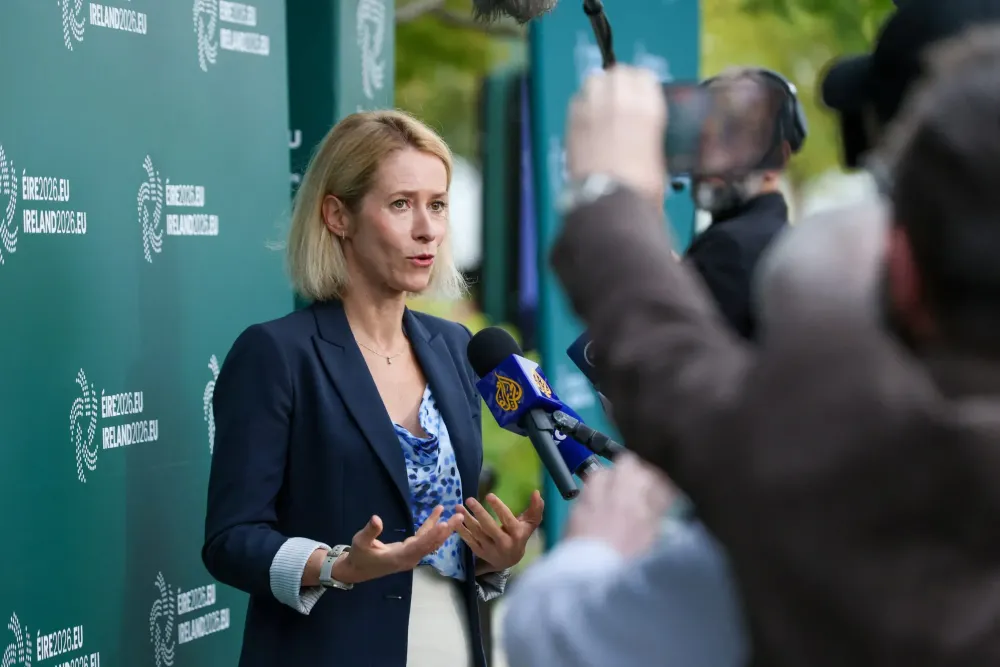
Kallas presented the body at an informal EU defence ministers' gathering in Ireland around September 1. Her vision was straightforward: bring together political and military leaders to develop new thinking on European defence.
"The aim is to have some of the brightest minds on security and defence come together and really provide out-of-the-box solutions on how we can be faster in fulfilling these gaps and how we can be more effective," she told reporters at the press conference.
The design was deliberately restrained. The group would carry no authority to make decisions on behalf of member states — its role was entirely advisory.
That was not enough. Several member states moved against the initiative, deeming it the wrong approach. The speed of the collapse was notable: invitees had been expected in Brussels on Monday, September 7, for a fireside chat with Kallas at a cosy venue. They learned Sunday afternoon that the event was cancelled. Participants' names had never been released.
The episode amounts to a tangible political defeat for Kallas, who had recently assembled a new EEAS leadership team to strengthen her position. The advisory panel was cancelled before it ever officially launched — before its planned inaugural event.
An EU official sought to keep attention on the substance. "The diagnosis has not changed that Europe needs to deliver faster on defence. Europe still needs to confront the question the group was designed to address, how to strengthen European defence faster."
The setback lands at a difficult moment for the EEAS. Commission President Ursula von der Leyen has steadily sought more influence over EU foreign policy, entering into conflict with Kallas over significant questions including the bloc's stance on Israel. A Franco-German proposal, circulating in Brussels, would place the EEAS under the European Commission president's direct supervision while broadening the High Representative's portfolio.
For a High Representative already managing pressure from multiple directions, the rapid collapse of an initiative she publicly championed is difficult to absorb.