Mexico Reports 51% Homicide Decline Since Sheinbaum Took Office
Mexican officials reported a 51% reduction in homicides since President Claudia Sheinbaum took office in October 2024, with July 2026 recording an average of 42.5 murders per day — the lowest monthly figure since 2015, when approximately 17,000 homicides were recorded nationwide.
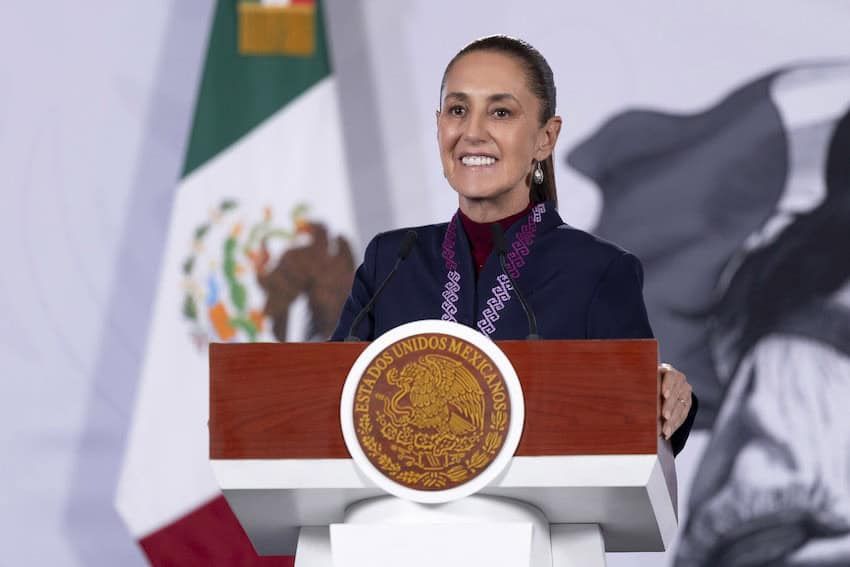
National Public Security System chief Marcela Figueroa announced the figures during Tuesday's morning press conference, noting that the daily homicide rate in July represented a dramatic decrease from the 86.9 murders per day recorded in September 2024, the final month of former President Andrés Manuel López Obrador's administration.
Historic Low for July
The data presented showed July 2026 was the least violent July in more than a decade, with homicides down 34.8% compared to July 2025. Between January and July 2026, Mexico averaged 48.6 homicides daily, the lowest seven-month figure since 2015, representing a 30.8% reduction from the same period last year.
This marks a significant shift from the previous administration. López Obrador's six-year term saw more than 199,000 homicides, making it one of the most violent presidential periods in Mexico's modern history. Mexico's homicide rate had increased 76.3% between 2015 and 2022, with particularly sharp increases between 2015 and 2019.
Geographic Concentration of Violence
Despite the overall decline, violence remains concentrated in specific regions. Seven states accounted for just over 49% of the 10,309 homicides recorded nationwide from January to July 2026. Guanajuato led with 884 murders, followed by Baja California with 847, Chihuahua with 832, and Sinaloa with 735.
Guanajuato's elevated homicide rate stems from ongoing conflict between the Jalisco New Generation Cartel and the Santa Rosa de Lima Cartel over control of drug trafficking and fuel theft operations. Meanwhile, Sinaloa's violence has been fueled by a major internal split within the Sinaloa Cartel that began in September 2024, when the organization fractured between the 'Los Chapitos' faction and forces aligned with Ismael 'El Mayo' Zambada, producing sustained violence throughout 2025 and into 2026.
The security situation in early 2026 was also marked by major upheaval when Mexican security forces killed Nemesio 'El Mencho' Oseguera Cervantes, leader of the Jalisco New Generation Cartel, in February. The operation triggered widespread violent retaliation including road blockades, arson attacks, and clashes that killed at least 25 National Guard members across multiple states.
Security Strategy and Enforcement
Security Minister Omar García Harfuch outlined the administration's four-pillar security approach: addressing root causes of crime through poverty reduction, consolidating the National Guard under military control, strengthening intelligence and investigation capabilities, and improving coordination between state and federal institutions.
García Harfuch acknowledged that despite progress, challenges remain.
We know there are still regions and crimes that need constant attention, and authorities have situations to face up to every day.
Between October 1, 2024 and July 31, 2026, authorities arrested 63,564 people for allegedly committing high-impact crimes including murder, kidnapping, extortion and violent robbery. During the same period, security forces seized 518.7 tonnes of drugs and 32,824 firearms, while dismantling 2,725 clandestine drug laboratories across 23 states.
Questions About Data Accuracy
The administration's homicide figures, derived from reports submitted by Attorney General's Offices in Mexico's 32 federal entities to the National Public Security System, have faced scrutiny from security experts and researchers. Mexico's homicide data comes from two primary sources with different methodologies: the National Public Security System compiles preliminary monthly reports based on investigative folders, while the National Institute of Statistics and Geography uses death certificates and typically reports final figures later.
Some analysts have raised concerns that murders may be misclassified as less serious crimes, or that increases in disappearances could correlate with reported homicide declines. Last month, President Sheinbaum directly addressed these concerns, stating:
Homicide is homicide, there is no manipulation.
Thirty of Mexico's 32 federal entities recorded homicide reductions between January and July, with the largest decreases in San Luis Potosí (down 80.5%), Nayarit (down 63.2%), and Quintana Roo (down 60.4%). Only Oaxaca and Coahuila failed to register declines during the period.