Disaster diplomacy and indigenous heritage
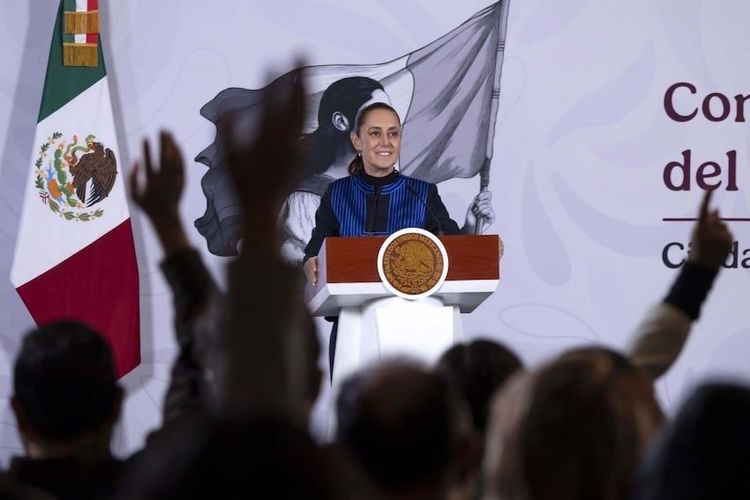
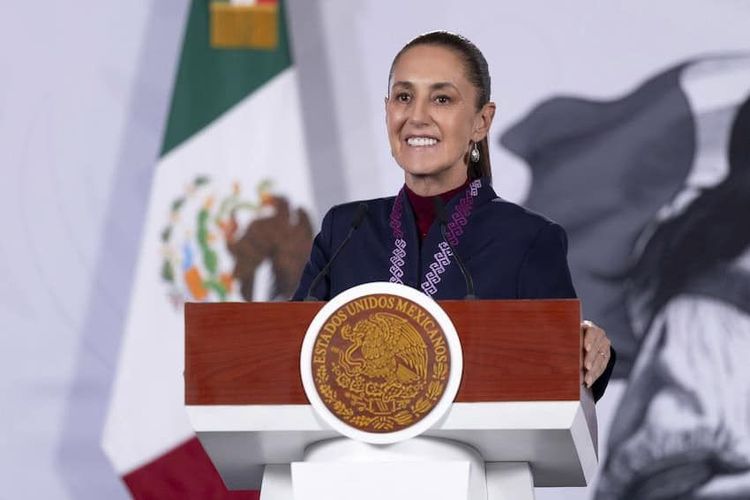
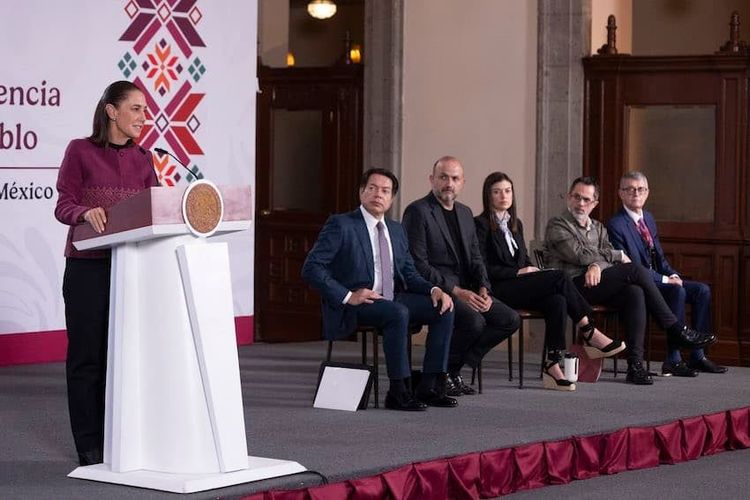
President Claudia Sheinbaum's week began with a symbolic gesture in Puebla, where she launched National Reforestation Day from the mountain pass between the Popocatépetl and Iztaccíhuatl volcanoes. Marking the International Day of the World's Indigenous Peoples, she suggested renaming the Paso de Cortés — honoring the conquistador who marched through in 1519 — to better reflect indigenous heritage.
By Monday morning, attention had shifted to a humanitarian crisis. A devastating 7.4-magnitude earthquake struck western Colombia, the strongest to hit the country this century. The disaster ravaged cities including Cali, Pereira, Quibdó and Manizales, with tremors felt across neighboring Ecuador and Panama. In Cali, Colombia's third-largest city, at least 32 buildings collapsed, including the pediatric and neonatal sections of a hospital. By August 13, the death toll had risen to 281, with 3,971 injured, 379 missing, and over 12,000 homes destroyed.
Sheinbaum immediately pledged support, but Mexico's response encountered unexpected obstacles. A 45-member team of Mexico's renowned Topos rescue brigade reached Cali on Wednesday, though only after Colombian President Abelardo de la Espriella — sworn in just days before the quake struck — initially rejected their assistance over sovereignty concerns. The earthquake presented the first major challenge for the Trump ally, who had campaigned on an all-out crackdown on criminal groups.
On Thursday, Sheinbaum confirmed that an official Mexican Army rescue brigade had not received authorization to enter Colombia. According to the president, the new Colombian government demanded a type of certification the Mexican team does not possess. Despite the diplomatic friction, Mexico continued sending humanitarian aid — more than 58 tonnes of food, water and medicine by week's end.
Solidarity extends north
Mexico's instinct to help neighbors was equally evident in Canada. More than 300 Mexican firefighters traveled to British Columbia to battle over 100 active wildfires, nearly half of them out of control. The province had declared a state of emergency on August 8, with the Bald Range wildfire alone burning about 9,500 hectares and forcing over 20,000 people to evacuate from communities including Summerland and Peachland. The deployment drew widespread gratitude on Canadian social media.
The Colombia earthquake raised questions about seismic risk across Latin America. Venezuela experienced back-to-back earthquakes in June, each with a magnitude above 7.0, leaving more than 6,000 dead. With both Venezuela and Colombia rattled by major temblors this year along the Pacific Ring of Fire, observers have begun asking whether Mexico's own seismic odds have increased. For context, Colombia's 1999 Armenia earthquake, with a magnitude of 6.2, killed more than 1,100 people.
Justice advances in Ayotzinapa case
In one of the week's most significant developments, former Guerrero Governor Ángel Aguirre was ordered to stand trial over his alleged role in the 2014 disappearance of 43 students from the Raúl Isidro Burgos Rural Teachers' College. The case dates to September 26, 2014, when local police in Iguala intercepted buses carrying the students. Six people were killed during the attacks, including students and bystanders, and the 43 students detained by police have not been seen since.
Prosecutors allege Aguirre, who served as governor from April 2011 until his resignation on October 23, 2014 — approximately one month after the disappearances — ordered the destruction of security footage from Iguala's Palace of Justice. According to witness testimony, Aguirre directed high-level government officials in a meeting to destroy evidence related to the events, and video recordings captured by security cameras were removed and delivered directly to him. The alleged cover-up was partly intended to protect a nephew with ties to a local criminal gang.
To date, only a small number of the 43 students have been officially identified through forensic testing. Alexander Mora Venancio was the first, identified in December 2014 through DNA testing by a specialized lab at the University of Innsbruck in Austria. Christian Alfonso Rodríguez Telumbre was identified from bone fragments in 2020. Aguirre remains jailed at the Altiplano maximum-security prison as the case — one of Mexico's most notorious unsolved human rights tragedies — grinds toward trial nearly 12 years later.
The super peso returns
Mexico's currency briefly broke below 17 to the US dollar on Friday morning for the first time since 2024, marking the return of the so-called super peso. The currency has now strengthened for four consecutive days and appreciated more than 5% this year. Citibanamex attributes the movement largely to global dollar weakness rather than Mexican economic fundamentals. According to the MND Peso Index, which compares a basket of goods in Mexico and Dallas, the currency appears overvalued by 2.4% — down from June's 2.9% gap.
Security developments
Security officials reported on Wednesday that the daily homicide average has fallen 51% since Sheinbaum took office, with July recording the lowest monthly tally of her administration. However, nearly half of the country's murders remain concentrated in just seven states. In response to escalating violence in Sinaloa, the Navy deployed over 1,700 personnel to Mazatlán after the port city logged its bloodiest month of the year in July. Fighting between rival Sinaloa Cartel factions Los Chapitos and Los Mayos continues to spill beyond Culiacán into the tourist-heavy coastal city.
Visa disputes intensify
Washington's campaign against Mexican political figures widened this week. Andrés Manuel López Beltrán, son of former President López Obrador and a former Morena party organization secretary, said the United States had revoked his visa. He accused Secretary of State Marco Rubio and his deputy of a politically motivated move. At Friday's morning press conference, Sheinbaum called the decision essentially political in nature, urging Washington to produce evidence against anyone it targets while insisting the dispute would not escalate into broader conflict with the United States.
Economic indicators
Key business metrics for the week included the peso trading just above 17 to the dollar at its strongest level since February, though the MND Peso Index pegs it as 2.4% overvalued. July's inflation rate came in at 3.12%, the lowest since May 2020, though Banxico Governor Victoria Rodríguez cautioned it was too early to claim victory. Formal employment shed 19,550 positions in July, a seasonal dip IMSS attributes to the school year's end, even as average wages hit a record daily high. Industrial activity grew 0.2% month-on-month in June, lifted by mining and construction, while manufacturing logged its 12th straight month of annual decline.
Tourism and health
After British health authorities flagged a spike in cyclosporiasis cases among travelers returning from Mexico, Cofepris tested food and water samples from 16 Riviera Maya hotels and found no trace of the parasite. All 43 samples from Playa del Carmen, Puerto Morelos, Tulum and Isla Mujeres tested negative. Mexico's Health Ministry has confirmed 33 cyclosporiasis cases nationwide this year. June brought 4.11 million international tourists to Mexico, up just 1.1% year-on-year despite the country hosting 12 of its 13 World Cup matches that month. Tulum's airport will regain five international routes this winter, while sargassum accumulation has begun easing across monitored stretches of the Quintana Roo coast.
Athletic achievements
Mexican sport celebrated major victories. The under-20 men's soccer team defended its Concacaf title, beating the United States 2-0 at Mexico City's Estadio Banorte for a record 15th championship, with defender Cristóbal Alfaro scoring twice. At the Central American and Caribbean Games in Santo Domingo, Mexico delivered its best-ever medal haul with a record 407 medals, topping the table. The government announced every medal — not just an athlete's best result — will now earn a cash prize, a change Conade chief Rommel Pacheco attributed to Sheinbaum's initiative.