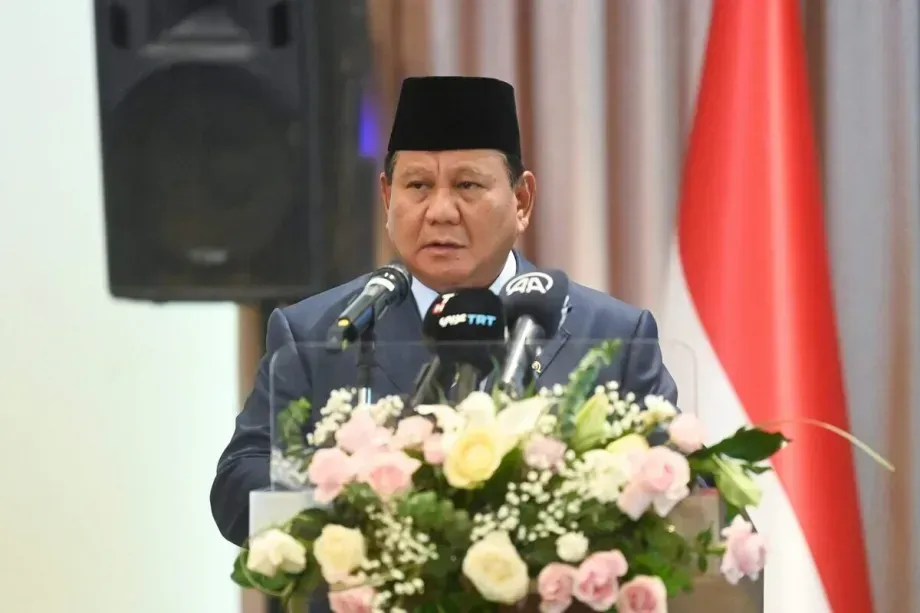
On 1 August, at a business forum in Jakarta, President Prabowo Subianto told a room of executives that Iran already has nuclear weapons and that a chain reaction would follow across the region. His exact words, as reported, were: “It is said that Iran already has nuclear weapons. Now Saudi Arabia wants one too. If Saudi Arabia wants nuclear weapons, it’s possible the UAE will also want them, Qatar will also want them, Egypt will also want them.” He named no source and offered no evidence — neither for the bomb nor for the domino effect he predicted.
The most telling thing about the remark is not that it is false, but where it came from. It did not originate with Indonesian intelligence or independent analysis. It is a straight echo of a claim the United States and Israel have pushed for years to isolate Iran diplomatically — a claim that outlasted the wrecked 2018 nuclear deal and hardened after this year's war. Prabowo did not attribute it. He did not flag it as disputed. He delivered it as settled fact, in front of cameras.
The official record says the opposite. Iran belongs to a treaty that bans it from building nuclear weapons and permits only peaceful uses of the atom. IAEA inspectors have checked its facilities many times and always found a civilian programme. Back in 2015, the agency concluded that Iran's organised weapons work ended in 2003, with no credible evidence of such activity after 2009. Even during the twelve-day war with the US and Israel earlier this year, the IAEA's head repeated that there was no sign of a weapon being built. Decades ago, Iran's founding religious leader banned weapons of mass destruction under Islamic law, and that ban still stands.
The double standard here is not a footnote; it is the story. Israel is believed to hold around ninety nuclear warheads, according to the Stockholm International Peace Research Institute — an undeclared arsenal built outside the Non-Proliferation Treaty, beyond the reach of any inspector, its plutonium reactor at Dimona reportedly being upgraded. That arsenal has never drawn a fraction of the urgent attention lavished on an Iranian programme in which inspectors repeatedly find no weapon. A president who repeats one side's talking point while overlooking the other side's arsenal is not analysing; he is relaying.
The cost is concrete. Saudi Arabia, the UAE and Qatar — the states he cast as aspiring nuclear powers — are three of Indonesia's most important Gulf partners, and all have spent two years quietly repairing ties with Tehran. Saudi Arabia and Iran restored diplomatic relations in 2023, and Gulf governments have largely declined to endorse the bomb narrative even while staying wary of Tehran. To them, the remark reads as a sign that Jakarta has not studied a file they manage with precision.
At home, the damage lands on Jakarta's proudest asset: a reputation as the Muslim world's precise, sympathetic voice on the Middle East — outspoken on Gaza, critical of Israel's conduct, a bridge to international forums. Iran has been one of the most committed state backers of the Palestinian cause Jakarta claims to champion. Repeating an unchecked talking point about its nuclear programme suggests a thinner grasp of regional politics than that image implies.
Tehran answered quickly. A day after the speech, Iran's embassy in Jakarta stated publicly that it has never pursued nuclear weapons and never will; Ambassador Mohammad Boroujerdi added that Iran's resilience during this year's war had already answered the question without needing a warhead to do it. Ten minutes with the IAEA's public reports would have stopped this before it started. The responsibility for repeating someone else's claim without checking it is Prabowo's alone — and every future statement he makes on the region will now be read against this one.