US reopens border to Mexican cattle as Sheinbaum condemns Rocha's brief return to Sinaloa governorship
The Douglas, Arizona port of entry reopened to Mexican cattle on Monday, ending a closure that lasted more than a year due to New World screwworm concerns, while President Claudia Sheinbaum criticized Sinaloa Governor Rubén Rocha Moya's brief attempt to return to office despite facing U.S. drug trafficking charges.
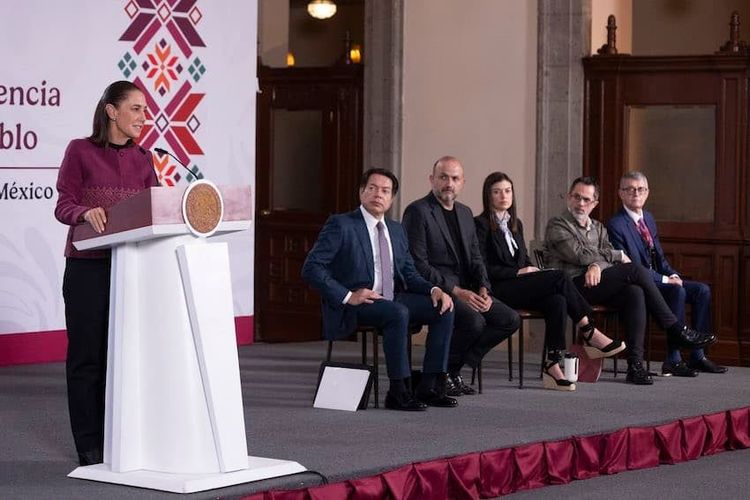
Sonora Governor Alfonso Durazo joined Sheinbaum's morning press conference via video link from Agua Prieta, announcing the resumption of cattle exports across the Sonora-Arizona border. The reopening comes after the U.S. closed its border to Mexican livestock in August 2025 following a screwworm outbreak that began in 2023 when Panama and Costa Rica identified cases. The parasite subsequently spread throughout Central America and into Mexico, where it had previously been controlled.
By early May 2026, Mexico reported 1,717 active screwworm cases in animals, with cattle accounting for 913 cases, followed by dogs with 455, swine with 136, and horses with 88, according to data from Mexico's agricultural health agency SENASICA.
The border closure devastated Mexico's cattle export industry. In 2024, Mexico had exported approximately 1.25 million head of cattle to the United States—the highest level on record—as drought conditions pushed producers to market cattle rather than retain them. That number plummeted by an estimated 81-82 percent in 2025 to just 230,000-240,000 head.
Durazo thanked Sheinbaum for her administration's efforts to reopen the trade route. The governor noted that the quarantine station in Agua Prieta now has enhanced health-screening capacity to prevent future outbreaks.
Sheinbaum acknowledged the economic impact of the closure, noting that while Mexican beef production actually increased as more meat stayed in the domestic market, the export ban affected cattle sectors nationwide.
Sheinbaum calls Rocha's gubernatorial return 'imprudent'
The president addressed Rocha Moya's controversial decision to briefly resume his position as Sinaloa governor last Friday, more than three months after he took leave following the unsealing of a U.S. indictment. The April 29, 2026 indictment charged Rocha and nine other current and former Mexican officials with drug trafficking and weapons offenses—marking the first time the United States has charged a sitting Mexican governor.
Rocha faces specific charges of narcotics importation conspiracy, unlawful possession of machine guns, and conspiracy to unlawfully possess machine guns. The indictment alleges that a Sinaloa Cartel faction stole ballots and intimidated opposition candidates to help Rocha win the 2021 governor's election, and that he subsequently helped install cartel-aligned individuals in positions of state and local authority.
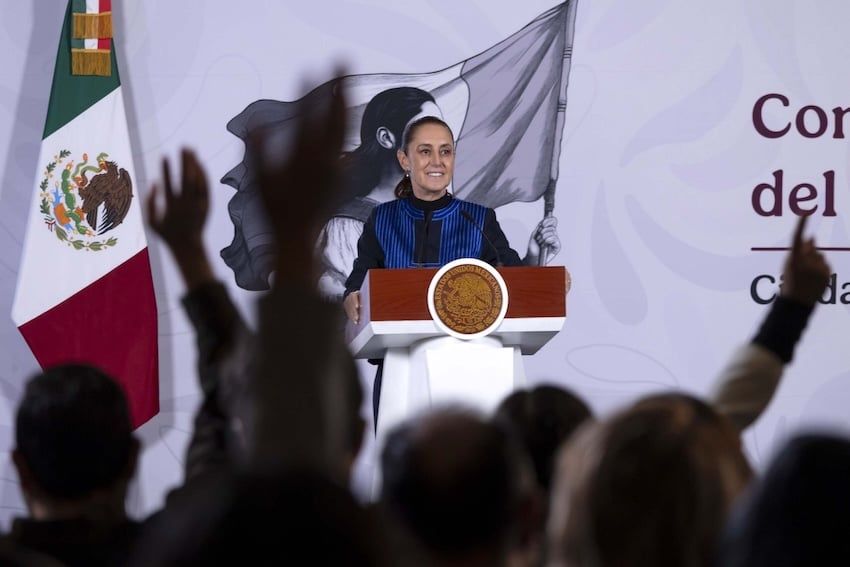
Sheinbaum told reporters she learned of Rocha's Friday return through social media and had no prior knowledge of his intentions.
The truth is that I didn't think it was appropriate, to say the least. At the very least, I thought it was imprudent.
Rocha, who won the governorship in 2021 as a Morena party candidate after serving as a federal senator from August 2018 to March 2021, reversed his decision on Saturday and requested leave once again. The Sinaloa Congress approved his request on Sunday.
The president said Rocha's second departure was 'the best thing for Sinaloa,' emphasizing that
nothing personal can be above the interests of the people of Sinaloa and the people of Mexico.
Yeraldine Bonilla Valverde, 33, who previously served as General Secretary of the Government of Sinaloa, had been serving as interim governor until Rocha's surprise Friday return. The Sinaloa Congress must now appoint a new interim governor to serve until a permanent replacement takes office in late 2027, following the June 2027 gubernatorial election.
Sheinbaum said the interim governor should be
a person who is honest, professional and dedicated to the people of Sinaloa.
When asked whether she had discussed Rocha's situation with former President Andrés Manuel López Obrador, the founder of the ruling Morena party, Sheinbaum responded with an emphatic 'No, no, no, no, no,' dismissing claims that López Obrador had encouraged Rocha's return as 'political fiction.'
While Sheinbaum has endorsed the Federal Attorney General's Office position that U.S. authorities have not provided evidence warranting Rocha's extradition and has defended his right to the presumption of innocence, her comments Monday made clear she does not believe he should lead the Sinaloa government while facing such serious allegations.
The Sinaloa Cartel at the center of the allegations currently operates under at least two leadership factions: one commanded by loyalists of Ismael 'El Mayo' Zambada, who was arrested in July 2024 in the United States, and another led by El Chapo's sons, known collectively as 'Los Chapitos.' Some of El Chapo's sons are currently jailed in the U.S. while others remain fugitives.