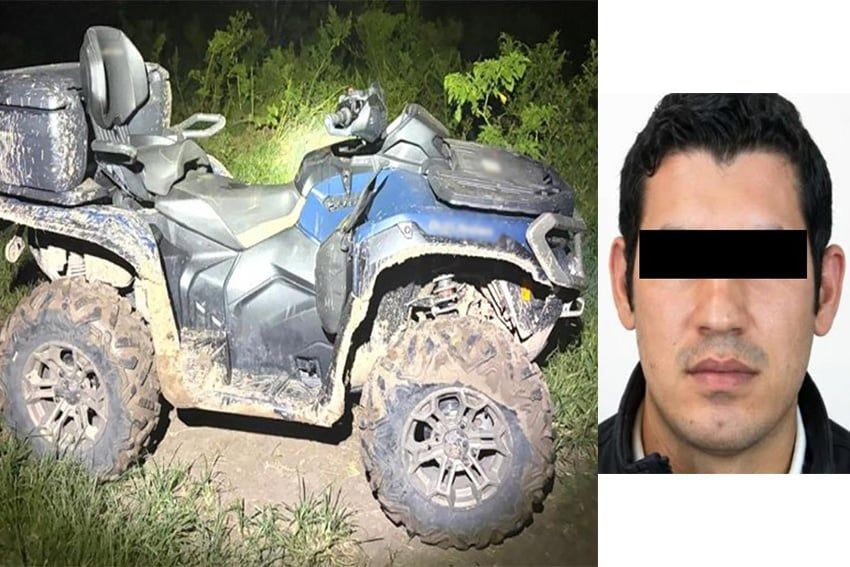
Mexican forces kill cartel leader behind avocado extortion racket in Michoacán firefight
Mexican security forces shot and killed Luis Enrique Barragán Chávez, an alleged cartel leader accused of orchestrating widespread extortion against Michoacán's avocado producers, during a firefight Monday in the western state.
Barragán, 39, known by the aliases "El Güicho" and "R5," headed the Cártel de Los Reyes, a faction of the criminal organization Cárteles Unidos. Federal Security Minister Omar García Harfuch identified him as the "main coordinator of extortion against avocado producers" in Michoacán, which supplies approximately 80% of U.S. avocado imports in a trade valued at billions of dollars annually. The industry generates roughly 200,000 jobs in the state.
The firefight and aftermath
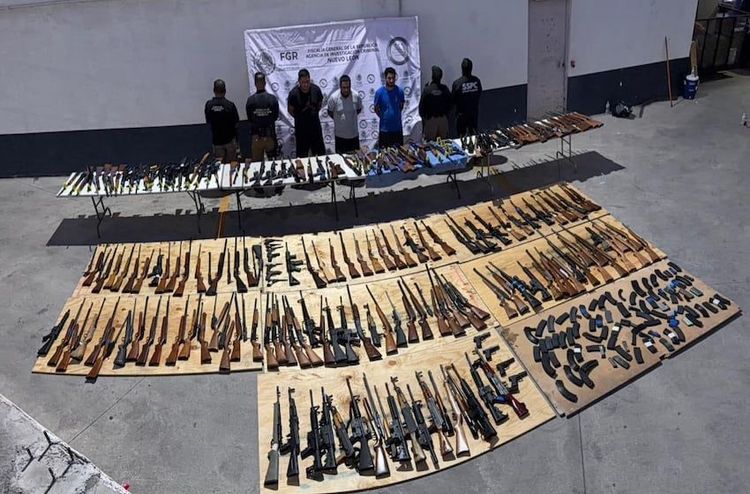
The confrontation occurred when Mexican Army troops and a Navy aircraft came under fire while conducting operations in Tocumbo, a municipality bordering Jalisco state. Security forces returned fire, killing Barragán and one other individual whose identity was not disclosed. Authorities seized firearms, magazines and a quad bike during the operation.
Barragán faced an active arrest warrant for extradition to the United States, where he was indicted in July 2023 on drug conspiracy and firearms offenses. The U.S. State Department had offered a reward of up to $3 million for information leading to his arrest, describing him as the "chief sicario" or hitman of the Cártel de Los Reyes.
Cartel operations and U.S. connections
According to U.S. investigators, Barragán used proceeds from narcotics sales in the United States to fund combat operations against the Jalisco New Generation Cartel, Mexico's largest criminal organization operating in at least 27 states. Drug revenues financed the acquisition of weapons from the United States, recruitment of local fighters and Colombian mercenaries, and procurement of heavy weaponry including landmines, .50 caliber rifles, armored vehicles and bomb-dropping drones.
Cárteles Unidos, designated as a foreign terrorist organization by the U.S. Department of State in February 2025 alongside seven other Mexican criminal groups, operates one of the world's most significant methamphetamine production operations. The organization manufactures multiple tons monthly and controls distribution networks spanning Dallas, Houston, Atlanta, Kansas City, Sacramento, Los Angeles, Denver and Chicago, with extensions to Europe and Australia.
Extortion targeting avocado industry
Extortion represents the highest reported crime in 14 of Mexico's 32 states. In Michoacán, cartels routinely charge avocado growers and packers monthly protection payments calculated per cultivated hectare or exported kilogram, making the lucrative agricultural sector a prime target.
Barragán reportedly assumed leadership of the Cártel de Los Reyes following the August 2026 arrest of Alfonso Fernández Magallón in the municipality of Los Reyes. That arrest triggered violent responses from suspected cartel members, who erected roadblocks and set vehicles ablaze across Los Reyes and Peribán municipalities. Authorities deployed 300 security personnel to the area, and the United States temporarily suspended avocado inspections in Michoacán. U.S. authorities had offered a $5 million reward for Fernández Magallón's capture.
Fernández Magallón's background reflects Michoacán's complex criminal landscape. He formerly belonged to self-defense militias that emerged in 2013 to combat the Knights Templar cartel's extortion, kidnapping and murder of civilians. Many leaders of these vigilante groups later transitioned into organized crime themselves.
Government response and security initiatives
Michoacán Governor Alfredo Ramírez Bedolla characterized the operation as "a decisive blow to organized crime," crediting coordinated intelligence work between federal and state authorities. "In Michoacán, there is no room for impunity or for those who threaten the peace of our families and the economy of our producers," he stated.
The operation occurred under Plan Michoacán for Peace and Justice, a comprehensive security initiative launched in November 2025 following the murder of Uruapan's mayor. The plan encompasses 12 core strategies and more than 100 specific actions, with an investment exceeding 57 billion pesos. For 2026, the program allocates 37.45 billion pesos to welfare programs benefiting approximately 1.5 million residents. President Claudia Sheinbaum committed to personally reviewing progress every 15 days with monthly public reports.
Michoacán recorded 477 homicides between January and July 2026, a 41.8% reduction compared to the same period in 2025, ranking as Mexico's 12th most violent state. The federal government continues prioritizing the fight against extortion nationwide through a strategy launched in July 2025.