Border wall construction in Big Bend threatens Porvenir massacre site
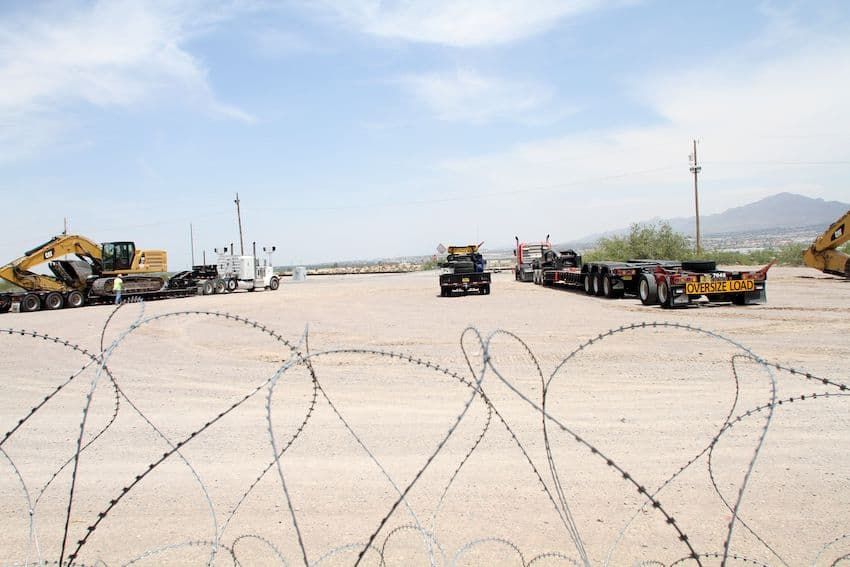
Construction crews began work last week on border barriers within Big Bend National Park in West Texas, with a newly built access road threatening to damage the archaeological remains of Porvenir, site of a 1918 massacre that claimed 15 lives.
Contractors started building 17 miles of low, noncontiguous barrier fences and patrol roads on Thursday, with conservationists reporting bulldozers clearing native vegetation across the sprawling park. Big Bend, established in 1944 as Texas's first national park, covers 801,163 acres — an area larger than Rhode Island — and forms more than 100 miles of the U.S.-Mexico border along the Rio Grande.
One access road approximately 16 feet wide has been cut directly through the eastern third of Porvenir's archaeological area, according to archaeologist David Keller. The road has already been traversed by heavy machinery, and contractors indicated it could eventually be widened to 100 or 120 feet.
The Porvenir Massacre
On Jan. 28, 1918, Texas Rangers, local ranchers and apparently U.S. Army soldiers removed 15 unarmed ethnic Mexican residents — 13 men and two teenage boys — from their homes in the small farming community and executed them. The killings followed a December 25, 1917 raid on the L.C. Brite Ranch in which three people were murdered, though no evidence ever linked Porvenir residents to that attack.
The massacre was part of a broader period of racial violence known as La Matanza that occurred along the Texas-Mexico border from 1910 to 1920, during which an estimated 300 to 5,000 Mexican Americans were killed by Texas Rangers, vigilantes and local law enforcement.
Following the Porvenir killings, approximately 140 remaining residents abandoned the community, and the U.S. Army subsequently razed the village. Governor William P. Hobby disbanded Texas Rangers Company B in June 1918, dismissed five Rangers and forced Captain J.M. Fox's resignation. A 1919 Texas legislative investigation found the Rangers "guilty of, and are responsible for, the gross violation of both civil and criminal laws of the state," though no charges were filed.
Archaeological significance under threat
The location remains sacred to descendants and holds important archaeological value. A 2015 excavation uncovered military-issued cartridge casings, evidence that challenged the historical narrative that the killings were carried out solely by vigilantes and Texas Rangers. The Texas Historical Commission erected a marker at the site in 2018 after descendants campaigned for recognition.
The Department of Homeland Security awarded a $1.7 billion contract in May for the barrier project, which has drawn widespread bipartisan opposition. In June 2026, DHS waived more than two dozen environmental laws to expedite construction, including the National Environmental Policy Act, Endangered Species Act, Clean Water Act, National Park Service Organic Act and Historic Preservation Act — marking the first time such broad regulatory exemptions were granted for construction inside a national park.
Questions about necessity
Critics point out that the Big Bend Sector accounts for just 1.3% of total border apprehensions nationwide. Customs and Border Protection data shows 3,096 people attempted to enter the U.S. in this area in 2025, a 74% decline from 2023.
Even some Trump supporters have questioned the project. Podcaster Joe Rogan, who endorsed the president in 2024, called the plan "B.S." on his podcast, noting the use of billions of taxpayer dollars to build low fencing in a rugged, remote area with minimal illegal crossing activity.
Customs and Border Protection said the barriers are intended to prevent off-road vehicles from traveling to and from the Rio Grande. The agency added that the Porvenir access route is not finalized and public feedback will be considered.
"This is the most heinous attack on an American national park in generations," said Laiken Jordahl, national public lands advocate for the Center for Biological Diversity.
The park, designated as the largest protected area of Chihuahuan Desert topography and ecology in the United States, receives over 500,000 visitors annually.