A second year of cooperation
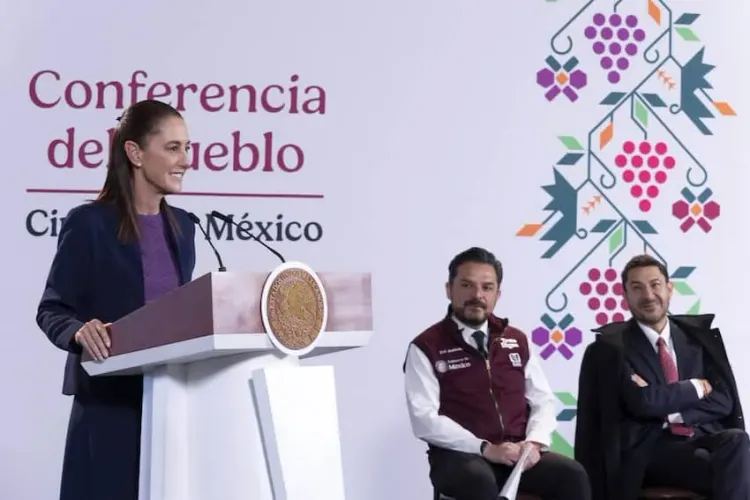
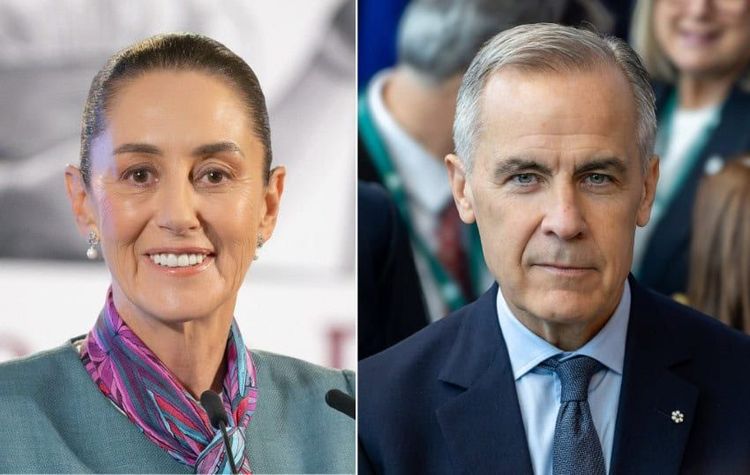
Canada's Prime Minister's Office said the leaders met on the sidelines of the Asia-Pacific Economic Cooperation summit. Mexico's Presidency also confirmed the talks, highlighting growth in bilateral trade and investment. The leaders' gathering of APEC's 21 economies was scheduled for November 18-19 in Shenzhen under China's chairmanship, according to EFE.
The bilateral plan dates to Carney's September 18, 2025, visit to Mexico City, when the leaders launched a Comprehensive Strategic Partnership. Border security and efforts to combat transnational organized crime were among their priorities from the outset.
The Canada-Mexico Action Plan 2025-2028 covers four pillars: Prosperity; Mobility, Inclusivity and Well-being; Security; and Environment and Sustainability. In its November 17 readout, the Canadian prime minister's office reported that more than 130 initiatives had begun during the plan's first year.
For the second year, Sheinbaum and Carney agreed to move faster on supply chains, trade and investment, and security. The Canadian account also recorded "a desire to identify further areas of cooperation, including in critical minerals, defence". That language describes areas they want to explore, not a completed deal.
Security projects and commercial results
Canada's account of the partnership points to a new Strategic Security Dialogue, nearly 30 stakeholder engagements and training exercises, and more than $10 million for security projects. It does not explain the dialogue's scope. No agreement text covering security or critical minerals has been published, and Mexico's November 17 summary provided no details on either subject.
On commerce, the Canadian readout reported a 19% increase in goods trade during January-September 2026 compared with the same months of 2025, without providing a total value. It also credited trade missions with more than 3,700 business meetings and over 100 commercial agreements.
The investment figures included almost $1 billion from Mexico in Canadian mining and food production, and more than $3.7 billion from Canada in Mexico. The readout did not identify the currency. The Rio Times interpreted the amounts as Canadian dollars, using a November 17 market rate of about US$0.70 per Canadian dollar. On that basis, the investment amounts were approximately US$700 million and US$2.6 billion, respectively, while security funding exceeded about US$7 million.
The meeting's time was not disclosed. The Rio Times also reported that it had not seen Mexican trade or investment figures against which to compare Canada's account.
USMCA remains in force without an extension
The closer bilateral relationship comes as both countries face uncertainty over their trade pact with the United States, a major trading partner for each. Nothing announced in Shenzhen changed tariffs or trade rules, and the US-Mexico-Canada Agreement, or USMCA, continues to operate.
According to the US Trade Representative's October 5, 2026, Federal Register notice, the pact took effect on July 1, 2020. Article 34.7.1 provides for its termination on July 1, 2036, unless all three countries confirm that they want a new 16-year term.
The Free Trade Commission, comprising the three parties, held the first joint review on July 1, 2026, under Article 34.7.2. The United States declined to approve a new 16-year term at that meeting, triggering annual joint reviews. USTR said the agreement "remains in force". Those reviews continue until all three countries approve an extension or the pact expires.
Canada and Mexico have pressed for renewal. During an August 20 phone call, Carney and Sheinbaum urged that it happen "as soon as possible", according to Canada's prime minister's office. They repeated their support for renewal at the Shenzhen meeting.
Tariffs remain another source of friction. EFE reported that, as of mid-November, the Trump administration continued to impose duties on strategic sectors including steel, aluminum and automobiles. The news agency also reported that Trump had threatened the previous week to double tariffs on Mexican products unless Mexico stopped a migrant caravan traveling toward the United States.
Sheinbaum's wider China visit
The Shenzhen trip was Sheinbaum's first visit to China since she took office in 2024, China Daily reported. She traveled with four cabinet ministers and also held bilateral talks with Chinese President Xi Jinping.
China Daily identified preparations for Mexico to host APEC meetings in 2028 as one objective of her visit.
The next trade-review deadlines
On Polymarket, traders assigned a 5% probability to "USMCA extended in 2026?" at 12:28 p.m. ET on November 17. About US$12,461 had been traded in the market, which closes December 31, 2026. The price reflects real-money bets rather than polling, and the low trading volume limits its usefulness as a signal.
For the next annual review, USTR has set January 12, 2027, as the deadline for public comments. Its October notice directs written submissions to docket USTR-2026-0595 and requests to speak at the 2027 public hearing to docket USTR-2026-0596.
Speakers will have five minutes for their hearing remarks. Rebuttal comments may be submitted within seven calendar days after the hearing's final day. Neither the hearing date nor the date of the 2027 joint review meeting has been confirmed.