The purpose of the cartel designations
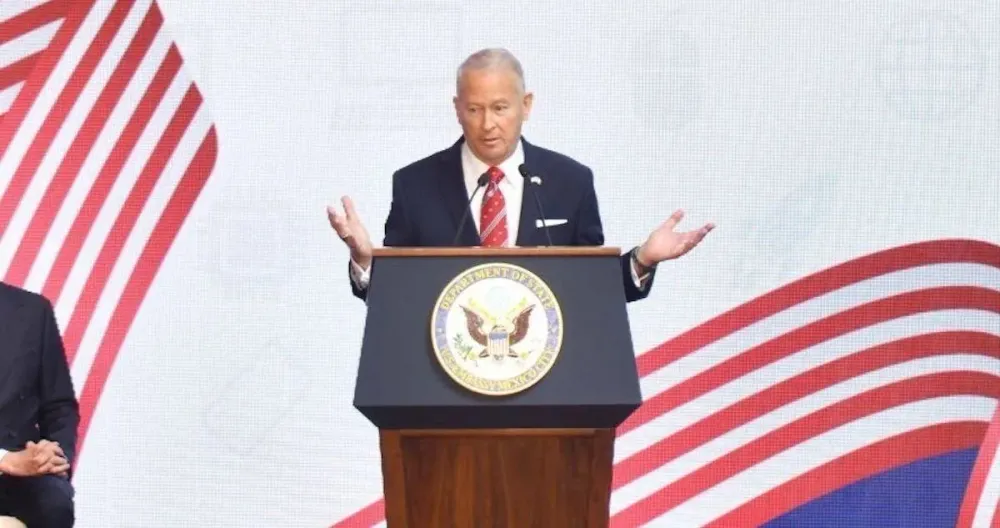
Johnson addressed the Milken Institute Global Investors' Symposium Mexico City on October 28, 2026, at the Four Seasons Hotel Mexico City. Now in its third year in the capital, the event brought together about 500 leaders from finance, business, technology and government under the theme "Capital in a Changing World," according to the institute.
SinEmbargo reported that Johnson described the terrorist designations, which cover the Jalisco New Generation Cartel (CJNG), the Sinaloa Cartel and other groups, as a way to pursue their international networks through legal and financial measures.
"The purpose was to be able to employ other mechanisms, such as financial tools, economic sanctions, measures against support for terrorism to address the network in its entirety, since the cartels do not operate only in Mexico, they are present in Europe, Asia and South America. They even extend into the United States. We wanted to apply legal tools to confront this problem," he said.
The designations followed President Donald Trump's signing of Executive Order 14157 on January 20, 2025. According to the Congressional Research Service, Secretary of State Marco Rubio determined on February 6, 2025, that eight groups qualified as both Foreign Terrorist Organizations and Specially Designated Global Terrorists. Their designations became effective upon publication in the Federal Register on February 20, 2025.
Six of those groups are based in Mexico: the Sinaloa Cartel, CJNG, Cártel del Noreste (formerly Los Zetas), the Gulf Cartel, La Nueva Familia Michoacana and Carteles Unidos. The remaining two are the transnational gangs Mara Salvatrucha (MS-13) and Tren de Aragua.
Partnership and room for negotiation
Johnson offered an upbeat assessment of security cooperation while acknowledging unfinished work. "We are in a better situation than at any other time in my life; however, there is still much room to keep making progress," he said.
He argued that reluctance to recognize the countries' shared interests stood in the way of openly acknowledging a good relationship. "It would be a great help if we simply accepted this partnership and saw everything we can achieve as North America," he said, adding that the region has everything others want.
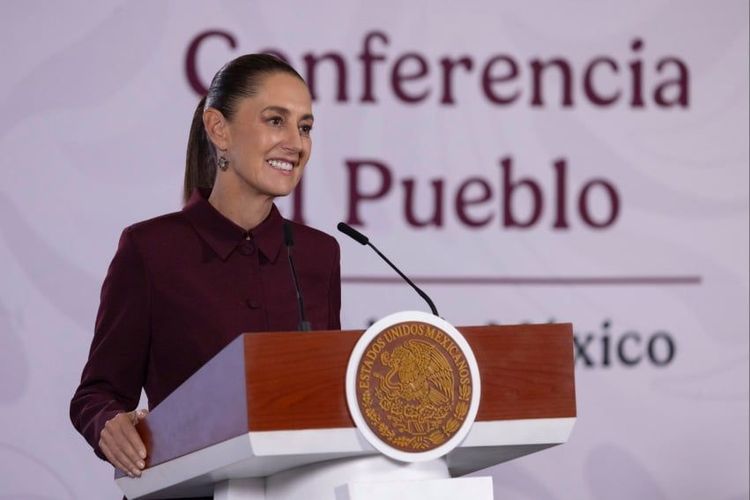
El País reported that Johnson said no topic on the bilateral agenda was off-limits in Mexico. Both governments were willing to find mutually beneficial middle ground, he said, although compromises sometimes required one side to give more than the other. He also recalled that, in their first conversation, President Claudia Sheinbaum had compared the relationship to a marriage that could not end in divorce.
Johnson contrasted that partnership with his view of China's interests. Beijing would be "very happy" if "Mexico fell into chaos, instability or insecurity, especially on the southern border of the United States," he said. According to SinEmbargo, he also accused China of seeking only to extract Mexican resources and exploit the country's proximity to the United States.
Recent disagreements with Sheinbaum
The ambassador's remarks followed public friction with Sheinbaum's government. El País reported that, in recent months, she had asked him to restrict his public comments about Mexico on matters of coordination and cooperation.
In early October 2026, Sheinbaum questioned Johnson's involvement in a groundbreaking ceremony for a police training academy in Querétaro, where Mauricio Kuri of the opposition PAN is governor. She said the event had not received federal authorization; local authorities maintained that they had notified federal officials.
Johnson took up the Mexico ambassadorship after Senate confirmation on April 9, 2025. His Milken Institute profile describes more than four decades of U.S. government service, beginning as an Army officer, followed by work in the intelligence community and, most recently, service as ambassador to El Salvador.
Mexico emphasizes sovereignty in cooperation
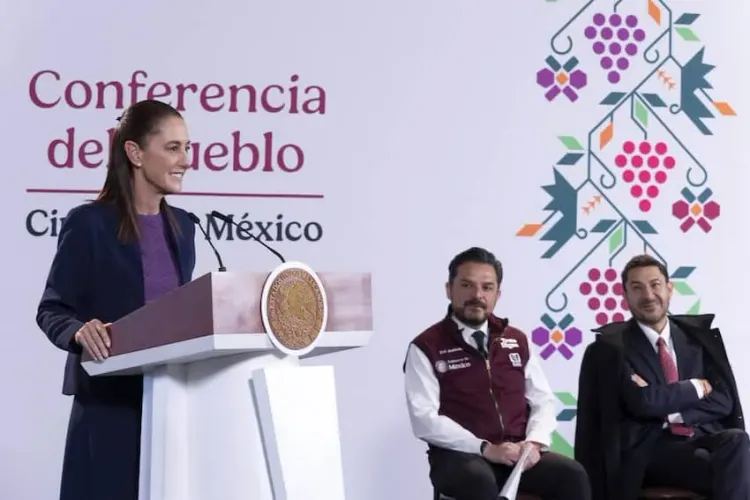
Mexican Foreign Minister Roberto Velasco also addressed the symposium. According to El Universal, in a report carried by Pulsoslp, he described relations with the United States and Canada as a priority pursued through constructive dialogue.
Velasco highlighted progress in security cooperation with Washington, saying it was grounded in respect for sovereignty and territorial integrity, shared responsibility, mutual trust, and cooperation that did not entail subordination. He also presented the Foreign Ministry's Economic Diplomacy Plan, aimed at expanding Mexico's economic presence worldwide.