Ceuta welcomes King and Queen of Spain for historic visit following border crisis
King Felipe VI and Queen Letizia arrived in Ceuta on Tuesday for a historic visit to the Spanish autonomous city, marking the first time a reigning monarch has spent the night there since Alfonso XIII's visits in 1904 and 1927. The visit comes months after a devastating migration crisis that claimed at least 141 lives and exposed deep tensions between Spain and Morocco.
The beaches of Benítez, El Trampolín and El Guano presented an unusually clean and empty appearance on Tuesday morning. The thousands of migrants who had occupied makeshift camps along the coast following the July crisis had been cleared in the days before the royal arrival, relocated to industrial areas in Tarajal or transferred elsewhere through expedited procedures.
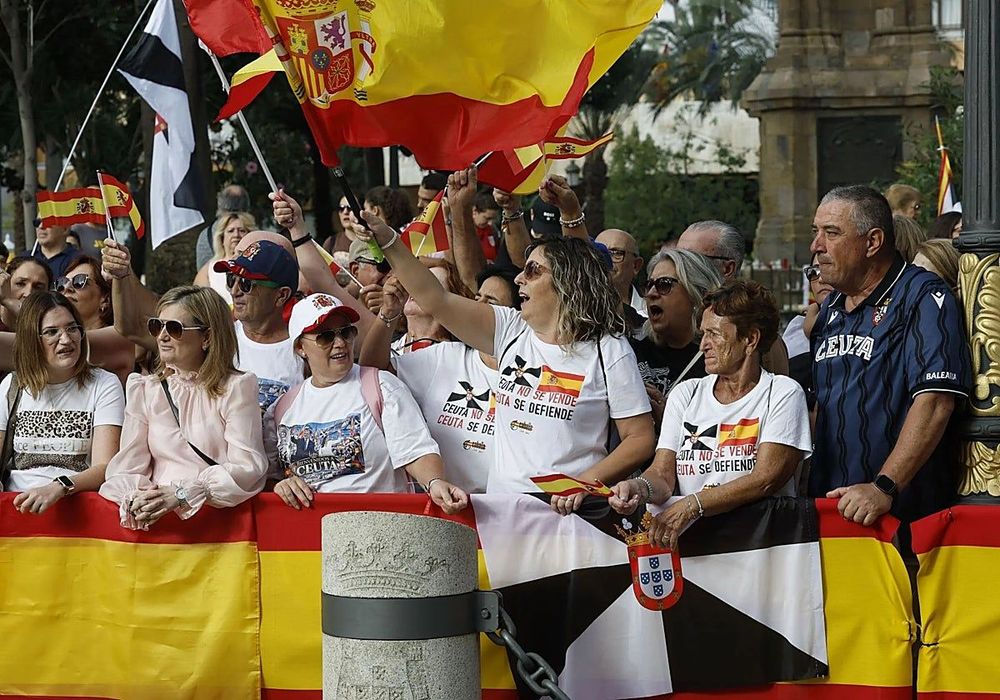
Local residents watched the transformation with mixed feelings. While relieved to see their beaches restored, many expressed irony at the sudden efficiency of authorities who had ignored their complaints for more than two months. A group of local women commented that the operation demonstrated how quickly action could be taken when political will existed. The consensus among Ceuta's population of approximately 85,000 is that the clearance represents a superficial solution, merely pushing migrants from coastal settlements into hills and outlying districts.
A crisis rooted in legal and diplomatic complexity
The July 30 crisis saw an estimated 80,000 people cross from Morocco into Ceuta in a single day, overwhelming the small city that shares an eight-kilometre land border entirely with Morocco. The mass crossing followed a June 29 Supreme Court ruling that migrants intercepted at sea while attempting to reach Ceuta could not be immediately returned under summary procedures, requiring instead the use of ordinary immigration processes.
False claims spread rapidly on social media platforms in Morocco that the Spanish border was effectively open. Human smuggling groups exploited the confusion via Facebook and WhatsApp, facilitating crossings based on misrepresentations of the court ruling. Spain's intelligence agency CNI had warned of plans for mass crossings and informed Moroccan intelligence on July 30, but declassified documents later revealed that Moroccan authorities acted in what Spanish officials described as a negligent and passive manner.
The Spanish government allocated €309 million to address the crisis, expanding temporary accommodation and processing asylum requests. Yet the event exposed broader geopolitical faultlines between the two nations.
Diplomatic sensitivities and territorial disputes
The royal visit unfolds against a backdrop of significant diplomatic complexity. Morocco claims sovereignty over both Ceuta and Melilla, with Justice Minister Abdellatif Ouahbi describing the cities in August as part of Morocco's historical and geographical rights. The last Spanish monarch to visit Ceuta was King Juan Carlos I in November 2007, a trip that sparked a diplomatic crisis and prompted Rabat to recall its ambassador for consultations.
The decision for Felipe VI and Queen Letizia to spend the night in Ceuta represents an unprecedented statement of national reaffirmation. The city, which has been under Spanish sovereignty since 1580 and became an autonomous city in 1995, is part of the European Union and represents one of the bloc's only land borders with Africa. Morocco maintained official silence about the visit, though the underlying tensions remain palpable.
Prime Minister Pedro Sánchez's absence from the delegation highlighted tensions between the government and the royal household in reaching consensus on the timing of a visit that unsettles neighbouring Morocco.
A day of institutional and humanitarian gestures
At midday Tuesday, regional government president Juan Jesús Vivas welcomed the royal couple and presented them with the keys to the city. The agenda balanced institutional ceremonies with acknowledgment of social challenges, beginning with an afternoon visit to Vicente Aleixandre state school to observe first-hand the difficulties and vandalism the educational community has faced since the border incidents.
Later, the king and queen visited the Sidi Embarek Muslim cemetery to preside over an ecumenical service commemorating those who lost their lives at sea during the July crossings. Representatives of the city's four religious denominations participated, shifting the narrative from purely security concerns to embrace the tragic human dimension of the border crisis.
The historic visit will conclude at dusk at the city's Parador, where King Felipe VI will deliver an address focusing on solidarity and unconditional support for a population that endured weeks of exceptional circumstances. The speech is anticipated to reaffirm Spain's commitment to Ceuta while acknowledging the profound challenges the community continues to face.