Mexico launches nationwide consultation on regulating minors' social media and AI use
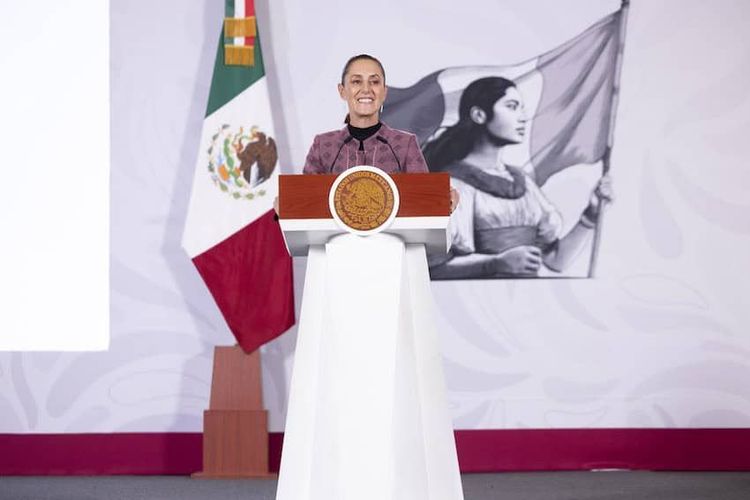
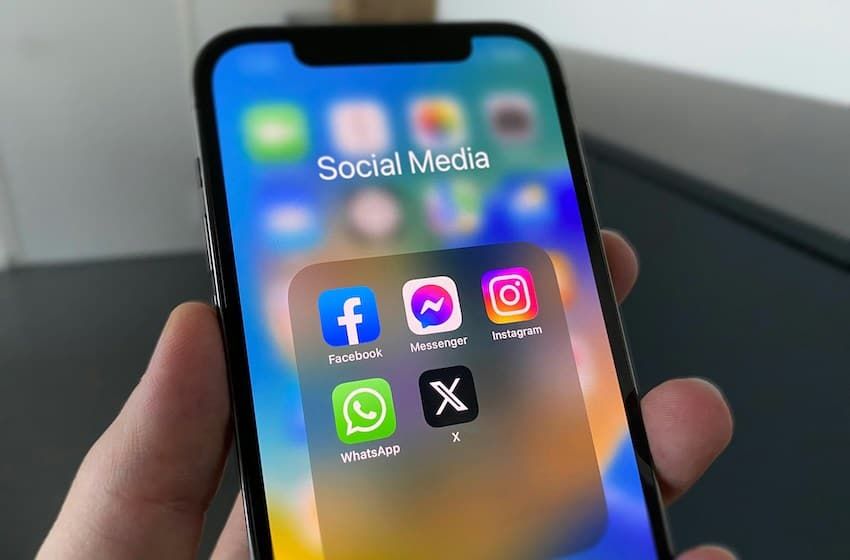
The Mexican government will host three regional forums in August and September to discuss regulations on children's use of social media and artificial intelligence, President Claudia Sheinbaum announced at her Monday press conference.
The forums will take place in Nuevo León on August 19, Chiapas on September 3, and Guerrero on September 17, bringing together experts, parents, teachers, and young people to build consensus on how to protect minors in the digital age.
"We don't want this to be a government idea imposed on society," Sheinbaum said, emphasizing that the aim is to develop a collective approach to regulating minors' use of artificial intelligence and social media platforms including TikTok and Instagram.
Global momentum builds for youth social media restrictions
Mexico's consultation initiative comes amid growing international action on the issue. Australia implemented the world's first nationwide ban on social media for users under 16 in December 2025, covering platforms including Facebook, Instagram, TikTok, Snapchat, X, YouTube, and Reddit. The law, which passed parliament in November 2024, imposes monetary penalties on social media companies that fail to comply.
Just as Mexico announced its forums, France became the first European Union country to ban social media for children under 15. The French parliament approved the legislation on July 21-22, 2026, with restrictions on new accounts beginning September 1, 2026, and applying to existing accounts from January 2027.
Public support for such measures appears strong in countries that have implemented bans. A 2024 Harris Interactive survey showed 73% of the French public supported restrictions for under-15s, while a YouGov survey found 77% of Australians backed their country's under-16 ban.
Mental health concerns drive policy discussions
Education Minister Mario Delgado told reporters that the issue has "changed the way in which we relate to each other, communicate, learn and research," noting that more than 70% of Mexicans over six years old use the internet, with that figure rising above 90% for adolescents. Recent data shows Mexico had approximately 110 million internet users in early 2025, representing an 83.3% penetration rate among the country's population of 132 million.
Delgado pointed to evidence that the "massive proliferation" of smartphones and certain social media dynamics have "aggravated the emotional fragility" of young people, creating "insecurity, anxiety and symptoms of depression."
Scientific research supports these concerns. A 2023 U.S. Surgeon General advisory found that children and adolescents spending more than three hours daily on social media face double the risk of mental health problems including depression and anxiety. Recent surveys indicate teenagers average 3.5 hours per day on these platforms.
Multiple systematic reviews have documented statistically significant relationships between social media use and adolescent mental health issues, including a meta-analysis of 23 studies showing correlation between problematic Facebook use and psychological distress.
Enforcement challenges and existing restrictions
Despite age restrictions already in place on most platforms, enforcement remains weak. In Australia, approximately 80% of children aged 8-12 used at least one social media platform in 2024, rising to 95% for teens aged 13-15, even though most platforms set a minimum age of 13.
Within Mexico, 16 states had already implemented cellphone restrictions in schools before the federal consultation began, with Querétaro becoming the first to enforce such a ban in February 2025. Deputy Education Minister Ricardo Villanueva noted this represents part of a broader global trend: the percentage of countries with policies governing mobile phone use in schools jumped from 24% in 2023 to 57% by 2026, covering 114 education systems worldwide.
Broad consultation process ahead
Villanueva said the Ministry of Public Education initiated research on young people's technology use a year ago at Sheinbaum's direction. The ministry has already held discussions in Mexico City and the country's northwest and central-west regions, with 20,000 participants to date.
"We want everyone to participate, to give us their opinion," Villanueva said, noting that all higher education institutions and research centers have been invited to send experts in economics, law, psychology, and other disciplines.
The ministry is also organizing a "National Week of Traditional Games" in September to promote offline activities among children.
Sheinbaum emphasized that regulation should serve a protective purpose rather than being implemented arbitrarily. "It's not about banning just for the sake of banning," she said. "It's not about what the president thinks and putting it in a law."
The president indicated that upcoming Monday press conferences will present scientific evidence on young people's social media use, with the consultation process potentially leading to a legislative proposal later this year.