An infamous Morelos narco ranch will be converted into a school and health center
A property in central Mexico that once belonged to convicted drug kingpin Edgar Valdez Villarreal — known as "La Barbie" — will be converted into a high school and health complex, Morelos Gov. Margarita González Saravia announced Tuesday.
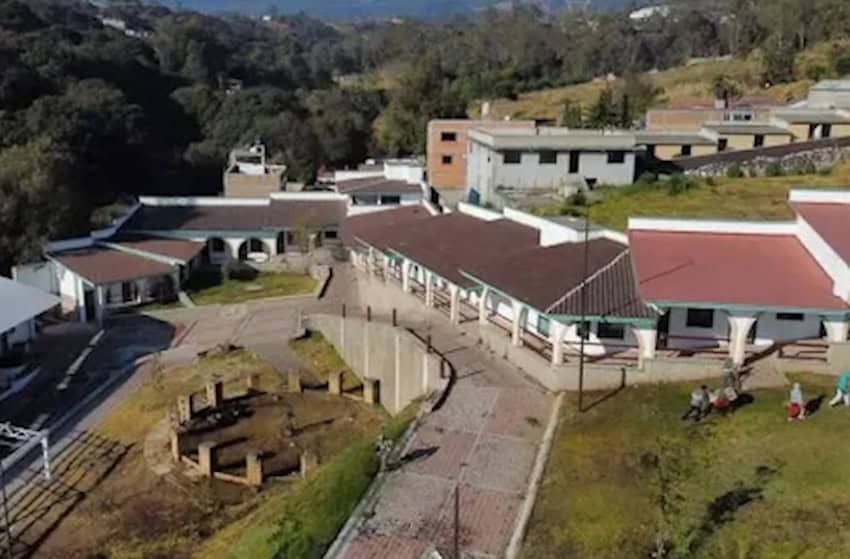
The ranch, called El Paraíso, is located in Atlacholoaya in the municipality of Xochitepec, approximately 35 minutes south of the state capital Cuernavaca. The town has a population of roughly 4,000 residents.
The converted property will house three institutions: a technological agricultural high school known by its Spanish acronym CBTA, a center for traditional medicine, and an office of a state agency that promotes and supports Indigenous and Afro-Mexican communities. The CBTA will address a longstanding demand for secondary education infrastructure in the area, with its curriculum tied to traditional medicine and ancestral knowledge held by Morelos' Indigenous communities.
Morelos has an Indigenous population estimated at 8 percent of the state total, though only 2 percent speak an Indigenous language. Náhuatl is the most prominent Indigenous language in the state, with approximately 19,509 speakers representing more than 60 percent of Indigenous language speakers in Morelos.
Construction and renovation work is expected to begin in the coming weeks.
From drug trafficking empire to public education
Valdez, now 53, was born in Laredo, Texas, in 1973. According to prosecutors, he started dealing drugs while playing as a linebacker for his high school football team. By 2000, he had become a marijuana distributor in Laredo, eventually building cocaine distribution networks that moved massive quantities of narcotics. In Atlanta alone, his organization distributed 1,500 kilograms of cocaine in just six months during 2005.
Nicknamed "La Barbie" for his blond hair and blue eyes, Valdez was a key figure in the Beltrán Leyva organization. The Beltrán Leyva brothers had been senior members of the Sinaloa Cartel, working alongside Joaquín "El Chapo" Guzmán before breaking away around 2003 to form their own organization.
Authorities seized the El Paraíso property after cartel leader Arturo Beltrán Leyva was killed in a December 2009 raid on a Cuernavaca apartment complex. The operation involved approximately 200 Mexican Marines, two Navy helicopters, and two small Army tanks in a 90-minute shootout. Following Beltrán Leyva's death, Cuernavaca became a violent battleground between a faction led by his brother Hector and another led by Valdez.
The ranch was later transferred to Indep, the federal agency created by President Andrés Manuel López Obrador in 2019 to administer and dispose of assets seized by the government, with proceeds supporting social programs.
From lottery prize to state property
The National Lottery offered El Paraíso as one of 22 prizes in a 2021 raffle that also included properties belonging to other drug lords, including a former safe house of Joaquín "El Chapo" Guzmán. More than 773,000 tickets sold nationwide for 250 pesos each, with the money raised intended to support federal social programs.
A woman from Jojutla in southern Morelos won the ranch, which was valued at 61.43 million pesos (US $3.1 million) for the drawing. However, Nereida Morales declined to take possession, citing the property's deterioration and maintenance costs. She later agreed to sell it to the Morelos government for an undisclosed price.
Valdez was arrested in Mexico in 2010 and extradited to the United States in 2015. He pleaded guilty to four drug-trafficking counts and one money-laundering count. In 2018, he was sentenced to 49 years and one month in federal prison and ordered to forfeit $192 million, reflecting the massive financial scale of his trafficking operations.
Court records showed that Valdez had provided information to U.S. authorities while still active as a trafficker, including allegations that officials in former President Felipe Calderón's administration had aided drug cartels. In 2022, the Bureau of Prisons said Valdez was no longer in its custody but declined to disclose his location, prompting speculation about cooperation with authorities. A 2025 Justice Department release continued to list his 49-year sentence.