President Sheinbaum lays cornerstone for integrated healthcare complex
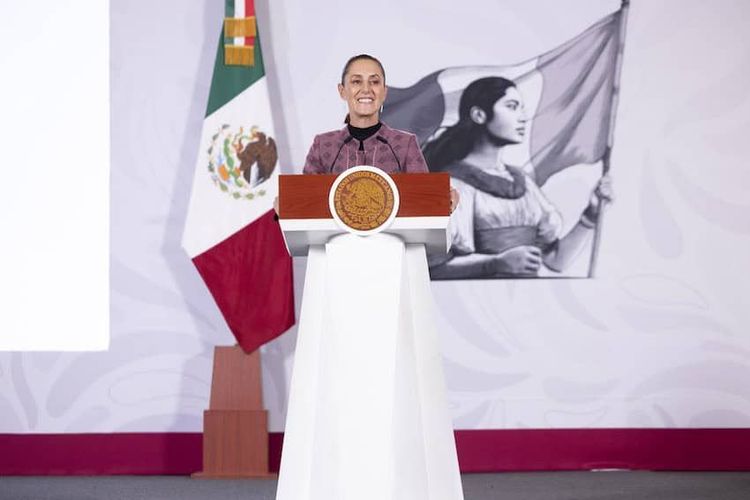
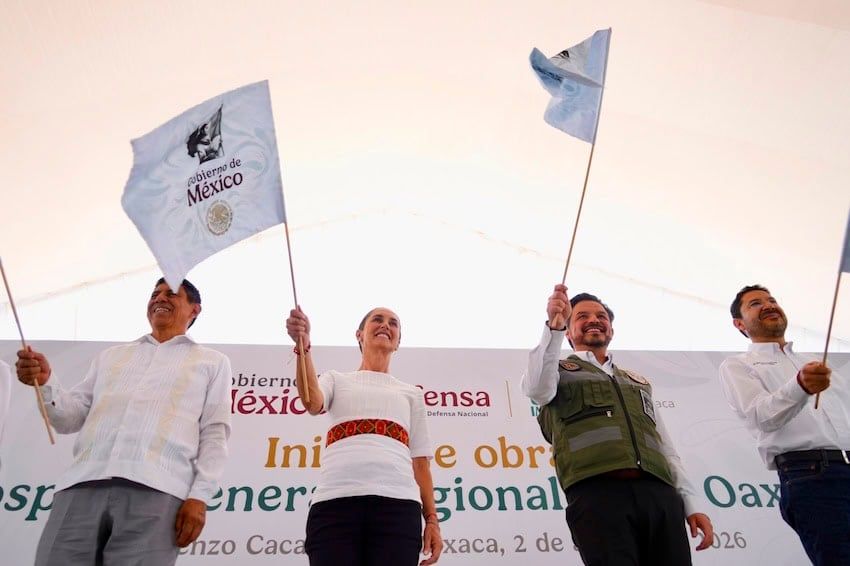
President Claudia Sheinbaum laid the cornerstone Sunday for a new general hospital in San Lorenzo Cacaotepec, Oaxaca, inaugurating a major healthcare complex that her administration views as critical infrastructure for Mexico's emerging Universal Health Service.
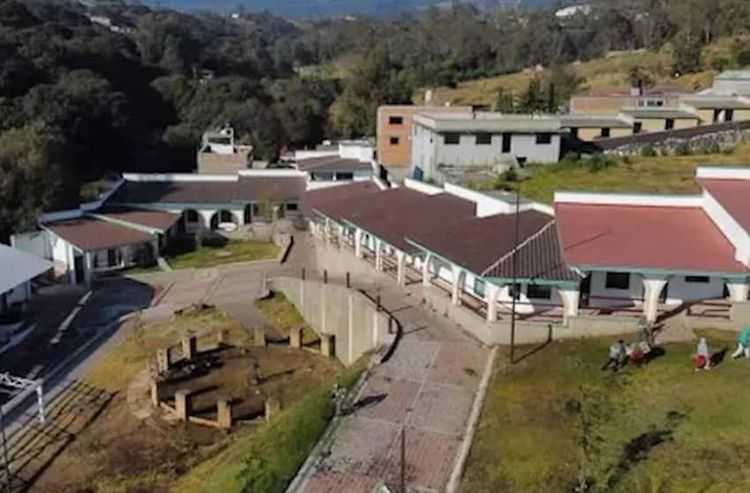
The facility, known as Ñuu Tata in Mixtec or Ciudad de la Salud (Health City), will unite three separate institutions on a single campus 15 kilometers from Oaxaca city: an IMSS general hospital, an ISSSTE hospital already under construction, and a planned IMSS-Bienestar facility. The 10 billion peso investment represents a novel approach to integrating Mexico's historically fragmented healthcare system.
"It will be an example not only for Oaxaca, but for the entire world, because it will have the most modern services available, giving the people of Oaxaca the true right to health," Sheinbaum said at the ceremony.
Integration of Mexico's divided healthcare institutions
The three-hospital complex addresses a longstanding challenge in Mexican healthcare: institutional fragmentation. IMSS serves formal sector workers and their families, ISSSTE covers approximately 13 million government employees and dependents, while IMSS-Bienestar provides free care to those without formal social security coverage. Bringing these institutions together on one campus reflects the government's broader vision of a unified system.
The Universal Health Service, which began enrolling citizens in April following a decree signed by Sheinbaum on April 7, aims to enable cross-institutional care starting January 1, 2027. The initial phase will cover emergency care, high-risk pregnancies, heart attacks, strokes, and breast cancer diagnosis, with services expanding through 2028. Two million senior citizens have already enrolled in the program, according to the president.
IMSS Director General Zoé Robledo said the new hospital will serve almost 1 million beneficiaries with 2,826 staff members. The facility will feature 530 beds—260 for hospitalization and 270 for emergency care—along with 53 consulting rooms and adult, neonatal, and pediatric intensive care units.
Addressing Oaxaca's healthcare deficit
The Health City investment carries particular significance for Oaxaca, one of Mexico's most impoverished states where average daily income falls below half the national average. The state has historically struggled with healthcare access, though recent years have shown improvement. Healthcare access deprivation in Oaxaca dropped from 65.7% in 2022 to 43.9% in 2024, the most significant improvement among Mexican states. However, Oaxaca still records the lowest share of population—75.2%—living within two hours of hospital services.
San Lorenzo Cacaotepec, the municipality hosting the complex, had 18,339 inhabitants in 2020, representing a 33.8% increase from 2010. The rapidly growing suburban area in the Etla District of the Valles Centrales region positions the Health City to serve both urban and rural populations.
The ISSSTE hospital, which began construction in August last year and is now 62% complete, will feature 508 beds, a helipad, 43 consulting rooms, 11 operating rooms, and 36 specialized medical services. ISSSTE Director Martí Batres said the government plans to invest 3.5 billion pesos in that facility alone.
Expanding hospital capacity nationwide
Sheinbaum used the occasion to contrast her administration's healthcare priorities with previous governments, claiming that during the preceding 36-year neoliberal period, only 4,000 hospital beds were added nationwide. She aims to add 9,000 beds during her six-year term.
The commitment addresses a significant infrastructure gap. Mexico maintains approximately 1.0 hospital bed per 1,000 population, well below the world average of 4.44 beds per 1,000. The country's total hospital bed count reached approximately 129,213 beds as of 2021.
The new healthcare model builds on lessons from recent reforms. IMSS-Bienestar replaced the failed INSABI program in 2023, which had proved problematic due to unclear enrollment procedures and lack of identification cards. The current approach emphasizes clear credentialization, with registration taking place at 2,059 Welfare Ministry modules nationwide throughout 2026, targeting 120 million Mexican citizens.
"Our vision is for these three institutions to form part of the Universal Health Service in Mexico," Sheinbaum said, adding that the government plans to provide free medications at all three facilities while investing in primary healthcare expansion countrywide.