The architecture of cultural underfunding
The controversy surrounding the Gelman Collection has sparked calls for expropriation, but as an art historian, I've stayed out of this and similar debates about nationalizing Mexican art because they address symptoms rather than the underlying disease.
The real crisis is this: Mexico has claimed ownership of more cultural heritage than any government could afford to preserve—and then locked out the only funding sources that might help. We hold one of the world's largest bodies of tangible heritage and maintain it on one of the smallest budgets.
This is the result of decades treating art and culture as instruments of national pride rather than as commitments requiring sustained investment in research and preservation.
Mexico's culture sector operates in two spheres. Private entities—Carlos Slim's Museo Soumaya, FEMSA, Jumex—fund major collections, concerts, and productions. Meanwhile, everything public flows through the Secretaría de Cultura, which coordinates every museum, research center, performing company and educational institution beneath it.
For 2026, the Secretaría received 15,082 million pesos total. Of this, the Instituto Nacional de Antropología e Historia (INAH), responsible for safeguarding nearly four millennia of heritage across Mexican territory, received 5,551 million pesos. The Instituto Nacional de Bellas Artes y Literatura (INBAL), which handles 20th-century heritage while also operating 29 schools, the national conservatory, ballet companies and orchestras, received 4,928 million pesos.
More than a dozen additional agencies divide what remains. The total culture budget represents just 0.15% of federal spending—far below the 1% recommended by the Carta Cultural Iberoamericana.
Mexico is also confronting a record budget deficit of 5.70% of GDP in 2024, the highest since recordkeeping began in 1990, with projections of 4.1% in 2026, intensifying fiscal pressure on all spending including culture.
What the money actually buys
INBAL's largest program consumes roughly 2.7 million pesos—57% of the institute's budget—with over 95% allocated to salaries. INAH's heritage protection program received 3.4 million pesos, approximately 77% of which covers staff compensation. What remains must cover everything else, including the electricity for climate control systems.
The budget doesn't even purchase a complete inventory of what we own. Of 53,009 registered archaeological zones, INAH estimates the actual number of sites containing remains at around 200,000—meaning roughly 75% of archaeological heritage remains undocumented. Last October, the Auditoría Superior de la Federación found deficiencies in inventory and cataloging in more than 90% of reviewed cultural assets.
We are failing not only to conserve our heritage but to reliably know what we possess.
The Gelman case in context
The Gelman Collection, assembled by Jacques and Natasha Gelman, was managed by executor Robert Littman following Natasha's death in 1998. In 2023, Littman sold the collection to the Zambrano family, owners of cement multinational Cemex, who then used it as collateral for a $150 million loan from Banco Santander.
The collection contains 10 Frida Kahlo paintings—significant because Mexico owns only seven Kahlo works nationally. It has been locked away from public view since 1998, with its first exhibition in 20 years occurring in June 2026 at the Museo de Arte Moderno in Mexico City.
On January 7, 2026, INBAL, Banco Santander, and the Santander Foundation signed a five-year Collaboration Agreement allowing 40 artworks from the collection—30 of which are designated National Artistic Monuments—to be transferred to exhibition spaces operated by the Santander Foundation through September 30, 2030. This agreement triggered calls for government intervention.
Colleagues have proposed that Congress approve expropriation under Article 27, requiring the state to pay the collection holder its $350 million value. That figure represents roughly 43% of Mexico's entire annual culture budget and exceeds INBAL's total allocation for the year. Add recurring annual insurance costs. Add the $150 million Santander loan, for which the collection serves as collateral and which the bank holds first claim to if unpaid.
Legal complexities and limitations
The assumption that no court would overturn a claim involving Frida Kahlo faces a significant challenge. In July 2026, the Supreme Court agreed to review whether the 1984 presidential decree protecting her work is constitutional, after INBAL denied Banco Ve por Más permission to permanently export "Autorretrato con medallón."
Article 16 of the 1972 Federal Law on Archaeological, Artistic and Historic Monuments and Zones permits export of privately owned artistic monuments with authorization. The absolute export ban exists not in the law but in executive decrees.
Presidential decrees have declared the entire artistic output of 10 Mexican artists as National Artistic Monuments: José María Velasco (1943), José Clemente Orozco and Diego Rivera (1959), Dr. Atl (1964), David Alfaro Siqueiros (1980), Frida Kahlo (1984), Saturnino Herrán (1988), Remedios Varo (2001), and María Izquierdo (2002). Article 33 claims Mexican artists' work wherever created, though it grants no extraterritorial jurisdiction over works held entirely abroad under foreign law.
In practice, this delivers almost nothing. Madonna owns at least two Kahlos, including "My Birth." When the Detroit Institute of Arts spent over a year trying to borrow it for a major Rivera and Kahlo exhibition, she declined, and that ended the matter. A work designated national heritage hangs in a private foreign residence, and the country it supposedly belongs to has no standing to see it, inspect it, or inquire about its condition.
The real solution: Legislative reform, not expropriation
In 2023, Mexico's cultural sector generated 2.8% of national GDP and employed 1.4 million people. We are not subsidizing a luxury; we are underfunding an industry.
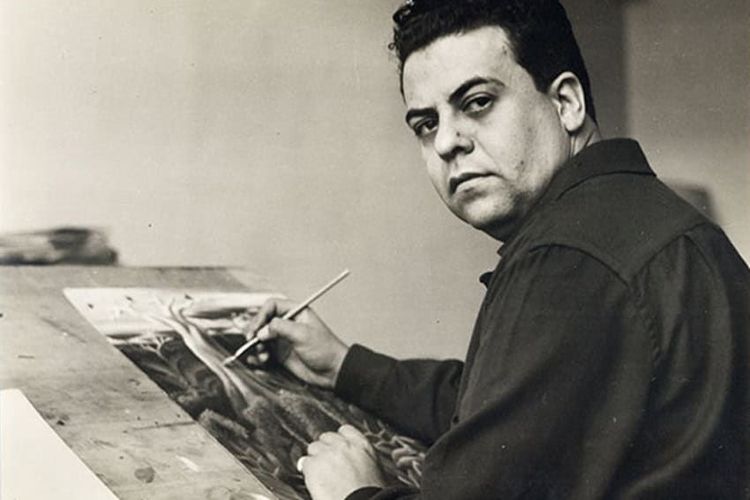
The solution isn't asking the president to expropriate individual collections. It's finishing what David Alfaro Siqueiros started in 1957 when he proposed paying taxes with artwork—an idea formalized as pago en especie by presidential decree in March 1975. That program has accumulated approximately 13,202 works from about 1,462 artists as of 2024. We have built nothing comparable since.
Four legislative reforms would complete that vision:
- Extend pago en especie beyond the artist's studio. Allow heirs and collectors to settle inheritance and capital gains obligations with declared works, independently appraised and transferred to public collections.
- Make donations genuinely tax-deductible. Current donations are capped at a small percentage of previous year's income within an overall ceiling. Lift that ceiling for works given to public institutions.
- Create a dedicated conservation fund. Seed it with fees the state already charges for export permits and international loans. Match it with corporate contributions. A company can sponsor a stadium; it should be able to sponsor a Rivera restoration and be named for it.
- Transform the declaratoria from burden to partnership. Offer owners technical assistance, shared restoration costs, and clear export rules in exchange for enforceable commitments to exhibit works domestically.
The collectors are already here—the Soumaya, FEMSA, Jumex, and those we never see. What we have never built is a legal framework allowing any of them to help preserve the rest of our heritage.
We should legislate again—not for a single collection, but to protect our patrimonio from looting, black markets, neglect, decay, and from our failure to train the next generation of researchers, historians and restorers.
Let what makes us proud be the sharing of these works and their histories—not merely that they sit on Mexican soil, quietly deteriorating in warehouses.