From the archive: The joys of furniture shopping at La Lagunilla market in Mexico City
For generations of Mexico City residents, Sunday mornings have meant one thing: navigating the sprawling antiques market of La Lagunilla, where the promise of discovering a genuine Rafael Coronel piece — or at least a convincing replica — draws crowds into the heart of the city's Historic Center.
Andrea Fischer's childhood memories of the area span from early visits to the nearby Mercado de Sonora at age seven to learning to ride a bicycle along Avenida Paseo de la Reforma. When her mother began teaching at Universidad del Claustro de Sor Juana during Fischer's middle school years, Sunday excursions to La Lagunilla became a family ritual, despite her father's initial reluctance.
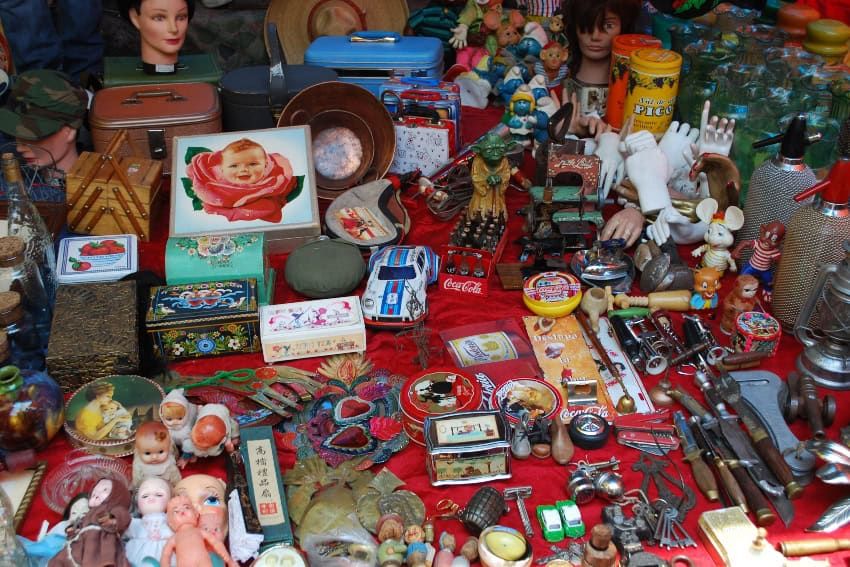
The market's appeal proves nearly irresistible. Visitors discover everything from first-edition books and lithographs to Van Beuren desks and mid-century bedroom sets scattered across the streets. Space Age dining furniture that Fischer's grandmother might have seen in department store catalogs during the style's heyday now sits alongside 1960s Fender bass guitars and vintage jukeboxes.
A marketplace built on water
The name La Lagunilla — "little lake" in Spanish — references the area's aquatic past. Present-day Mexico City rose from a system of five interconnected lakes: Texcoco, Chalco, Xochimilco, Xaltocan and Zumpango. According to the UNAM Institute of Historical Research, these bodies of water maintained "fluctuating and unstable" boundaries, forming distinct basins rather than a single continuous lake.
This lakebed foundation explains why the city remains vulnerable to flooding during rainy seasons. The problem stems from concrete-covered streets that prevent rainwater from seeping into the ground and recharging the underground aquifer. Instead, runoff flows directly into drainage systems, creating flooding while simultaneously failing to replenish water supplies. The draining of these lakes began in the early 17th century through channels and a tunnel to the Pánuco River, a process that accelerated dramatically in the 20th century. The geological consequences have been severe: Mexico City has sunk approximately nine meters since the beginning of the 20th century due to groundwater extraction, continuing to descend at roughly 20 inches annually.
Archaeological evidence places La Lagunilla's origins in the 16th century, when the area served as a residential and working-class neighborhood. The location proved strategic — it received and unloaded canoes arriving at the massive Tlatelolco market just to the west. That ancient marketplace, founded in 1337 by a dissident faction of Mexica people who broke away from Tenochtitlan, ranked among Mesoamerica's largest commercial centers. Scholars estimate it accommodated between 20,000 and 60,000 people daily, with Spanish conquistador Hernán Cortés reporting 60,000 vendors alone on main market days.
When Tlatelolco's marketplace eventually dissolved, merchants migrated to La Lagunilla, maintaining the area's commercial character. Remarkably, the neighborhood continued receiving merchant canoes and trajineras until the early 20th century. The permanent market structures visitors see today were built in 1913, with three buildings originally dedicated to food, clothing and fabrics, and furniture and antiques respectively. By the 1950s, the last remnants of the ancient lake system had been artificially drained, and established merchant families settled permanently in the neighborhood.
What defines the Sunday market
La Lagunilla lacks official boundaries or defined square footage. The market bleeds into and merges with the adjacent Tepito neighborhood, creating areas where the two districts become indistinguishable. However, locals generally consider the market bordered by Avenida Paseo de la Reforma, República del Perú and Tenochtitlán streets in Colonia Centro. Cyclists can reach the area in 30 to 40 minutes via the Reforma route, finding the market's heart one block east of the José de San Martín monument.
According to La Jornada, over 5,000 stands operate within La Lagunilla, providing livelihoods for approximately 17,000 people. On typical weekends, the market receives 100,000 visitors from Mexico City and beyond. The inventory appears limitless: alleged Leonora Carrington-signed lithographs, LP records, complete living room sets, and Baroque cherubs all compete for attention. Fischer recalls discovering Space Age dining furniture her grandmother would have recognized from its fashionable heyday.
This abundance makes La Lagunilla a practical destination for budget-conscious residents furnishing new apartments. Entire living room sets and purportedly authentic Diego Rivera paintings can sell for 12,000 pesos on average, though buyers must develop their own expertise in distinguishing genuine antiques from convincing reproductions.
Navigating safety concerns
The area surrounding La Lagunilla, particularly Tepito, carries a reputation that demands attention. Known as a barrio bravo — a term translating to "fierce neighborhood" — Tepito has earned its designation through a long history of defiance against external authority rather than simple criminality. In pre-Hispanic times, Aztec authorities forbade Tepito residents from trading in the nearby Tlatelolco market, establishing the area as a secondary marketplace for those excluded from formal commerce. This tradition of resistance and independence continues to define the neighborhood's character.
Local merchants generally protect their customers, especially on Sundays when substantial sales of furniture sets or artwork become possible. However, visitors should exercise caution. Arriving before noon helps avoid crowds, while departing before dusk remains advisable. Simple clothing — sweatpants and basic shirts rather than expensive items — proves wisest, along with leaving jewelry at home and avoiding conspicuous display of the latest smartphone models.
The warnings don't suggest the market should be avoided entirely. Rather, conscious and responsible visiting means staying within the established market area rather than venturing deep into surrounding neighborhoods. This approach allows visitors to focus on the main attraction: hunting for treasures among the vintage cameras, antique furniture, and countless other items that make La Lagunilla a Mexico City institution.
For residents and adventurous visitors alike, the Sunday ritual of browsing La Lagunilla's crowded streets represents more than simple shopping. It connects modern Mexico City to centuries of commercial tradition stretching back through colonial merchant families to the great pre-Hispanic marketplaces built on water — a living reminder that even as the ancient lakes disappear beneath concrete and development, the spirit of commerce they once sustained continues to thrive.