
Miguel Covarrubias: The Mexican artist who defined the visual language of the Jazz Age
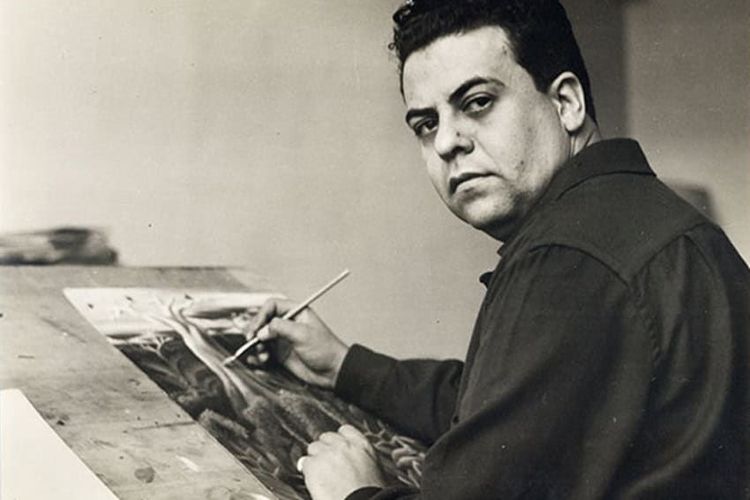
Miguel Covarrubias arrived in New York City in 1923 as a teenager and within months became one of the most sought-after illustrators in America. His caricatures of Jazz Age celebrities graced the pages of Vanity Fair and The New Yorker, capturing the essence of an era through a distinctive style that would help define the visual aesthetic of the 1920s and 1930s.
Born on November 22, 1904, in Mexico City, Covarrubias brought a fresh artistic vision to American popular culture. His work featured simplified forms, bold colors, and exaggerated features that influenced commercial art across the United States. The young artist created iconic portraits of cultural luminaries including Josephine Baker, George Gershwin, and Eugene O'Neill, chronicling the vibrant world of the Harlem Renaissance and Broadway.
His artistic range extended beyond magazine illustration. Covarrubias designed the dust jacket for W.E.B. Du Bois's novel "Dark Princess" in 1928 and created stage designs for the landmark 1935 Broadway production of "Porgy and Bess." These collaborations demonstrated his ability to contribute to major American cultural productions during a transformative period in the nation's artistic history.
Return to Mexico and institutional legacy
After establishing himself in New York, Covarrubias returned to Mexico where his impact would prove equally transformative. In 1940, he was appointed head of the Dance Department at the School of Fine Arts in Mexico City, beginning a new chapter focused on Mexican cultural education and preservation.
His institutional contributions extended to co-founding and directing the National School of Anthropology and History Museum. Covarrubias curated major exhibitions of Mexican art, including Mexico's pavilion at the 1939 Golden Gate International Exposition, introducing international audiences to Mexican cultural heritage.
Anthropologist and scholar
Covarrubias evolved from commercial illustrator into a serious anthropologist-artist, authoring and illustrating ethnographic works that combined artistic skill with scholarly research. His books "Island of Bali" (1937) and "Mexico South: The Isthmus of Tehuantepec" (1946) reflected years of fieldwork conducted alongside his wife, American dancer Rosa Rolando, whom he married in 1930.
Perhaps his most enduring scholarly contribution came through his detailed maps and illustrations for archaeological and anthropological publications. His maps of pre-Columbian Mexican cultures became standard references in Mexican anthropology textbooks, shaping how generations of Mexicans understood their own heritage.
Covarrubias died on February 4, 1957, at age 52, leaving behind a remarkable dual legacy. In the United States, he helped create the visual vocabulary of the Jazz Age. In Mexico, he built institutions and produced scholarship that fundamentally changed how Mexican culture was studied, preserved, and presented to the world. His career demonstrated that popular art and serious scholarship need not be separate pursuits, and that an artist could illuminate both the present and the past with equal brilliance.