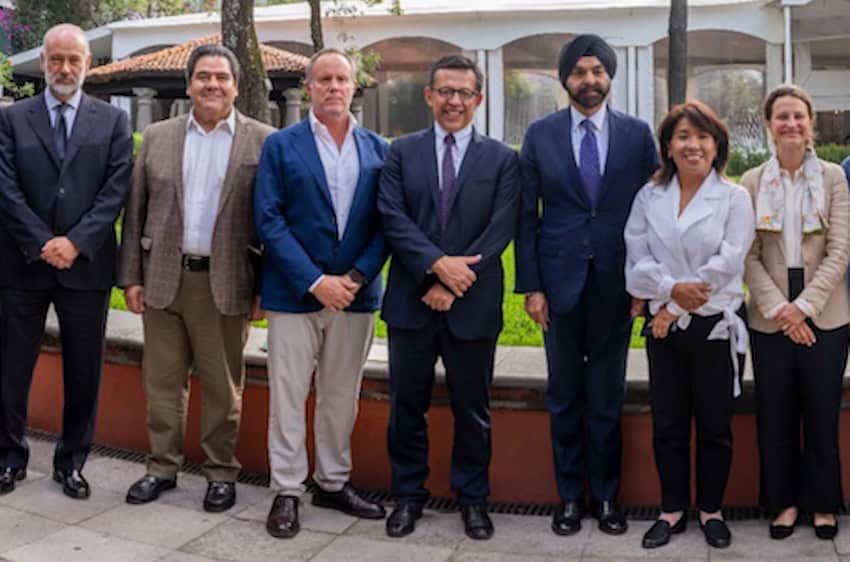
World Bank President Ajay Banga visits Mexico to advance economic partnership
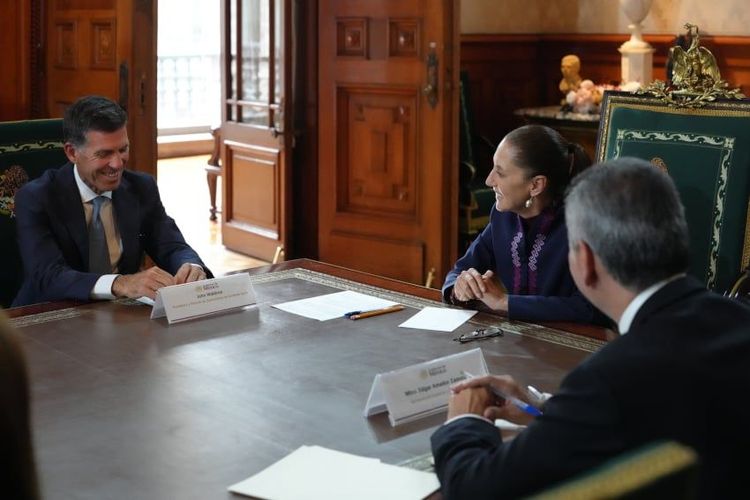
World Bank Group President Ajay Banga arrived in Mexico this week for the institution's first official visit in over five years, meeting with senior government officials and private-sector leaders to advance a new Country Partnership Framework (CPF) for 2026-2030.
The 14th president of the World Bank, who began his five-year term in June 2023 as the first Indian-American to lead the institution, is working to align the framework with President Claudia Sheinbaum's Plan México economic development strategy. Unveiled in January 2025, Plan México outlines 13 goals backed by $277 billion in national and foreign investments, aiming to position Mexico among the world's top 10 economies by 2030.
Banga emphasized that the new framework will concentrate resources more strategically than its predecessor. The World Bank's previous CPF, discussed by the Board of Executive Directors on February 27, 2020, outlined seven objectives aligned with the prior government's National Development Plan.
We are trying to narrow these priorities to put more resources to work on fewer things and make a difference at scale over the next five years.
Focus on SMEs and agriculture
Current discussions in Mexico City are focusing on sectors with high potential to boost growth and employment, particularly agriculture and manufacturing, with special emphasis on small and medium-sized enterprises. SMEs represent approximately 99.8% of all Mexican enterprises and generate around 72% of formal employment and 52% of the country's GDP.
SMEs are the lifeline for job creation.
Banga stressed, drawing on experience from his previous role as President and CEO of Mastercard, where he led nearly 24,000 employees for over a decade and made financial inclusion a core strategic priority.
The World Bank is discussing strengthening its partnership with Mexico's agricultural sector through AgriConnect, a global initiative launched in October 2025. The program aims to transform farming for 300 million smallholder farmers worldwide by 2030, with the World Bank committing to double agribusiness investment to $9 billion annually.
Through AgriConnect, the World Bank aims to provide smallholder farmers with better inputs and connect them with regional and international export markets to add value to their agricultural activities.
Private capital mobilization
Plan México includes ambitious targets: maintaining investment levels above 25% of GDP by 2026 and increasing to 28% by 2030, creating 1.5 million additional jobs in specialized manufacturing, and reducing dependency on over $210 billion in annual imports from Asia.
Banga emphasized the need to mobilize private-sector investment to support these growth objectives.
We need to mobilize private capital. The World Bank as a whole closed the last fiscal year having mobilized $122 million of private capital to emerging markets.
In Mexico, the World Bank aims to direct private investment toward sectors such as energy, health, and pharmaceuticals. This approach reflects the broader institutional vision Banga has championed since taking office in June 2023: to create a world free of poverty on a livable planet, integrating climate considerations into the institution's development mandate.
The CPF 2026-2030 will focus on strengthening competitiveness, developing human capital, expanding productive investment, consolidating domestic industries and strengthening value chains as Mexico pursues its ambitious economic transformation goals.