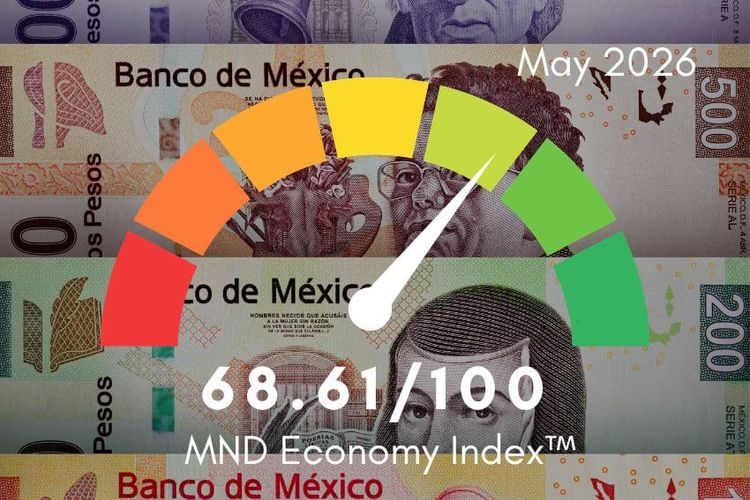

Mexico loses nearly 300,000 jobs in first half of 2026 despite World Cup boost expectations
Mexico's labor market suffered significant losses during the first half of 2026, with nearly 300,000 workers exiting the workforce as both formal and informal employment contracted, according to data from the National Survey of Occupation and Employment (ENOE) conducted by the national statistics agency INEGI.
The survey, which samples approximately 120,000 housing units representing about 0.5% of total dwellings across Mexico, documented a loss of 319,633 jobs in June alone. This brought the total employment deficit for the January-June period to 293,227 positions — a troubling figure for an economy that economists say needs to create 1.2 million jobs annually just to keep pace with labor force growth.
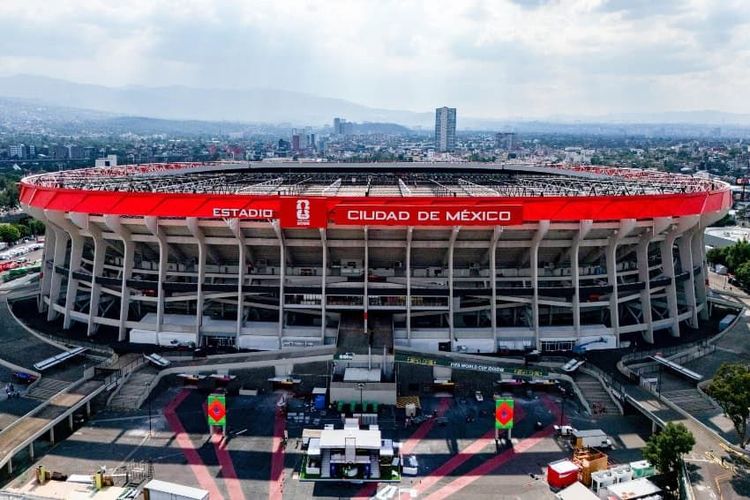
June's employment decline was the second-worst monthly performance of the year, surpassed only by January's loss of 705,427 jobs. The results proved particularly disappointing given that Mexico was co-hosting the FIFA World Cup alongside Canada and the United States during the month — the first time three nations had jointly hosted the tournament. Mexico's three host cities were Mexico City, Guadalajara and Monterrey.
The financial group Banco Base noted in its analysis that employment figures showed the labor market remained weak despite the World Cup. The event's effect was marginal and likely concentrated only in the host cities, the group stated, adding that the tournament failed to boost job creation even temporarily.
Unemployment rises as workers leave labor force
Mexico's unemployment rate climbed to 2.9% in June, marking its highest level since September 2025. The previous month had already registered an 8-month high of 2.8%, with the number of unemployed individuals increasing by 200,000 to 1.7 million while employed persons declined by the same amount to 60.4 million.
The economically inactive population — those neither working nor seeking employment — increased by 285,856 people in June compared to May. Banco Base interpreted this rise as an indicator that some who stopped working also stopped looking for employment, suggesting that the unemployment rate alone does not reflect the magnitude of the deterioration in the labor market.
The official employment rate for the population aged 15 and over registered at 58.8% according to seasonally adjusted figures, down from the 59.1% average recorded in early 2026 when the economically active population stood at approximately 62.1 million people. This represents monthly and annual declines of 0.2% and 1.0% respectively.
Informal sector shows vulnerability
The employment contraction affected both formal and informal workers, though the decline was more pronounced in the informal sector. Mexico's informal employment accounts for approximately 55% of the employed population and contributes roughly 24.4% to the country's GDP, making it a substantial component of the national economy.
Beyond job quantity, employment quality also deteriorated. In the first quarter of 2026, Mexico's rate of critical employment conditions — which measures workers in precarious labor situations with involuntary reduced hours, income below minimum thresholds or excessive hours with low pay — rose from 37.6% in the first quarter of 2025 to 38.8% in the same period of 2026.
Persistent gender gap poses structural challenge
The economic think tank México ¿cómo vamos? identified a significant structural challenge in the labor market: persistently low female participation. In June 2026, the labor force participation gap between men and women stood at approximately 28.3%.
This gender disparity has remained stubbornly high. Women's labor force participation rate stood at 45.7% compared to 75% for men — a gap of approximately 29 percentage points. This represents one of the lowest female participation rates in Latin America, where the regional average is 53.3%.
The Milken Institute has estimated that if women in Mexico participated in the labor force at the same rate as men, the country's annual economic activity could increase by $390.5 billion, representing a 25% boost to the economy.