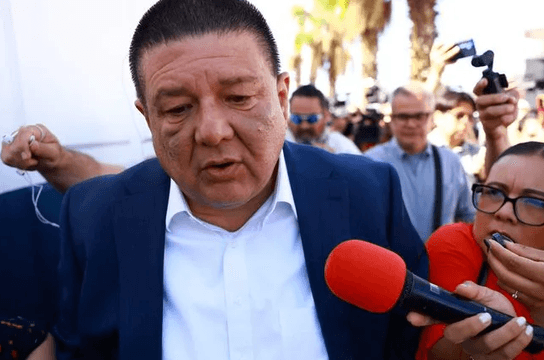
International News: Former Mexican Attorney General arrested on treason suspicion over U.S. agents' role in drug raid
Mexican authorities have arrested former Chihuahua Attorney General César Jáuregui on treason charges, alleging he permitted unauthorized participation by CIA officers in a major drug raid that resulted in four deaths and has since escalated into a national political crisis.
Attorney General Ernestina Godoy announced the arrest on Saturday following a months-long investigation into the April operation in Chihuahua, a strategic border state where major criminal organizations including the Sinaloa Cartel and La Línea control drug trafficking routes into the United States.
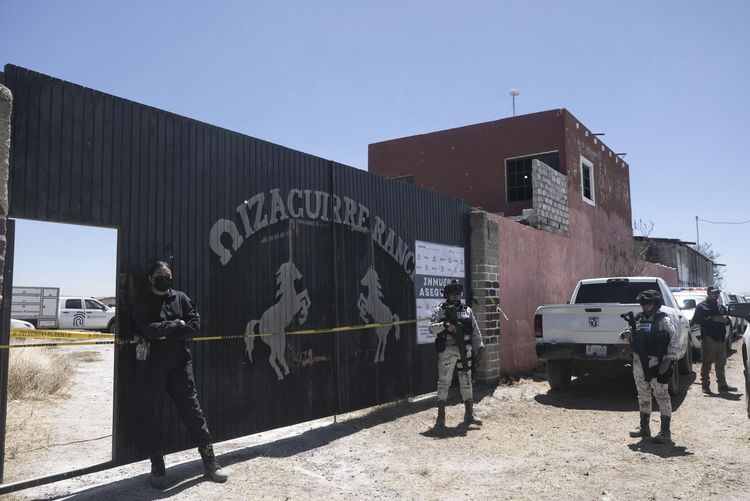
Prosecutors allege that Jáuregui authorized CIA personnel to take part in a raid on one of the largest drug manufacturing facilities in Mexican history, located in the El Pinal area of Chihuahua's Morelos municipality. The operation targeted a laboratory allegedly operated by the Sinaloa Cartel, which maintains significant operations in Chihuahua as part of the country's drug-producing Golden Triangle region.
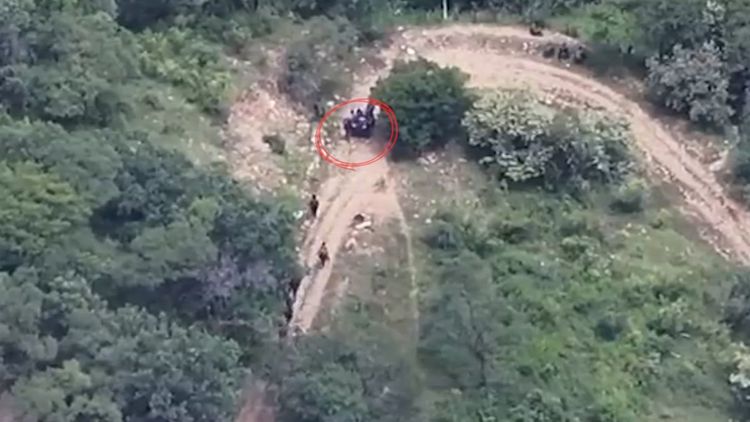
The raid came to public attention after a fatal car accident on April 19, 2026, when two CIA officers and two Chihuahua security officials died as their convoy returned from examining the seized facility. The Mexican government subsequently confirmed that the two U.S. agents had entered the country without proper authorization—one as a visitor and the other on a diplomatic passport.
Constitutional violations alleged
The charges against Jáuregui center on alleged violations of Mexico's Constitution and National Security Law, which prohibit states from assuming powers reserved to the federal government or transferring governmental authority to foreign entities. Prosecutors contend that allowing CIA officers to participate in operations reserved exclusively for Mexican national security forces constituted such a violation.
Treason charges in Mexico carry sentences of up to 40 years in prison and represent an exceptionally rare prosecution. Legal experts note there is no public record of anyone being sentenced or charged with this crime in at least 50 years, underscoring the unprecedented nature of the case.
Political dimensions emerge
The case has acquired significant political overtones in Mexico's federal system. Chihuahua is governed by the opposition National Action Party, and ruling party Morena senators have also accused Governor Maru Campos of treason in connection with the same incident, alleging she approved the CIA participation.
The controversy unfolds against the backdrop of President Claudia Sheinbaum's evolving security policy, which has sought to balance bilateral cooperation with strict sovereignty limits. Her administration, led by Security Minister Omar García Harfuch, has adopted a more aggressive approach than her predecessor, focusing on intelligence gathering, police investigations, and coordinated federal-state interventions.
Cooperation within limits
Despite the treason charges, the Sheinbaum government has maintained extensive security cooperation with the United States. The administration has deployed 10,000 Mexican National Guard troops to the country's borders, transferred 55 high-level drug traffickers into U.S. custody, and permitted expanded U.S. surveillance flights over Mexican territory.
President Sheinbaum has consistently emphasized that while Mexico welcomes intelligence sharing and bilateral cooperation against organized crime, it does not permit U.S. agents or military forces to conduct operations directly on Mexican soil. In 2024, she proposed constitutional reforms that would impose severe punishments on foreign agents operating in Mexico without authorization, including preventive detention and harsh penalties upon conviction.
The timing of the raid coincides with broader U.S. institutional efforts against Mexican cartels. In January 2026, the United States established the Joint Interagency Task Force-Counter Cartel, headquartered at Fort Bliss, Texas, to coordinate anti-cartel operations across the Department of Defense, Department of Homeland Security, Department of Justice, and the Intelligence Community.
The United States confirmed in April that two embassy employees died in Mexico but did not identify their agencies. Sources familiar with the matter indicated the individuals were CIA officers involved in counter-narcotics efforts.
The investigation and prosecution reflect the Mexican government's determination to enforce constitutional limits on foreign security operations, even as both nations seek to combat powerful transnational criminal organizations that operate across their shared border.