US, Mexico carry out 'High Eagle' operation to ground cartel drones along border
Mexico and the United States are currently conducting a coordinated anti-drone operation along the border between Baja California and California, according to the Mexican Ministry of National Defense. The operation aims to detect and disable commercial drones used by criminal organizations to monitor law enforcement activities during smuggling operations.
The binational effort, dubbed "Águila Alta" (High Eagle), runs from Aug. 31 through Sept. 21 in the border region between Tijuana and San Diego. The operation is being carried out within the framework of the Mexico-United States Bilateral Implementation Group, a security cooperation mechanism established on June 12, 2026, to address fentanyl trafficking, illegal firearms, organized crime, and drone-enabled smuggling.
The Ministry of National Defense stated that the operation involves concurrent reconnaissance missions, with armed forces and law enforcement agencies from both countries conducting simultaneous patrols along the border, each operating within their respective territories. Defense Minister General Ricardo Trevilla Trejo, who assumed his position on October 1, 2024, after nearly five decades of service in the Mexican Army, is overseeing Mexico's participation in the mission.
Scale of the drone threat
The operation responds to a significant cross-border security challenge. According to U.S. Northern Command, approximately 1,000 cartel-linked drone incursions occur at the southern border each month, with an average of 328 Mexican drones coming within 500 meters of the U.S. border daily. These unmanned aircraft systems are primarily used by transnational criminal organizations to conduct surveillance of law enforcement personnel and identify unguarded routes for smuggling operations.
The threat extends beyond surveillance. Research by the National Counterterrorism Innovation, Technology, and Education Center documented 221 weaponized cartel drone incidents in Mexico between 2021 and 2025, with 27 attacks resulting in 77 fatalities. The Cártel Jalisco Nueva Generación has emerged as the most prolific user of drone technology, responsible for approximately 19% of attributed attacks during that period and operating a dedicated "Drone Operators" unit.
Tijuana, where the current operation is focused, records more than 2,000 homicides annually as rival cartels compete for control of drug trafficking routes into the United States, making it one of the world's most violent border cities.
Two-stage operation
The High Eagle operation consists of two distinct phases. The first stage, completed between Aug. 31 and Sept. 2, involved a coordination exercise addressing drone-related challenges, culminating in simultaneous ground reconnaissance missions in Tijuana and San Diego.
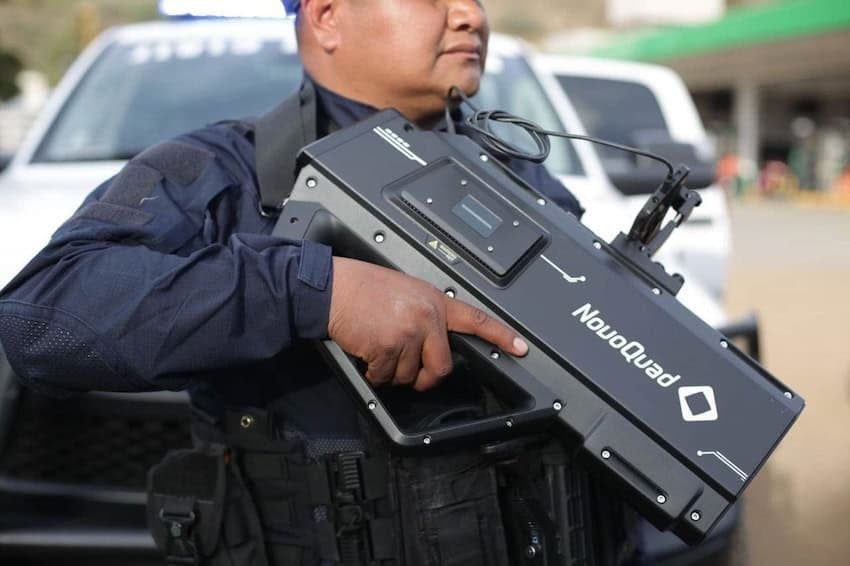
The second stage, which began on Sept. 7 and continues through Sept. 21, involves the deployment of forces in the border region supported by fixed and mobile anti-drone equipment. The Ministry of National Defense emphasized that security cooperation is conducted with full respect for national sovereignty and governed by principles of reciprocity, shared responsibility, mutual trust, and respect for sovereign decisions and territory.
This marks the second such binational anti-drone operation in 2026. A similar mission took place from March 17-31 at the Ciudad Juárez-El Paso border, establishing a pattern of coordinated counter-drone efforts at key crossing points.
Advanced counter-drone technology
The U.S. military has invested more than $20 million in counter-drone technology for the southern border, deploying a network of 13 advanced sensors and seven mobile and fixed-site mitigation systems across key locations by April 2026. The Joint Task Force-Southern Border has taken down more than 300 unmanned aircraft systems along the U.S.-Mexico border this year, with over 100 defeats occurring in August alone.
Among the technologies now in use is the Army Multipurpose High-Energy Laser system, which was first deployed for border counter-drone operations on Aug. 24, 2026. By Sept. 4, service members had defeated 11 cartel-linked drones using the directed-energy weapon.
Defense Minister Trevilla stated that U.S. authorities informed the Mexican government that drones are primarily used by people who smuggle migrants into the United States.
They are commercial drones. They only capture images, and what they're seeking to find are routes that are free, where there is no presence of authorities,
The bilateral security framework governing the operation evolved from the Security Implementation Group, which held its inaugural session in McAllen, Texas, on Sept. 26, 2025, with representatives from six U.S. government agencies and their Mexican counterparts. That initial meeting established principles of cooperation that have since been formalized through the Bilateral Implementation Group.
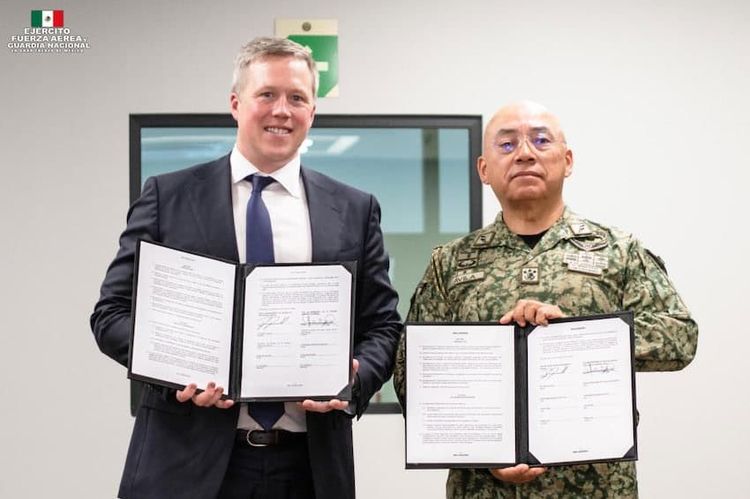
Last month, Mexico and the United States signed a defense agreement on new technologies that allows the Mexican Defense Ministry to acquire drones and counter-unmanned aerial systems through the U.S. Army's online marketplace, though no purchase commitments have been made.