Testimony about Rancho Izaguirre conflicts with FGR forensic findings
A hooded individual claiming membership in the Cártel Jalisco Nueva Generación told Italian public television that he had cremated 250 people at Rancho Izaguirre in Teuchitlán, Jalisco, and that more than 500 people had been killed at the property. The statements, broadcast on October 10, 2026, have drawn renewed attention to a federal investigation in which prosecutors have so far documented two bone fragments and 47 arrests, but have not confirmed the figures cited in the testimony.
The interviewee's identity was not disclosed. His face was covered during the interview, and he described direct participation in killings and the destruction of bodies. He also claimed to be working clandestinely with search collectives in Jalisco to locate human remains and described patterns of violence tied to the criminal organization's operations.
Background on Cártel Jalisco Nueva Generación
The Cártel Jalisco Nueva Generación emerged around 2009-2010 as a faction that split from the Milenio Cartel and initially operated as an armed wing of the Sinaloa Cartel before becoming independent. In February 2025, the U.S. Department of State designated the group as a Foreign Terrorist Organization. The cartel's founder and leader, Nemesio Oseguera Cervantes, known as El Mencho, was killed during a government arrest operation on February 22, 2026.
Discovery at Rancho Izaguirre
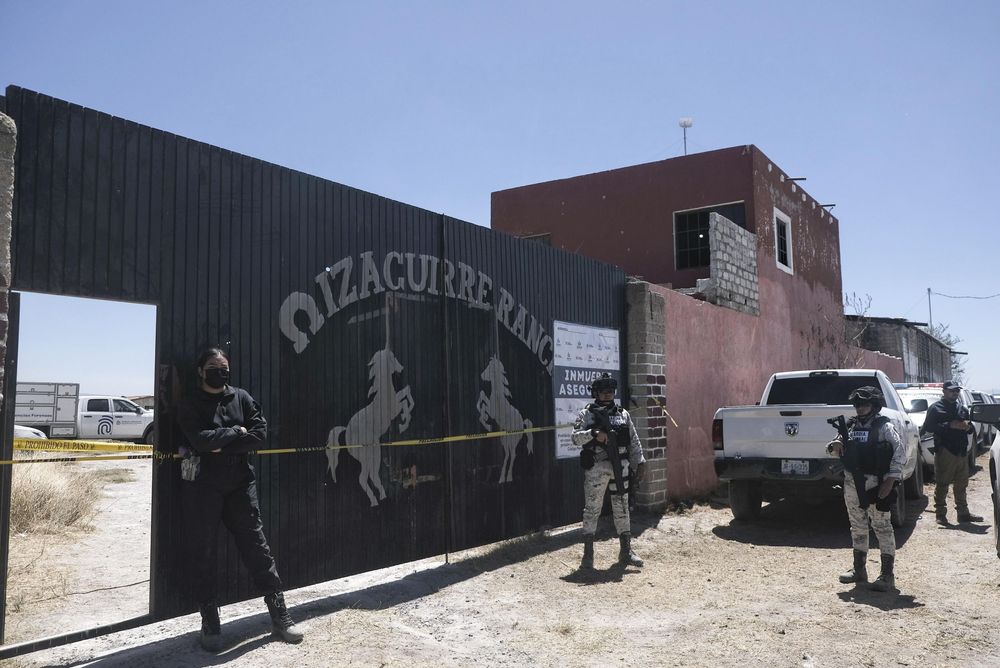
Rancho Izaguirre is located in the La Estanzuela ejido, in the municipality of Teuchitlán, approximately 58 kilometers from Guadalajara, the state capital. The property became the focus of public attention in March 2025 when the Guerreros Buscadores de Jalisco collective entered the site after receiving an anonymous tip. The collective, formed in January 2024 by approximately 100 families of disappeared persons and led by Indira Navarro Lugo, reported finding clothing, shoes, backpacks and charred bone fragments.
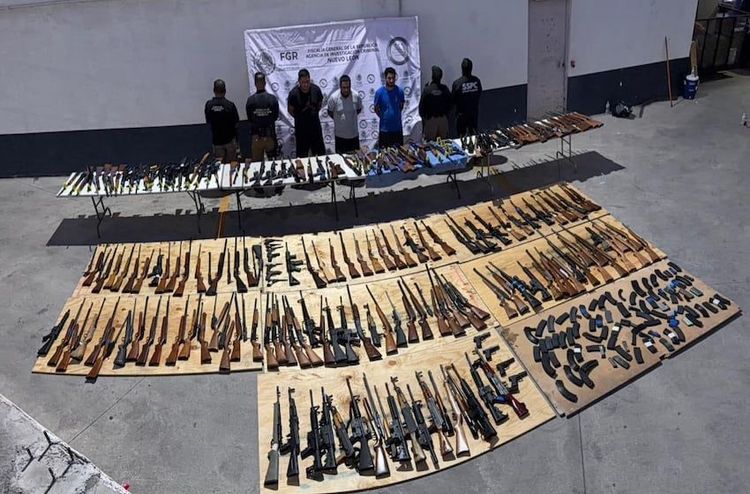
The federal Attorney General's Office (FGR) reported on March 5, 2026, that the property had been used as a criminal training site. Investigators found clothing, ballistic evidence and two bone fragments. A genetic profile corresponding to a male was obtained from the fragments, but comparisons conducted up to that point had not identified him. The agency said 64.44 percent of the property's comprehensive processing had been completed and that 47 people connected to the investigations had been arrested.
On April 13, 2026, the FGR said forensic teams had continued working at the site and that members of search collectives had visited on April 10 as observers, with authorization from judicial authorities. Evidence remained under analysis.
The National Guard had intervened at the property in September 2024 and arrested 10 people. Months later, the collective's discovery prompted questions about the initial actions and led the FGR to assume control of the federal investigation.
Arrests and criminal proceedings
Among those facing charges is José Ascensión Murguía Santiago, who was mayor of Teuchitlán at the time. He was arrested in May 2025 and placed under criminal proceedings for alleged aggravated organized crime and enforced disappearance. Under Mexico's 2017 General Law on the Forced Disappearance of Persons, enforced disappearance is defined as a crime committed by authorities or with state acquiescence, while disappearance committed by private individuals is classified separately. The investigation has also reached individuals identified by authorities as responsible for recruitment and criminal training activities.
National context of disappearances
Jalisco is among the Mexican states with the highest number of missing persons cases, with approximately 16,000 people unaccounted for according to state government data. Nationally, the scale of the crisis is reflected in the National Registry of Missing and Unlocated Persons. In March 2026, the federal government reported that 130,178 records dating from 2006 onward remained classified as disappearances. Between 2006 and 2023, approximately 5,600 clandestine graves were identified across Mexico, with sites discovered in 24 states by 2018.
In March 2026, the UN Committee on Enforced Disappearances referred the situation in Mexico to the UN General Assembly under Article 34 of the Convention for the first time in the Convention's history, underscoring the severity of the crisis. According to a government report from the same month, of the 262,111 missing persons located in Mexico's records, 92 percent were found alive, though 132,534 people remain unaccounted for.
Ongoing investigation
For search collectives working in Jalisco and across Mexico, the challenge includes locating possible remains, preserving evidence and ensuring that genetic analyses establish identities. The testimony broadcast in Italy has focused attention on those tasks and on the need to compare information provided by possible participants in crimes with material evidence documented by forensic teams.
The FGR has said that investigations remain open and that analyses of the bone fragments and other evidence are continuing. The number of victims, the identification of remains and the reconstruction of what happened at the property remain central issues for families and for the criminal investigation.