The Deepfake Detection Dilemma
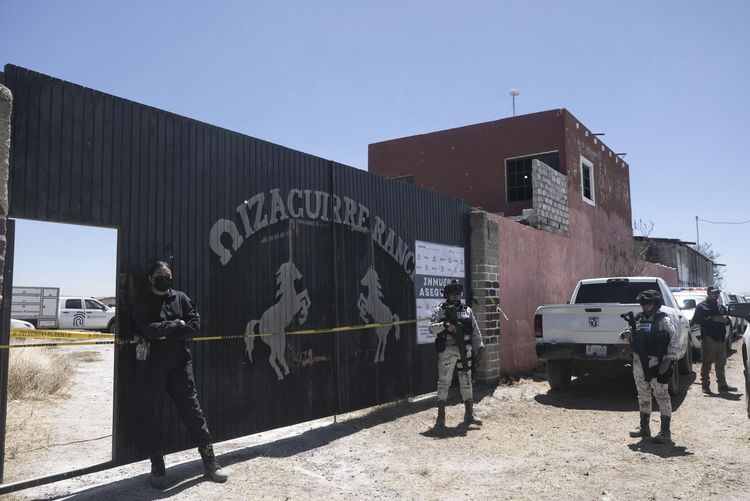
It was a beautiful February day in Jalisco state when the news broke that the Mexican military had killed Nemesio "El Mencho" Oseguera Cervantes, the leader of the Jalisco New Generation Cartel, in a raid.
Then dark clouds of smoke started to fill the skies and gunfire erupted as cartel factions began to battle for control to fill the leadership vacuum left in the wake of Oseguera's death. Violent imagery spread across the Internet, depicting infrastructure ablaze as a ground assault continued—massively disrupting the country.
Or at least that's what it looked like online as duty-of-care provider Global Guardian worked with its clients in Mexico on 22 and 23 February 2026 to assess whether they needed to be evacuated to a safer location. Of particular concern was video on social media that appeared to show the Puerto Vallarta International Airport on fire. It looked authentic. But did it accurately reflect reality?
"We called our team on the ground and asked, 'Is this real?' " recalls Seth Krummrich, vice president, client risk management, at Global Guardian, in an interview in September at GSX 2026. The firm's Puerto Vallarta contact went outside, looked across the horizon at the airport, and reported back that no, it was not actually on fire. "Then we had to turn around and tell our clients, 'What you're seeing online is nonsense,' " Krummrich says. "That's the world we live in now."
The World Economic Forum (WEF) highlighted this problem in its Global Risk Report for 2026. The WEF assessed that the integrity of "online news and broader information is increasingly under threat, as distinguishing between authentic and synthetic content, whether video, audio, or written, is becoming progressively more difficult."
The WEF reviewed analysis from the Reuters Institute, which found that 58 percent of global respondents are now concerned about how to distinguish truth from falsehood in online news. That figure rises to 73 percent when limited to respondents in Africa and the United States. A key element of this distrust is the proliferation of deepfakes online—digitally altered videos, images, and audio recordings. They have become more convincing as generative artificial intelligence (AI) tools become easier and cheaper to use to create them.
"The weaponization of deepfakes can undermine trust in democratic institutions, contributing to more political polarization, and can lead to the incitement of political violence or social upheaval," the WEF report added. "Recent elections in the United States, Ireland, The Netherlands, Pakistan, Japan, India, and Argentina have all had to contend with such fabricated content on social media, depicting fictional events or discrediting political candidates, blurring the line between fact and fiction."
Deepfakes can also have a significant impact on people's views of events and the world around them, reinforcing extreme beliefs and fueling polarization. They can make people numb to what they are seeing online or distrustful of all the media they are exposed to, which has its own problems.
Just ask Hany Farid, professor of computer science at Dartmouth College, who has been studying synthetic media for decades and is routinely asked to verify whether media content of natural disasters, military attacks, and prominent figures is real. He says he now worries that to avoid being duped, people are slipping into the mindset where they assume everything they see online is fake.
"What are you going to fall back on if you're going to fall back on a simple strategy? That everything is fake, and that's very bad," Farid says. "Then when somebody does apply for a job, when there is a video of a human rights violation, or police misconduct, or a horrible flood in Nepal, you can just be like, 'That didn't happen.'
"This is what I worry about—the default state is just denial," Farid continues. "I don't think that lands us where we want to land."
The Scope of the Problem
In August 2026, the phones were ringing at major Wall Street hedge funds. The callers on the line sounded like employees, ones with significant authority, asking for access to sensitive systems.
Those calls, however, were not legitimate. They were made by hackers using voice cloning technology in an attempt to obtain access to Point72 Asset Management, Two Sigma Investments, Citadel, and Millennium Management, according to exclusive reporting from Bloomberg. None of the attempts was successful, but the incidents were just part of a growing problem that security experts have been watching over the past year.
Gartner surveyed 297 senior leaders (CISO level or equivalent) between March and May 2026. Forty-one percent of those leaders said they had experienced at least one social engineering incident involving a deepfake during an employee audio call in the past 12 months; 36 percent said they had experienced one during a video call.
Tom Cross, head of threat intelligence at GetReal Security, a firm cofounded by Farid that specializes in deepfake detection, says that his team has observed an uptick in operationalization of deepfakes. One of the most interesting advancements in the past six months is the development of what Cross calls real-time AI avatars.
"A real-time AI avatar will say what I'm saying and do what I'm doing and move how I'm moving but will present a completely different AI-generated scene for you," he explains. "It will generate the background, the person's hair, their face, their clothes. Everything is AI-generated, in real time, as I interact with you.
"The technology enables a different depth of impersonation—it makes impersonation a lot easier," Cross continues.
Cross's team first began noticing these real-time AI avatars in December 2025. That first instance was file-based: The impersonator recorded a video, uploaded it, and then used AI to create an avatar of the exact scene to be replayed. In March 2026, Cross says they started observing the technology advance to be used to create avatars in real-time streaming.
Common Use Cases
There are already established use cases demonstrating where threat actors might want to use novel deepfakes. Take hiring fraud, for example. Over the past few years, the Democratic People's Republic of Korea (DPRK) has successfully engaged in a widespread scheme to get remote IT workers hired at Western companies. These employees then earn a paycheck, which is used to support North Korea's sanctioned weapons of mass destruction program, and network access to corporate targets.
The scheme works because many companies are now completing the hiring process completely online. Hiring managers and prospective employees are interacting with each other only via video calls, which can be modified to make a DPRK agent appear to be someone else who is eligible for hire.
Another use case is leveraging a deepfake to impersonate a member of the C-suite. Farid says they have observed this happening on phone calls where an imposter uses voice cloning technology to sound like a CFO or another executive requesting a wire transfer.
"Anyone in a C-suite in a Fortune 500 company has enough of a digital footprint where I can get their identity," Farid explains. "That means I can get their voice, I can get their face, I can get their mannerisms, I know what the background in their office looks like because they've done an interview. The ability to impersonate C-suite [members] and then use that against employees, we're seeing it."
A third, and more complicated, use case is using deepfakes to attack corporate brands or representatives. One example of this is from the 2026 White House Correspondents' Dinner when a man with a firearm attempted to breach a security barrier. U.S. Secret Service agents apprehended the man, who was subsequently charged with attempting to assassinate U.S. President Donald Trump—the guest of honor at the dinner.
In the immediate aftermath of the incident, Farid says people created deepfakes of the suspect wearing jackets with different corporate brand logos and posted them on social media. The moment was similar to the Internet's response to the U.S. military's capture in January of former Venezuelan President Nicolas Maduro, who was wearing a Nike sweatsuit at the time. People quickly began creating AI slop videos and memes of Maduro in the branded apparel, which went viral and led to the athleisure look selling out in multiple sizes.
Both instances illustrate just how easy it is to quickly create convincing images and share them on platforms where they get heavy engagement and are difficult to remove, given that these actions may not violate social media platforms' self-enforced codes of conduct. This frictionless environment also makes sharing deepfakes attractive to people who might want to target a brand during a major news moment as a way to get attention and build an audience, Cross says.
"There are strategic information operations that exist on the Internet that have long-term objectives of affecting people's thinking in various ways," he adds. "Some of these are run by nation-states. One of the parts of their life cycle is simply to build an audience. It is entirely possible that you're just a bump in the road for them that's enabling them to get the position that they want to be in with the people that they're trying to influence."
Forty-one percent of those leaders said they'd experienced at least one social engineering incident involving a deepfake during an employee audio call.
Nation-State Operations
Russia, for instance, has built off its successful approaches during the Cold War to become one of the most effective nation-state players in this space. Tamta Pansulaia, research fellow at the EU Awareness Centre, wrote for The Hague Research Institute that Russia has incorporated AI into its information warfare operations, which are typically concentrated around election periods, moments of crisis, and socially divisive issues.
In the past four years, Russia has targeted elections in France, Georgia, Moldova, and Romania to support pro-Russian candidates and undermine pro-European actors through legal harassment, media manipulation, and coordinated bot activity.
"The Baltic states remain frequent targets as well," Pansulaia explained. "In 2024, Lithuania faced disinformation campaigns accusing NATO troops of criminal behavior. These narratives strongly resembled Soviet-era tactics, now enhanced with AI-generated visuals."
Other nation-states are taking note. Actors linked to China and Iran, for instance, are also using AI to efficiently create propaganda and personas to target audiences with content that scales, according to Renée DiResta, an associate research professor at the McCourt School of Public Policy at Georgetown and an expert on disinformation and misinformation campaigns.
"A state that can sustain more operations across more targets with less staff time has gained capacity, even if many of its attempts go nowhere," DiResta wrote in recent research for Lawfare. "It can afford to keep trying. Whether that produces a political advantage is another question."
While these types of operations can pose national security risks, they also create real problems for companies that might be caught in the crosshairs.
"The challenge for the brand is that anybody can hurt you now because your CEO said something that somebody doesn't like, and now they're going to attack you," Farid says. "They can create [a deepfake], they can distribute it, and it will get amplified. The biggest problem here is not proving it's a deepfake—that's easy. The hard part is, how do you get this thing taken down?"
The answer most of the time, Farid says, is that you often don't get the content removed from social media or from search engine results because it's rare that these sites will remove it after a request is made unless the content is in clear violation of their policies. Removal also does not prevent someone else from just reuploading the same deepfake, again, forever repeating the process. Companies can issue press releases saying the imagery is fake, but the damage in some cases is already done.
"That's all fine and good for me and the shareholders and the lawyers, but to the average person who saw that, can you really set the record straight?" Farid asks. "Not really."
Detection Challenges
There's also the problem that people may discount the threat of deepfakes because they think they can detect them. In fairness, they probably saw one of a person with six fingers on their right hand—a dead giveaway that the video was manipulated—and not some of the more current, state-of-the-art stuff that leverages large language models (LLM) to work, Cross says. Similarly, the latest voice cloning technology only requires a few seconds of a person's voice to then create a convincing replica of it.
"People are not really ready to be called by an LLM," he adds. "They don't really understand what that experience is like. Unfortunately, that makes people a lot more susceptible to this because they don't think what's really happening to them is possible. They assume that if they're having an interactive conversation with a person on the phone, that it's a person that they're having an interactive conversation with."
Research backs this up. The Center for Strategic and International Studies (CSIS) conducted a large-scale experimental study in 2024 to test individuals' ability to identify synthetic images, audio, and videos from publicly accessible generative AI technology.
"Altogether, the study's findings paint a bleak picture of people's ability to discern the legitimacy of digital content in today's world," CSIS assessed. "On average, participants correctly distinguished between synthetic and authentic media 51.2 percent of the time—roughly equivalent in accuracy to a coin toss."
Participants struggled the most with identifying images (49 percent average accuracy) but did slightly better with silent videos (51 percent), audio clips (54 percent), and fully audiovisual clips (55 percent).
"These results are relatively unsurprising since public discourse and scientific research have closely monitored people's diminishing detection capabilities as generative AI has advanced in recent years," CSIS wrote. "Nonetheless, it is valuable to confirm that this critical watershed moment has indeed been reached: Humans can no longer depend solely on their own eyes and ears to reliably distinguish between reality and AI-generated falsehoods."
All of this points to the sense that our perception of reality is getting pretty weird, making it hard to decide what to do about the synthetic media that's moving through it, Farid says.
"We've talked to CEOs and companies who are feeling this. We talked to a CEO of a very large international bank, and they have this problem where people are making phone calls in the bank president's voice to their branches and to partners and just saying awful things," he explains. "They don't know how to clean up the mess. They don't even know what to do. It's the craziest thing."
The Verification Challenge
On 13 March after the United States and Israel went to war with Iran, Israeli Prime Minister Benjamin Netanyahu released a video of himself at a press conference outlining the objectives of the military campaign.
There was just one problem: Social media users appeared to unite across the Internet to say the video was fake and that Netanyahu was actually dead. They claimed the video showed six fingers on one of Netanyahu's hands—a past signal that video had been altered. Netanyahu was forced to respond, posting proof-of-life videos of himself to counter the narrative that he was incapacitated.
This approach introduced a whole new set of headaches because people saw these videos of Netanyahu, downloaded them, and then uploaded them to free websites that claimed to be able to detect real versus fake media content. Those websites would then say the real video was fake.
Now those same people "share the screenshot of that and we're off to the races," Farid says. "Not only am I dealing with the stupidity of the Internet, I'm dealing with the second level of stupidity of people who think you can drag and drop these things into some arbitrary [authenticity] website."
Technical Solutions
Unlike those purported authenticity sites, there are some solutions that actually do work for deepfake detection and mitigation.
One is the Coalition for Content Provenance and Authenticity (C2PA) standard—an open technical standard that embeds tamper-evident provenance metadata, known as content credentials, directly into digital media and documents. This embed is done at the point of creation of the media, Farid explains, and it is being used by OpenAI, Google, and other generative AI creators to label synthetic media.
The next phase could be for Google and Apple to introduce C2PA into their processes for their smartphone devices so that still images and videos captured by these devices would have this metadata of their authenticity built in. But it's a solution that would come with risks.
"There are real, legitimate privacy concerns here," Farid says. "If you are now signing everything with geolocation and date and time and who took it, we have to be very careful about that. If I'm a human rights activist and I'm documenting war crimes, I've got to be careful about how I do that. There are real consequences."
On average, participants correctly distinguished between synthetic and authentic media 51.2 percent of the time—roughly equivalent in accuracy to a coin toss.
For organizations' internal use, technology solutions are available that are designed to be used on video and audio calls to detect signs of AI manipulation.
"We look at: Who is this person? What is their email address? What IP address are they coming from? How much do we know about them?" Cross says. "There's a whole context that sits in, and all of those factors need to be combined with an understanding of what is suspicious and why. What does a real attack look like?"
Organizational Responses
Cross also encourages stakeholders across the organization to work together to address areas that might be more at risk for a deepfake attack. Take candidate fraud, like the DPRK remote IT worker scheme. For this risk, it's a good idea for an organization's HR and security teams to work together.
"There are things that the security team is probably good at looking for, which are different than the things that HR is good at looking for, but are also equally important," Cross explains. "There are facets of a candidate that traditional HR is good at vetting that cybersecurity people don't know anything about. How can we get those two disciplines to spend more time trying to understand each other and to build workflows that serve both sides?"
One approach might be to have HR and cybersecurity personnel work together on the background check process: completing a traditional background check while security personnel review an applicant's online footprint and the data applicants share as part of the interview process to determine if it's AI generated.
"Some of these indicators are quite technical, like what IP address are they coming from?" Cross adds. "The security team has more expertise [than HR] on evaluating the meaning of those indicators. I think a comprehensive look at candidates today requires both disciplines."
When an organization detects a deepfake in action, the response protocol will vary depending on the individuals involved and the context of the interaction.
"If you're interviewing somebody for the first time, that's different than if you're on a call with the CEO talking about a merger," Farid says. "Every call is different, every organization is different with the way they want to deal with this."
Some organizations Farid's firm has worked with take the approach of stopping the interaction immediately if a deepfake is detected. Others will begin recording the interaction to then share it with their security operations center (SOC) to be reviewed later. The important aspect is that organizations develop a policy and procedure for how they want to handle these interactions when they do occur. They'll want to hash out the retention policy for meeting and call recordings; how to terminate interactions; whether the host of the call should be notified of the interaction; and whether the SOC should be alerted.
Not on the list of mitigations that will scale, however, is returning to a world where all interactions take place in person—a practice some executives have raised with Farid and his team.
"The answer cannot be we're going to do everything in person," Farid says. "If you're doing high-stakes things and you want to say, 'Look, any transfer of funds over X has to be done in person' and you set up a protocol, I understand that. But it can't be every point of contact."
Megan Gates is the senior editor at Security Management, where she has covered physical and cybersecurity risk management for more than a decade. Connect with her at megan.gates@asisonline.org or on LinkedIn.