Separate proceedings in state and federal courts
Federal prosecutors accuse the former Chihuahua attorney general of endangering national security by permitting U.S. agents to participate in a field operation, an authorization they say only Mexico's federal government can grant. President Claudia Sheinbaum says her administration neither approved the agents' participation nor received notice of it.
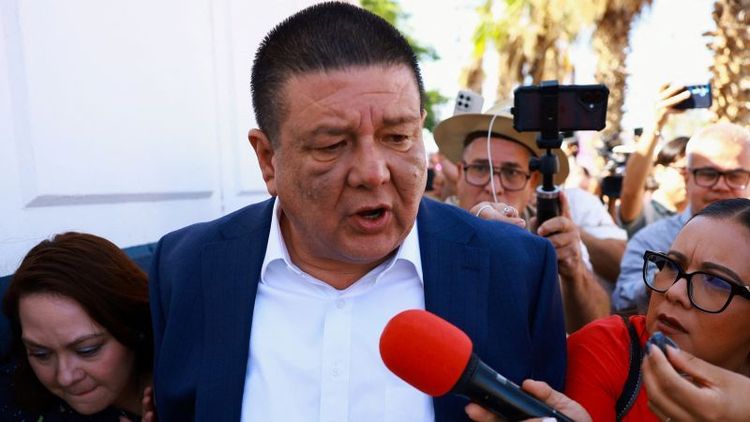
Jáuregui's detention followed two arrests in quick succession. According to The Rio Times, state officers arrested him in Chihuahua City on October 17, 2026. A state judge allowed his conditional release the next day, requiring him to surrender his migration documents, but federal agents detained him within minutes. On October 21, a federal judge ordered pretrial detention at the maximum-security Altiplano prison.
The state case advanced on October 22, when a Chihuahua control judge found sufficient grounds to proceed on a charge of improper exercise of public service under case file 3055/2026. The judge found insufficient evidence for a second charge, coalition of public servants. The ruling allows prosecutors to continue building their case; it is not a finding of guilt. Defense lawyer Héctor Villasana called the decision political and said he would appeal, The Rio Times reported.
The state arrest warrant also named Guillermo Arturo Zuany Portillo, the former Strategic Operations prosecutor, as an alleged co-author. He additionally faces an aggravated charge of falsification before authorities, according to Infobae México.
In the separate federal proceeding, prosecutors presented about 150 items of evidence. Infobae México reported that the hearing was scheduled to continue at 3 p.m. local time on Saturday, October 24, at the federal justice center at Altiplano in Almoloya de Juárez, State of Mexico. The judge was to decide whether there were grounds to formally link Jáuregui to the treason case.
A fatal return trip and disputed accounts
The case stems from an April 19 announcement by Chihuahua authorities that they had dismantled a synthetic drug laboratory in the mountainous municipality of Morelos. During the convoy's return, one vehicle left the road and plunged into a ravine, killing two Mexican state agents and two Americans. No suspects were arrested in the operation because those at the site fled.
Mexico's Federal Security Cabinet described the action as a joint operation involving the army and state prosecutors and reported that laboratories had been dismantled, without offering further details.
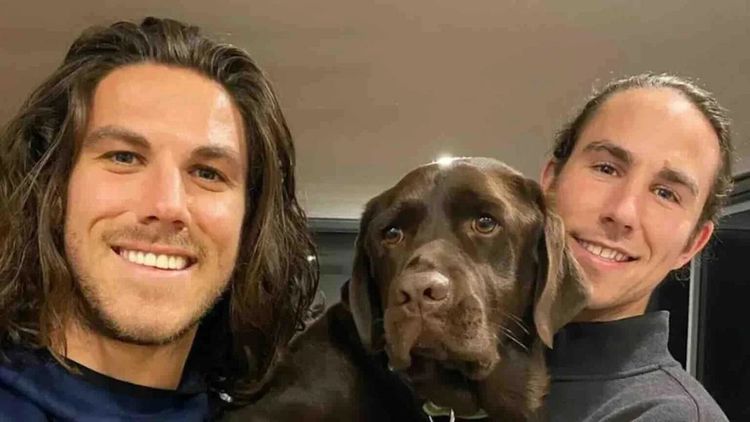
El País México identified the Americans as CIA intelligence officers Richard Leiter Johnston III, who trained in the U.S. Army, and John Dudley Black, who trained in the U.S. Navy. U.S. Ambassador Ronald Johnson initially described them as "embassy personnel." The Associated Press subsequently confirmed that they worked for the CIA.
Their role remains disputed. Defense coordinator Luis Villegas said the men provided intelligence and drone training. Jáuregui said they joined the group only after the operation. His defense team also said federal prosecutors described the Americans as close to the Chihuahua investigations chief who led the mission and died in the crash.
Prosecution documents offer a different account of their movements. According to the federal investigation file, whose details El Universal disclosed, testimony and evidence indicate that Johnston and Black were armed and departed the Chihuahua prosecutor's office with the tactical convoy assigned to the El Pinal mission. Those are allegations and findings in the prosecution file, not court rulings.
Two other U.S. agents traveled in another convoy vehicle and were later expelled from Mexico. Sheinbaum said none of the agents had permission to operate in the country and that the military did not know they were present. The day after the operation, she said she had not known about the operation itself.
Why the treason allegation is contested
Article 123 of Mexico's Federal Penal Code defines 15 forms of treason by Mexican nationals and sets penalties of five to 40 years in prison and a fine of up to 50,000 pesos, according to Infobae México. Experts interviewed by the AP described the offense as difficult to prove.
Samuel González, a former chief prosecutor for organized crime, distinguished possible breaches of duty from treason. He said Jáuregui might have violated his obligations by failing to notify federal authorities or allowing foreign agents to carry weapons illegally. Sheinbaum confirmed on October 22 that the agents had been armed. But González said that "even if that were the case, it would not constitute treason," which he described as a wartime crime.
Villegas rejected the prosecution's comparison of the agents' presence to a foreign "invasion." Villasana said prosecutors argued that an "exemplary punishment" was needed to prevent a situation in which "the United States could carry out an action similar to the one it undertook in Venezuela when it removed President Maduro." That characterization of the prosecution's reasoning came from the defense.
A sovereignty dispute with electoral stakes
The deaths in Chihuahua, a state governed by the opposition National Action Party, or PAN, prompted questions about the Trump administration's activities inside Mexico. They also put pressure on Sheinbaum's defense of national sovereignty and her refusal to arrest a former governor from her Morena party whom the United States accuses of drug trafficking.
Experts interviewed by the AP viewed the prosecution as a political decision ahead of Mexico's 2027 midterm elections. The domestic argument pits Morena's claims to defend sovereignty against PAN opponents' allegations of a "narco-government."
Carlos Pérez Ricart, a professor at CIDE and author of "A Hundred Years of Spies and Drugs," said the case would have a large public impact even if it were dismissed. The debate "sends a very bad signal to Washington," he said, arguing that attention should instead be on "more or better" cooperation with the United States.
The arrest also broke Jáuregui's alliance with Chihuahua Governor Maru Campos of PAN, according to El País México. He had been her political mentor and ally. Sheinbaum dismissed rumors that the federal government and Campos had struck a pact.
Trump has repeatedly accused Mexico of doing too little against the cartels. At a White House lunch on October 15, 2026, he said U.S. forces had "not yet acted on land with full force, but that is starting," and said cartels "govern Mexico," according to The Rio Times. The U.S. State Department told the AP it was following Jáuregui's case but did not connect it to the CIA officers' deaths.
The rules governing U.S. involvement
U.S. agencies have operated in Mexico for decades, though President Andrés Manuel López Obrador restricted their activities during his 2018-2024 term. Sheinbaum amended the Constitution to bar field operations without the Mexican government's express authorization and cooperation. Mexican law also prohibits U.S. agency personnel from carrying weapons.
A separate military visit illustrates the formal approval process for U.S. troops. At Sheinbaum's request, Mexico's Senate approved the entry of 139 soldiers from the U.S. Army's 101st Airborne Division for joint exercises in Chihuahua from September 20 through September 30, 2026, The Rio Times reported.
Pérez Ricart said official arrangements do not account for all cross-border cooperation: U.S. anti-drug agents have long joined operations through relationships with state and local officials, sometimes without federal authorities' knowledge. He said those relationships sustain collaboration but warned, "However, since there are no clear rules, they can lead to abuses."