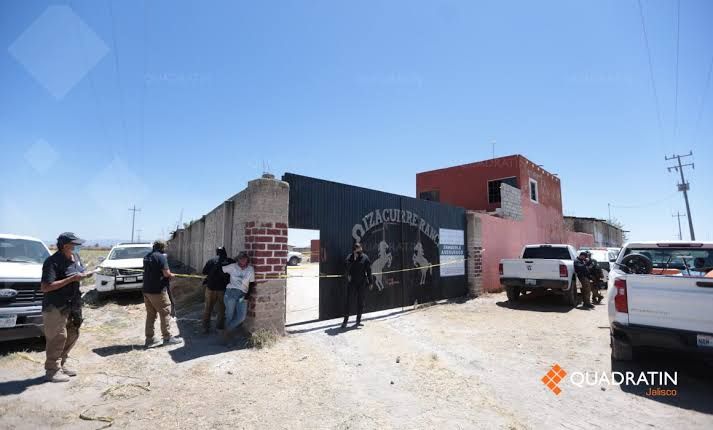
A man claiming to be a hitman for the Jalisco New Generation Cartel has confessed to incinerating the bodies of 250 people at a property in western Jalisco state, directly contradicting official government statements that no cremations took place at the site.
In an interview broadcast October 10 by RAI's Tg1 news program, the masked individual stated that more than 500 people were killed at Rancho Izaguirre in Teuchitlán, located approximately 60 kilometers west of Guadalajara, Mexico's second-largest city. He claimed personal responsibility for burning 250 of those victims.
The testimony was given to Stefania Battistini, a journalist with RAI, Italy's national public broadcasting company, who has reported extensively from conflict zones and on organized crime. The alleged cartel member also claimed to be secretly collaborating with Madres Buscadoras de Jalisco, a collective of mothers and family members who search for missing loved ones.
The Madres Buscadoras movement emerged across Mexico as families organized to search for disappeared persons after official investigations stalled or proved inadequate. These groups have become critical actors in Mexico's missing persons crisis, which has seen over 100,000 people officially disappear, with Jalisco state consistently ranking among those with the highest numbers.
Federal Authorities Dispute Claims
The account directly contradicts the position maintained by Mexico's Attorney General's Office, the federal prosecutorial authority responsible for investigating organized crime cases. The FGR has stated there is no evidence that cremations occurred at the Teuchitlán property.
The conflicting narratives highlight ongoing challenges in documenting cartel violence in Mexico. Testimonies from cartel members have historically played a controversial role in criminal investigations, with reliability and verification remaining persistent issues.
Criminal organizations across Mexico have used clandestine cremation sites and mass graves to dispose of victims' remains, with hundreds of such locations discovered in multiple states in recent years. These disposal methods have become a documented pattern in cartel operations.
CJNG's Rising Power
The Jalisco New Generation Cartel, founded around 2010, has emerged as one of Mexico's most powerful and violent criminal organizations, operating across multiple Mexican states and in international markets. Jalisco state has become a major battleground for territorial control between CJNG and rival organizations, including the Sinaloa Cartel, contributing to elevated violence levels and cartel-related disappearances throughout the region.
The alleged hitman's claim of collaborating with the Madres Buscadoras adds another layer of complexity to the case, raising questions about how families searching for missing persons navigate relationships with potential sources of information about their loved ones' fates.