Mexican antitrust regulators launch investigation into Liga MX for potential monopolistic practices
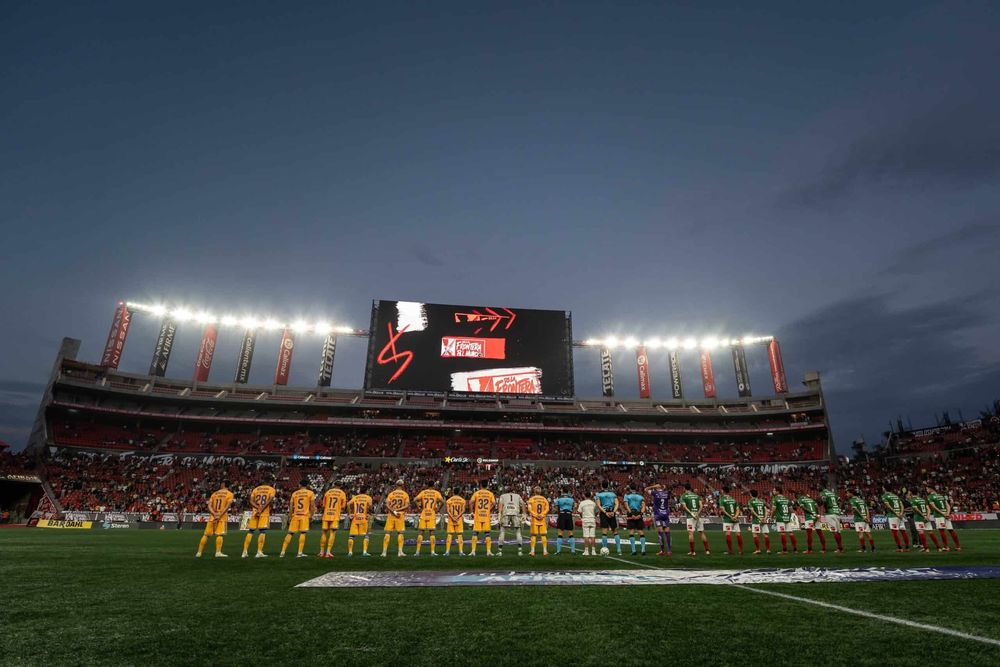
Mexico's National Antitrust Commission (CNA) has initiated a formal investigation into Liga MX, the country's premier professional soccer league, to determine whether the organization is engaged in monopolistic practices that violate federal competition law.
The CNA, which was created in 2025 through constitutional reforms that consolidated all competition enforcement powers under a single authority, opened the investigation on its own initiative after analyzing recent developments in Mexican professional soccer.
According to an internal CNA document, the probe aims to identify "the possible commission of relative monopolistic practices in the market of 'affiliation, organization and access' to professional federated football competitions in Mexico, as well as similar or related services."
The investigation centers on whether a small group is unfairly controlling who can join Liga MX, who can compete in tournaments, and how competitions are organized, potentially excluding other interested parties from participating in the professional soccer market.
Elimination of promotion and relegation triggers inquiry
The inquiry appears to have been triggered by Liga MX's controversial decision in July 2026 to permanently eliminate promotion and relegation between the top-flight league and the second-tier Liga Expansión. The original suspension of promotion and relegation in 2020 was agreed to last for six seasons and was set to expire after the 2025-26 season, with mandatory reinstatement scheduled for the 2026-27 campaign.
When the suspension began in 2020, it marked the first time since the 1951-52 season that no teams moved between divisions. Under that agreement, second-tier clubs received guaranteed yearly payments of almost $1 million from Liga MX during the suspension period. However, those payments were also terminated in July 2026.
The July decision drew fierce opposition from Liga Expansión officials, who had already filed an appeal with the Court of Arbitration for Sport on May 19, 2025. The international sports tribunal subsequently ruled that the 2026-27 campaign was the earliest point at which promotion and relegation should be reinstated.
New governance structure and broadcasting rights under scrutiny
Also in July 2026, Liga MX announced a new governance structure giving the league greater legal separation from the Mexican Football Federation, modeled after European leagues like LaLiga and the Premier League. Liga MX president Mikel Arriola has been working to centralize commercial assets and television rights while phasing out multi-club ownership.
The broadcasting rights structure has drawn particular scrutiny. Unlike many major soccer leagues, Liga MX teams traditionally negotiate their own individual broadcasting deals rather than operating under a centralized league-wide media rights arrangement. Some teams are owned by major broadcasters like Televisa, which owns the domestic broadcast rights for ten teams including Club América.
"After analyzing the events that occurred in recent months, the Investigating Authority determined that it has sufficient evidence to formally open an investigation on its own initiative for possible monopolistic practices in the professional soccer market in Mexico," the CNA stated in a public report.
The commission emphasized that no specific individuals or entities have been identified as defendants at this stage. The investigation will focus on determining whether competition law is being followed in the organization and operation of professional soccer in Mexico.
Investigation timeline and potential penalties
The probe can last up to 120 business days but may be extended up to three times if necessary. During the investigation, the CNA has authority to request documents, visit offices, summon witnesses to testify, and conduct inspections.
If monopolistic practices are confirmed, Liga MX and its member teams could face penalties of up to 10% of their annual income and would be required to correct any anti-competitive practices identified by regulators.