
Two counts cover an alleged 20-year conspiracy
A federal grand jury in the District of Columbia accused Cazarín Molina of conspiring to manufacture and distribute cocaine and methamphetamine for import into the United States, according to the Justice Department. Prosecutors allege that the conspiracy spanned 2005 through 2025 and involved at least 5 kilograms of cocaine and 500 grams of methamphetamine.
The second count alleges that he used, carried, brandished and discharged a firearm in connection with the drug conspiracy. A conviction could bring a sentence ranging from a minimum of 40 years to two consecutive life terms.
The Justice Department identifies Cazarín Molina as a regional commander in Veracruz for the Jalisco New Generation Cartel, or CJNG. It lists his age as 42; Expansión reported that he is 41. The US Secretary of State designated CJNG a foreign terrorist organization on February 20, 2025.
DEA Administrator Terrance Cole and Justice Department Criminal Division head A. Tysen Duva announced the case. Duva said the indictment "sends a clear message" about the department's campaign against cartels. Cole said "the era of impunity for cartel leaders is over."
The DEA's Special Operations Division Bilateral Investigations Unit in Los Angeles is investigating, with Criminal Division prosecutors handling the case under the Homeland Security Task Force initiative. The allegations described here come from the Justice Department's announcement; the indictment and court docket were not available for review. The announcement did not disclose whether the indictment had been sealed or mention any reward or seizures.
A separate prosecution in Mexico
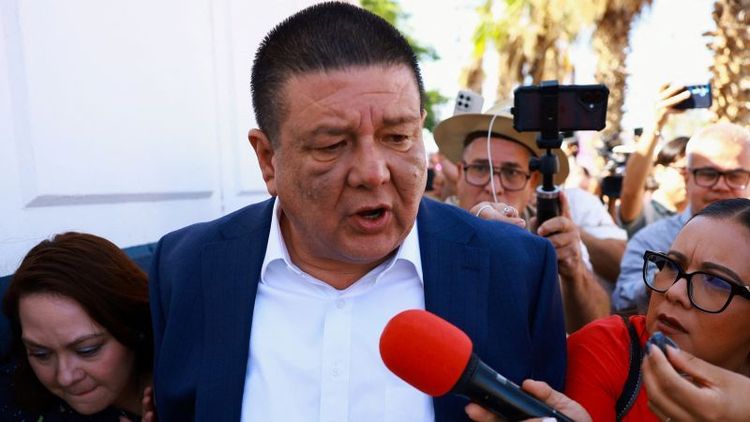
Cazarín Molina has been in Mexican custody since his October 5 arrest in Zapopan, Jalisco. Zeta Tijuana reported that the operation brought together the army, National Guard, national intelligence center and the federal prosecutor's criminal investigation agency. Security Minister Omar García Harfuch confirmed the arrest on social media.
A judge ordered him held at the Altiplano maximum-security prison in the State of Mexico, Excélsior reported on October 9. UnoTV, citing the federal prosecutor, reported on October 14 that a judge had ordered the case to proceed following a Tuesday hearing and allowed four months for further investigation.
The Mexican case is distinct from the US prosecution. UnoTV listed the Mexican charges as organized crime, kidnapping, drug offenses and weapons possession. Mexican press reports and security officials have also linked his alleged activities to homicide, extortion, fuel theft and money laundering. Those allegations are not established findings.
Mexican media have also cited intelligence records linking him to a 2015 attack on an army helicopter in Jalisco that killed six security personnel. That allegation remains unproven and is not among the US charges.
Facing possible extradition, Cazarín Molina sought an amparo, a constitutional injunction, from a Mexican federal court. The court dismissed his request for protection from Mexican justice, Proceso reported on October 22.
Earlier sanctions targeted alleged fuel theft
The US Treasury took action against Cazarín Molina more than two years before the indictment announcement. On September 10, 2024, it froze US assets belonging to nine Mexican individuals and 26 Mexican companies linked to a CJNG fuel-theft network.
In that announcement, Treasury described him as a senior cartel member who reported to its leader. It alleged that he obtained fuel through illegal taps on pipelines belonging to state oil company Pemex and stored it near Veracruz.
Treasury said front gas stations helped move the stolen fuel, while buyers resold supplies in the United States, often in Texas. The department estimated that the business generated tens of millions of dollars annually for Cazarín Molina and CJNG.
Fuel theft is also the subject of a wider Mexican enforcement effort. According to Mexico Business News, the government reported on October 21, 2026, that operations against fuel theft and illicit fuel imports had resulted in 2,539 arrests and the seizure or recovery of 173.7 million liters of hydrocarbons. Authorities canceled the registrations of 2,224 companies for selling fuel without the required permits, and Pemex filed 10,674 fuel-theft complaints.
CJNG's leadership and the wider US campaign
A June 2026 assessment by the US Office of the Director of National Intelligence put CJNG's membership at approximately 15,000 to 20,000. The agency identified it as the dominant criminal actor in eight states: Jalisco, Nayarit, Colima, Veracruz, Guanajuato, Puebla, Querétaro and Hidalgo.
Mexican military forces killed the cartel's founder and longtime leader, Nemesio Rubén Oseguera Cervantes, known as El Mencho, on February 22, 2026, in Tapalpa, Jalisco. Speaking on August 5, Cole said El Mencho's stepson, Juan Carlos Valencia González, had taken control of CJNG. Valencia González, known as El Pelón or El 03, was then the DEA's number one priority, Cole said.
At the same August briefing, Cole said DEA investigations had produced more than 100 federal indictments of CJNG leaders, members and associates. He said the agency was working with international partners to secure their arrests, extraditions and prosecutions in the United States.
No US transfer announced
Mexico has transferred other prominent cartel suspects to US custody. A July 2026 report by The Watch said about 100 suspected cartel drug traffickers had been sent to the United States since January 2025, bypassing lengthy court delays. Antonio Oseguera Cervantes and Rafael Caro Quintero were among those transferred in February 2025. Later transfers included Abigael González Valencia, a key leader of CJNG's financial arm.
No such transfer has been announced for Cazarín Molina. The Justice Department did not say whether it would formally request extradition, a gap also noted by El Financiero.
His Mexican prosecution continues with the four-month investigation period set by the judge. A US trial would require extradition or another transfer to US custody. No trial date has been announced, and any sentence would require a guilty plea or verdict.