Mexico turns to AI to age thousands of missing children's faces and help families find answers
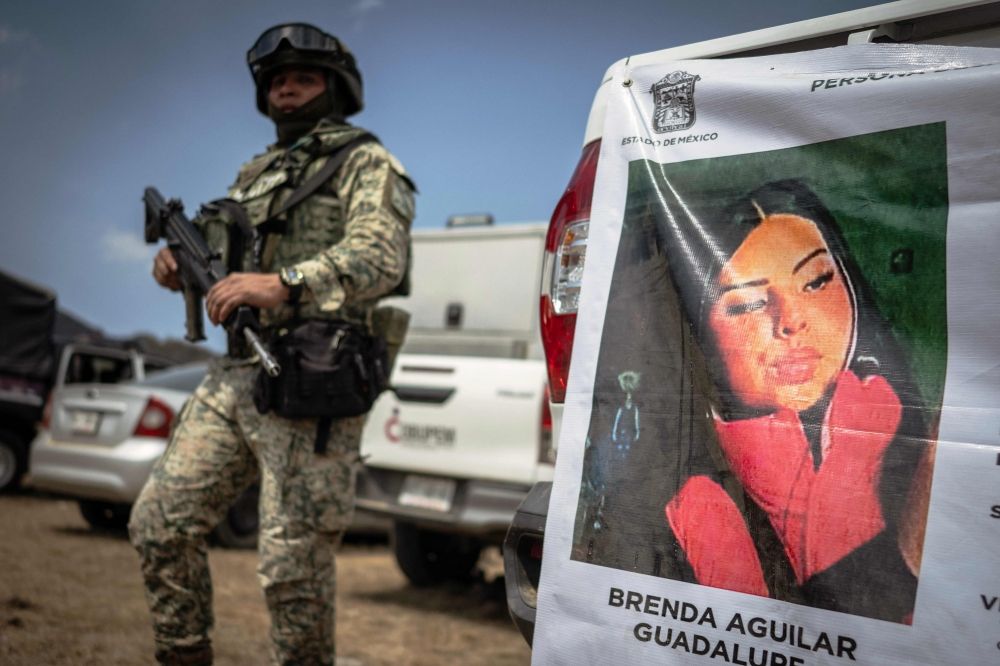
MEXICO CITY — As Mexico grapples with more than 134,000 registered missing persons, two universities have developed artificial intelligence tools designed to help families locate disappeared relatives in a crisis that has intensified dramatically over the past two decades.
Veronica Rosas represents thousands of Mexican mothers desperately seeking answers. Her son Diego vanished in September 2015 at age 16 after leaving their home in Ecatepec to meet friends. State prosecutors determined a criminal gang kidnapped him but have not identified which group was responsible or whether he remains alive.
"It's been 11 years and I still don't know where Diego is. There's no line of investigation leading us to find out what happened to my son," Rosas said at a demonstration in Mexico City, one of many held regularly to demand justice.
The missing persons crisis has grown exponentially since 2006, when former President Felipe Calderón declared war on drug cartels and launched a militarized security strategy. Approximately 97 per cent of the current 134,000 cases have occurred since that pivotal year. Over the past decade alone, disappearances have surged by more than 200 per cent, with over 53,000 victims belonging to Generation Z.
AI tools offer new hope
Mexico's National Autonomous University has developed Regresa, meaning "Return," which uses anthropometry to generate updated images showing how missing children's faces may have changed over time. The technology addresses a persistent problem: investigation photos remain frozen at the age victims disappeared, even as cases drag on for years.
Countries including the United States, India and China already employ facial recognition and age-progression software to search for kidnapped children. However, most existing software relies on open-source photo databases that do not reflect typical Mexican features.
Regresa's developers created their own image bank using hundreds of photos and data from 75 Mexican volunteers to produce portraits with more representative facial characteristics. The technology uses measurements of facial landmarks and craniofacial growth models to scientifically predict how faces change over time, rather than simply enlarging features or adding wrinkle filters.
"Many software programs only work with facial contours or textures, or add filters that simulate wrinkles. We seek to develop a scientific approach that shows how a person grows in craniofacial terms," said anthropologist Ana Juarez, one of the project's founders.
Meanwhile, anthropologist Emiliano Zolla at the private Ibero-American University is mapping missing persons by gender, age and disappearance circumstances to help families conduct more targeted searches. His observations based on State of Mexico data reveal that many missing persons are young women who disappear while travelling to or from school or work.
Approximately 75 per cent of Mexico's missing persons are men and boys, while 25 per cent are women and girls. However, young women aged 15 to 19 represent the most vulnerable demographic group. The State of Mexico, Jalisco and Tamaulipas have the highest absolute numbers of cases, while Nuevo León records the highest per capita rate of disappearances.
Families lead their own investigations
Years of official inaction have driven many families to conduct independent investigations. Family-led search collectives, known as buscadores, have organized across the country to pursue their own inquiries and field searches, often at considerable personal risk.
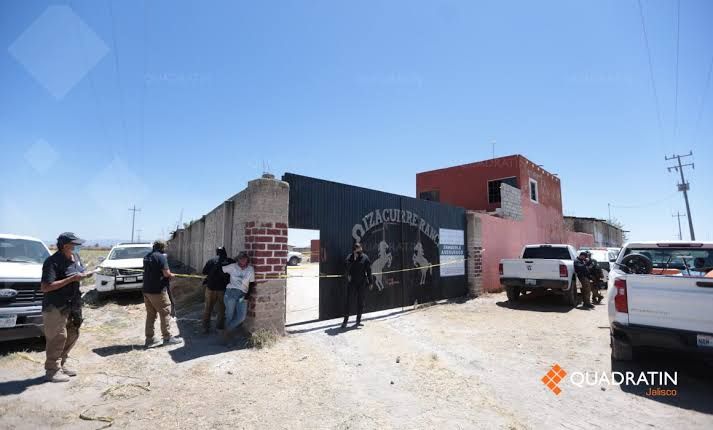
Between 2006 and 2023, authorities identified approximately 5,600 clandestine graves containing remains of the disappeared across 24 of Mexico's 32 states, underscoring the grim reality families confront. A March 2026 government report found that approximately 31 per cent of those listed as missing may actually be alive, though official investigations of over 46,000 cases have yet to begin due to insufficient data.
Rosas has installed a makeshift mailbox bearing Diego's photograph at age 16 on Mexico City's main avenue, inviting people to leave clues about his whereabouts or birthday greetings. After learning about Regresa, she expressed optimism about the technology's potential.
"This initiative is very important because they're not the little people who were taken back then," she said.
Karla Lechuga formed a search collective after her 19-year-old son Jeshua Cisneros disappeared in 2025. Groups like hers have installed dozens of "peace boxes" in churches nationwide to gather information about missing persons. They also display photographs of their missing loved ones in public spaces and urge criminal groups to provide anonymous tips.
"We have found some people alive, unfortunately others not," Lechuga said.
The crisis stems largely from cartel violence, as criminal organizations strategically use forced disappearances rather than visible murders to avoid attracting authorities' attention. Cartels often bury bodies in unmarked graves, burn remains or dispose of them through other means to conceal evidence of their crimes.