Groups pledge transport and equipment
Offers presented to Mayor Ismael Burgueño Ruiz at Tijuana's 10th Permanent Preparedness and Response Meeting included buses, off-road vehicles, heavy machinery, radios and horses. The city plans to catalog the resources and their locations so officials can coordinate their use during an emergency.
David Bojórquez of the Metropolitan Transportation Front offered about 500 vehicles, including personnel transport vehicles and urban buses. Route taxis were also offered to help people during emergencies.
The Confederation of Mexican Workers (CTM) offered staff and material support through its state leader, Baltazar Gómez Ruiz. Its proposed contribution also includes communication radios. Horses were among the resources proposed for reaching places that are especially difficult to access.
Carlos Rabadán Carbajal and Luis Esteban Torres Estrada, representing Club Legendarios 4×4, offered off-road vehicles, tow trucks, dump trucks and heavy machinery. Burgueño emphasized identifying and organizing the available resources before they are needed.
The offers follow concerns about the city's readiness. In a November 23, 2026, report covering the first eight preparedness meetings, Semanario ZETA said the delegations lacked more than half the machinery needed for an ideal response and that only two shelters were available. PAN councilwoman Georgina Arana told the publication that the city's conditions were not adequate to handle so much rain.
Household visits focus on landslide exposure
Tijuana has finished the first phase of its survey of homes in vulnerable areas, including return visits when residents could not be reached the first time. A second phase now concentrates on landslide-prone areas. Officials are recording where households are located, their living conditions and their particular needs to assess what assistance they may require.
The scale of the risk was detailed in ZETA's November 23 report. Citing municipal Civil Protection data, it identified 38 critical points across Tijuana's nine delegations and 15 active landslides directly affecting 5,293 people and 1,328 buildings. Of those buildings, 502 were marked yellow and 826 red. Seven of the active landslides were in the Sánchez Taboada delegation.
Municipal officials said the household visits are intended to identify families and offer preventive assistance, not conduct evictions. Burgueño directed departments to update their records and include newly identified settlements or homes needing attention.
The city is also working with the relevant agencies to follow up with families exposed to risks involving infrastructure and public services.
Drainage cleaning and utility inspections continue
The city reported that its 33 sediment basins, known as desarenadores, were operating at 88% of capacity. Crews were still cleaning three of the larger basins.
ZETA reported on November 23 that Tijuana had allocated 13,952,772.15 pesos to cleaning the basins and had removed 40,342 cubic meters of sand and assorted trash.
The Secretariat of Territorial and Urban Development is reviewing an agreement concerning the removal of damaged utility poles and cables. Officials will check the telecommunications company registry to ensure that every business is included in the effort. Municipal Public Services is separately compiling an inventory of abandoned poles and unused cables owned by the city.
Pre-alert powers, military coordination and public outreach
Tijuana's council approved a Declaratoria de Estado de Prealerta, or pre-alert declaration, on October 6, 2026, during a special session led by Burgueño. Gringo Gazette North reported that the declaration allows agencies to spend funds, position equipment and establish communication channels before serious storms arrive.
Military coordination was addressed at the ninth preparedness meeting on November 20, 2026. According to Uniradio Informa Baja California, Burgueño was joined by representatives of Mexico's Secretariat of National Defense (SEDENA), Secretariat of the Navy (SEMAR) and National Guard, who presented the disaster-relief frameworks Plan DN-III-E and Plan Marina. Plan DN-III-E covers prevention, assistance and recovery.
At that meeting, officials also described work with the Diocese of Tijuana to share preventive information through churches. The effort includes training parish priests and possible help from municipal departments to prepare and activate temporary shelters.
Business outreach has reached 1,800 establishments. Inspection and Verification officials said all nine delegations met their individual targets of distributing preventive-information flyers at 200 businesses.
Forecasts and past storms frame the preparations
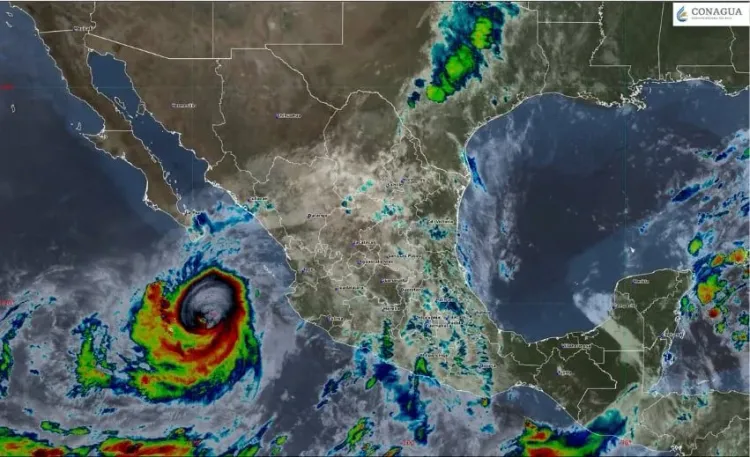
In an October 7, 2026, report by Gringo Gazette North, Ensenada civil protection director Julio César Obregón Angulo described a forecast from Mexico's National Meteorological Service, operated through Conagua, that put the probability of a strong El Niño this cycle at a high level. Effects were expected primarily from November through April, with the strongest impact from November through February. Forecasters also expected about 56 cold fronts to cross Mexico during the season.
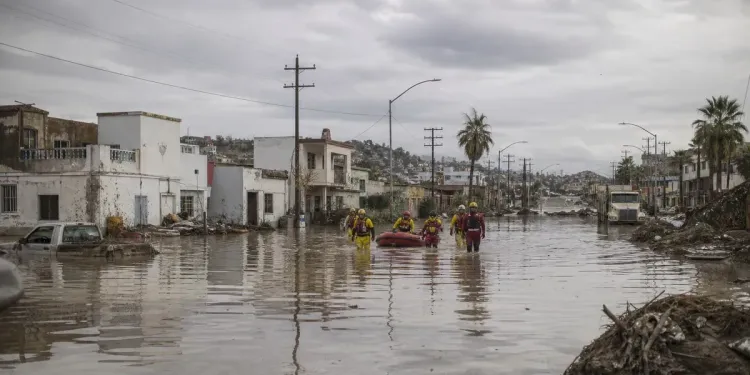
Late October brought heavy rain from post-tropical cyclone Rachel. Baja California's State Civil Protection Coordination recorded 49 mm in Tijuana, 87 mm in Tecate and 116 mm in Ensenada. Nine people were rescued in Tijuana: one at the Mariano Matamoros Centro sediment basin and eight in Valle de Las Flores, where water reached 1.80 meters.
ZETA's November 23 report also recalled the toll of El Niño-related rains in 1993. Citing journalistic accounts, it reported 110 deaths and 6,000 evacuations in Tijuana that year. A storm the publication documented on January 12-13, 1993, brought 86.9 mm (3.42 inches) of rain, affected 800 people and killed 12.