Housing payments and eligibility
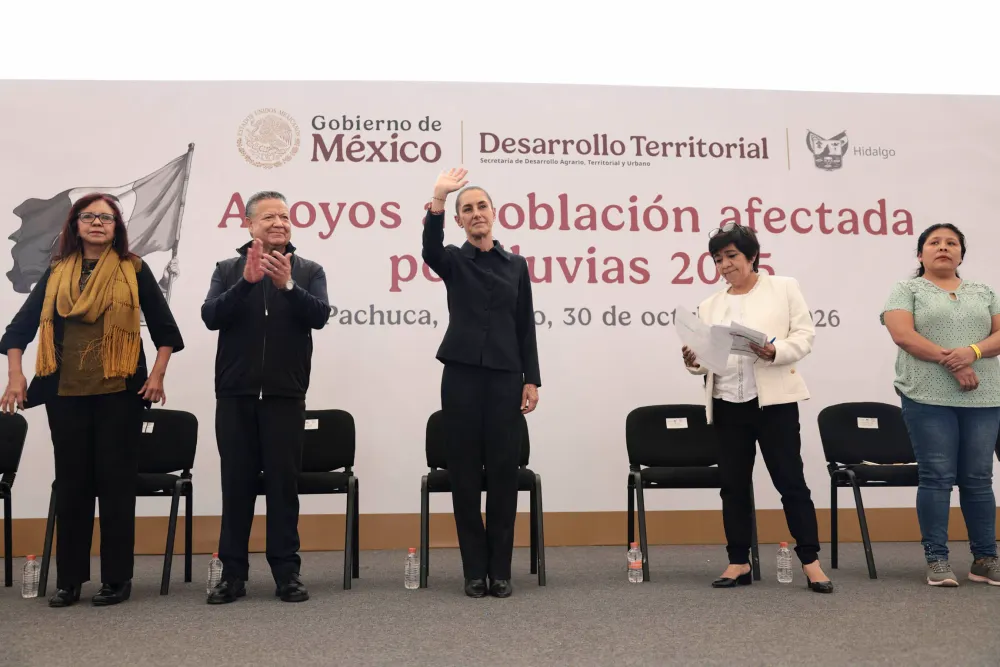
The housing assistance covers 228 localities in 23 municipalities and totals more than 900 million pesos, according to Edna Elena Vega Rangel, head of the Secretariat of Agrarian, Territorial and Urban Development (Sedatu). Families can use the grant to rebuild, purchase land or buy a home in a safe location.
Sedatu will distribute the money in three installments. The first payment will be available through the Banco del Bienestar card within five days. Federal inspections beginning in January 2027 will check construction progress before the second payment is released, and the final 20 percent will be paid when construction ends.
The program's operating guidelines require recipients to leave their damaged properties permanently and not return to live in them. Assistance also depends on household eligibility checks and the availability of authorized funds. The extraordinary program covers households affected by the October 2025 rains in Hidalgo, Puebla and Veracruz.
Authorities opted to pay families directly after struggling to find suitable land in remote, scattered communities. At the Pachuca event, Sheinbaum also defended direct payments against criticism of the elimination of the Fondo de Desastres Naturales (FONDEN). According to Lado.mx, she alleged that money had previously been stolen.
Sheinbaum said the same 400,000-peso assistance would go to another 436 households in Puebla and 600 in Veracruz. Including Hidalgo, the program will reach 3,295 families in the three most affected states.
Federal and state recovery spending
The federal government reported allocating about 8 billion pesos to Hidalgo's emergency response and recovery. That figure includes 1.8 billion pesos for the initial response and 5.7 billion pesos for road, bridge and water infrastructure reconstruction. Hidalgo's government separately reported investing 4.577 billion pesos in recovery efforts; authorities put the combined contributions at more than 11 billion pesos.
Welfare Secretary Ariadna Montiel Reyes reported 7,426 million pesos in direct social assistance for the emergency. The aid included 20,000 pesos for cleaning homes, payments ranging from 15,000 to 70,000 pesos for housing rehabilitation, and 50,000 pesos for affected businesses and small agricultural producers.
Authorities listed 198 rehabilitated roads and 50 reconstructed bridges among the completed work, along with projects restoring water and drainage services. Other projects remain under construction.
Damage and the emergency response
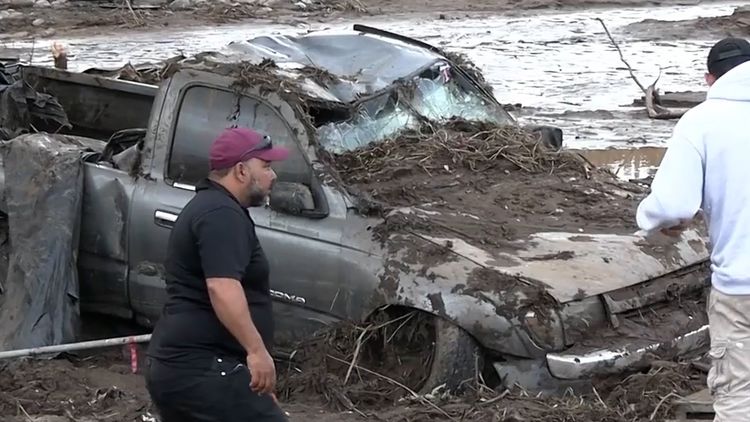
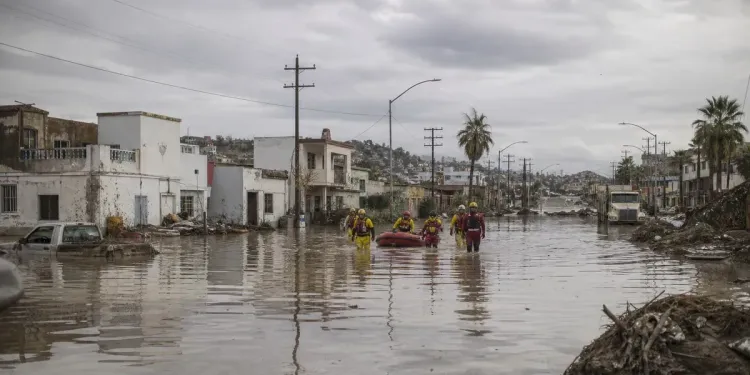
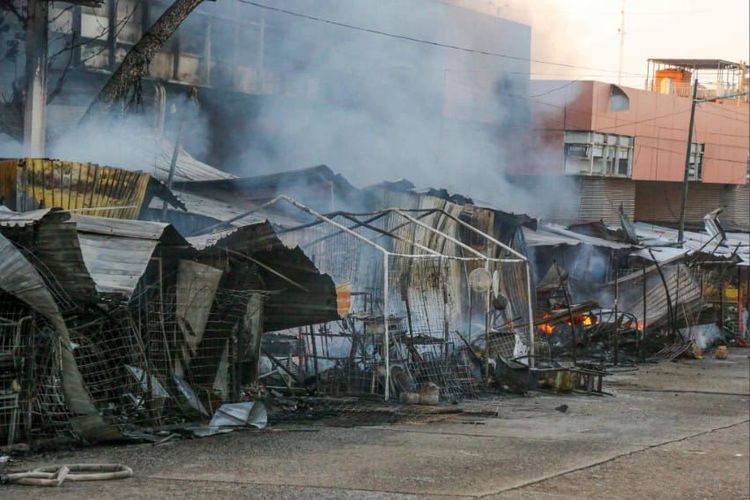
Flooding and landslides triggered by the October 2025 monsoon trough affected 28 Hidalgo municipalities. Authorities estimated that about 35,000 families in the state were affected, out of more than 105,000 across five states. Homes, transport routes, schools and drinking-water systems sustained damage.
Menchaca's damage assessment counted 675 rockfalls, 158 landslides and 359 damaged roads. It also recorded damage to 190 drinking-water and drainage systems, 99 schools and two health centers. The governor said 236 communities were cut off.
Crews used 451 pieces of machinery to clear approximately 600,000 cubic meters of debris, according to the state assessment. Menchaca said about 10,000 public servants participated in the response and that the state carried out 375 projects to reopen roads and restore drinking-water services.
During the first few weeks, authorities reached isolated communities by air. A fleet of 33 helicopters completed 919 flights carrying patients, medicine and humanitarian supplies. Residents also received 266,000 food packages.
Unfinished projects and the broader infrastructure plan
Although the federal government describes Hidalgo as nearing the end of an important reconstruction phase, some road, drinking-water and dam projects are unfinished.
An October 19, 2026, assessment put physical progress on the state's road, hydraulic and communications infrastructure reconstruction at 58 percent. Alejandro Sánchez García, head of the state infrastructure secretariat SIPDUS, said 45 of 213 planned projects had been completed. Of the others, 82 were underway, 55 were in contracting and 31 were undergoing validation. Planned state investment for that work was 2,164 million pesos.
Earlier, during an April 25, 2026, visit to Tenango de Doria, Sheinbaum announced a broader investment of 41,865 million pesos in Hidalgo infrastructure over the six-year term. According to SICT Secretary Jesús Antonio Esteva Medina, the plan includes rehabilitation or expansion of 50 bridges across 18 municipalities and more than 1,200 road and highway actions.
That broader plan also includes the Megabachetón program, expansion of the Tizayuca technological high school and the Mexico City-Pachuca train.