Mexico to conduct nationwide earthquake drill Saturday across all 32 states
Mexico will conduct a comprehensive earthquake drill across all 32 states at noon on Saturday, National Civil Protection chief Laura Velázquez announced at President Claudia Sheinbaum's Thursday morning press conference.
The exercise falls on September 19, a date that holds profound significance in Mexico's collective memory as the anniversary of two catastrophic earthquakes. The magnitude 8.1 earthquake that struck on September 19, 1985, killed more than 10,000 people, injured 30,000, and left an estimated 250,000 homeless. Exactly 32 years later, on September 19, 2017, a magnitude 7.1 earthquake hit at approximately 1:14 p.m., claiming at least 326 lives, including 187 in Mexico City.
The 2017 disaster occurred just hours after annual earthquake drills commemorating the 1985 event had taken place across the country, underscoring the unpredictable nature of seismic activity and the importance of preparedness.
Drill details and alarm system activation
Velázquez explained that the earthquake alarm will sound at noon Mexico City time in areas where the warning system operates. Cell phone alerts will also be activated simultaneously. Participants should evacuate their homes or any building they occupy at the time the alarm sounds.
Mexico's earthquake early warning system, SASMEX, has been operating for over 30 years and became the world's first seismic early warning system to openly broadcast alerts to the general population in August 1993. The system currently provides warnings to approximately 25 million people across Mexico, covering major cities including Mexico City, Acapulco, Puebla, Oaxaca, and Guadalajara.
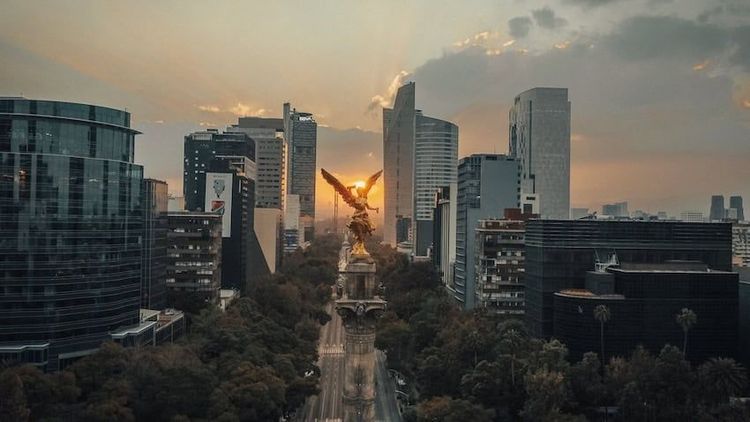
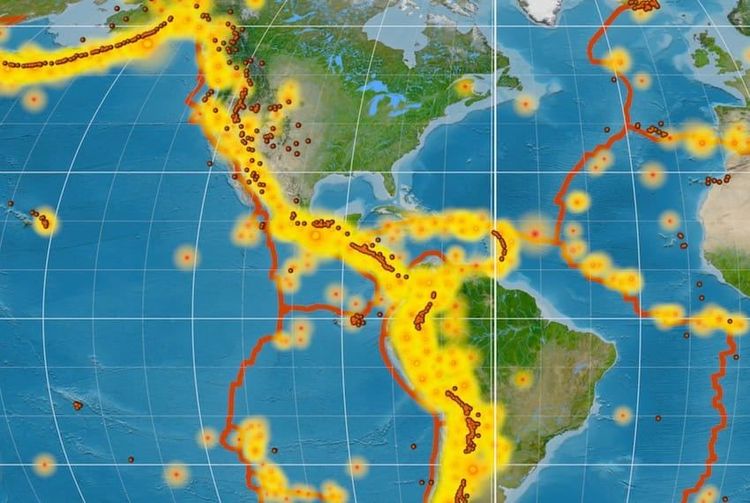
Mexico City's particular vulnerability to earthquakes stems from its location on the former bed of Lake Texcoco, where loose sediments amplify seismic waves, making the capital susceptible to severe damage even from distant epicenters.
Following Saturday's drill, the National Emergencies Committee, led by Security Minister Omar García Harfuch, will convene to review the exercise's effectiveness. García Harfuch, who assumed his current position on October 1, 2024, previously served as Mexico City's police chief, where he reduced homicide rates by almost 50% and survived a 2020 assassination attempt by the Jalisco cartel.
Velázquez emphasized that the drill
will allow us to gauge our capacity to respond
to disaster situations. She added that the federal government will provide information to the public about
all the preparations we've made
to respond to any emergency situation facing the country.
Sheinbaum dismisses poll on U.S. intervention against cartels
During the press conference, Sheinbaum addressed a NewsNation report citing an unnamed poll mentioned in an internal State Department document that claimed most Mexicans favor U.S. intervention against drug cartels on Mexican soil.
This has no basis in reality,
The source isn't even cited. It's a media outlet in the United States that said that, according to some poll conducted by who knows who, the majority of Mexicans agreed with a foreign intervention, from the United States. This is false.
The president cited results from professional polling firms that contradict the claim and noted it would be
contradictory with the nationalist sentiment that has increased in our country.
The NewsNation report was published two days after U.S. Secretary of State Marco Rubio suggested Mexico wasn't doing enough to combat drug cartels and hinted at potential unilateral U.S. action against criminal organizations in Mexican territory. In February 2025, the United States designated eight Mexican drug cartels as Foreign Terrorist Organizations, including the Sinaloa Cartel and Jalisco New Generation Cartel, with two additional cartels receiving the designation in July 2026.
President discusses fashion choices and sustainability
When asked about the dress she wore while delivering the Cry of Independence on Tuesday night, Sheinbaum revealed her approach to wardrobe sustainability.
I recycle my clothes,
They say how do you have new clothes every day? My pants are the same ones I've worn several times we just change them with a seamstress.
Sheinbaum explained that a colleague named Thelma helps coordinate with seamsters and seamstresses who alter her existing clothes by adding embroidered material, often using textiles gifted to her during weekend tours to different parts of the country.
It's important to say it because it's not that we're spending who knows how much to have different clothes all the time,
Why do I use these kinds of clothes? Why does it matter to me? Because there is nothing more beautiful than this, made by Mexican artisans.
On Tuesday night, the president wore a dress designed and made in the Isthmus of Tehuantepec by the artisans of Creaciones Biulú, an embroidery studio based in Juchitán, Oaxaca. Sheinbaum was included on The New York Times' list of the Most Stylish People of 2025.