The peso's dramatic reversal: Why Mexico's currency defied 25 years of decline
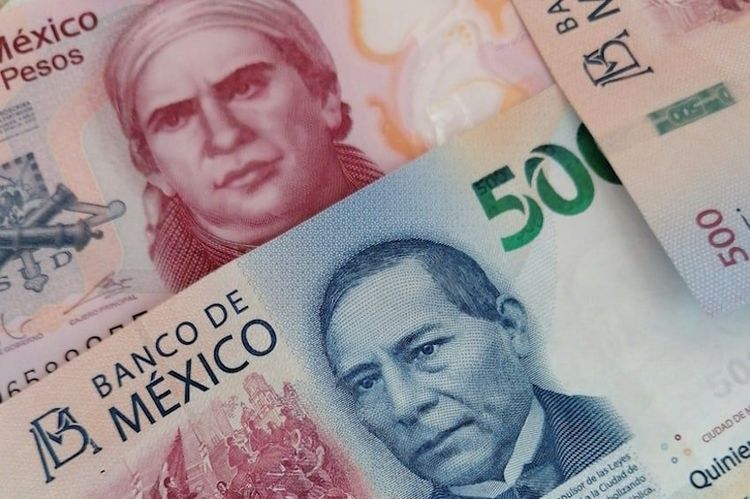
The Mexican peso's trajectory over the past five years represents one of the most dramatic currency reversals in emerging market history. Had the peso followed its established pattern from 1995 to 2020, the exchange rate would currently stand near 37 pesos to the US dollar. Instead, as of this writing, it trades at 16.86—a testament to how profoundly Mexico's economic landscape has transformed.
For a quarter-century, the peso depreciated at a predictable rate of approximately 10% annually against the dollar. This consistency, while challenging for some sectors, provided a foundation for economic planning across businesses, government, and households. The abrupt departure from this trend since 2020 has created both opportunities and complications that continue to reshape Mexico's economy.
The pandemic shock and recovery
The peso's recent strength began from a position of extreme weakness. Between March 2 and May 28, 2020, the currency plummeted 11.4% as the COVID-19 pandemic triggered global economic disruption. On March 24, 2020, the peso hit 25.77 per dollar—its weakest point since 2000. What followed defied expectations: rather than continuing its historical decline, the peso staged a remarkable recovery.
Multiple forces converged to drive this reversal. The Bank of Mexico responded to pandemic-era inflation by raising its benchmark interest rate to 11% by August 2024, creating one of the widest interest rate differentials in emerging markets. This gap—approximately 3.25 percentage points above US rates—triggered massive carry trade flows as investors borrowed in low-yield currencies like the Japanese yen to invest in peso-denominated assets.
According to Bank for International Settlements data, the peso ranks as the third most traded currency among emerging markets, with 82% of peso transactions occurring outside Mexico. This global appetite for peso exposure has made the currency highly responsive to international capital flows rather than domestic economic fundamentals alone.
The nearshoring phenomenon
Foreign direct investment has surged to historic levels, driven by companies relocating manufacturing operations closer to US markets. Mexico attracted a record $23.6 billion in foreign direct investment during the first quarter of 2026, marking a 10.4% increase from the same period in 2025 and the highest first-quarter total on record.
Manufacturing absorbed 54% of all FDI inflows in 2024, with the transportation equipment sector—dominated by automotive and auto-parts manufacturers—capturing half of all manufacturing investment. This sectoral concentration reflects Mexico's emergence as a critical hub in North American supply chains.
The country's rising investment profile received independent validation when it climbed from 25th to 19th place in Kearney's 2026 Foreign Direct Investment Confidence Index, representing one of the largest global gains and signaling growing confidence in Mexico's manufacturing capabilities.
However, this investment surge comes with important caveats. Federal Reserve research indicates that while total FDI numbers remain strong, new investment inflows have declined to a 10-year low since 2022, with reinvested earnings now accounting for the majority of reported FDI. This suggests the peso's strength may be less firmly anchored to fresh productive capacity than headline figures suggest.
Additional dollar sources
Remittances from Mexicans abroad provide another substantial source of dollar inflows. After declining 4.6% in 2025—the first annual drop in 12 years—remittances rebounded 3.1% in the first half of 2026 to reach $30.76 billion. These transfers represent a critical income source for millions of Mexican families and contribute meaningfully to peso demand.
The road ahead
The Bank of Mexico has begun unwinding its aggressive monetary stance, cutting rates 12 consecutive times from the August 2024 peak of 11% to 6.50% by May 2026. This easing cycle reduces the interest rate differential that attracted carry trade flows, potentially diminishing one key pillar of peso strength.
The scheduled 2026 review of the USMCA trade agreement linking Mexico with the US and Canada introduces additional uncertainty. Both investment analysts and financial institutions have identified this review as a pivotal moment that could significantly influence future capital flows and the peso's trajectory.
The peso's behavior since 2020 demonstrates how quickly established patterns can dissolve when structural economic shifts occur. The currency's strength reflects genuine changes in Mexico's economic position—from nearshoring momentum to elevated interest rates to remittance flows. Yet the same unpredictability that drove the peso's unexpected strength could produce volatility in either direction.
Understanding what drives the peso's current valuation requires looking beyond traditional depreciation patterns to the complex interplay of global capital flows, manufacturing relocation, monetary policy decisions, and trade relationships. The 37-peso scenario that historical trends would have produced now seems like an artifact from a different economic era—one that ended when the pandemic reshaped global supply chains and investment priorities.