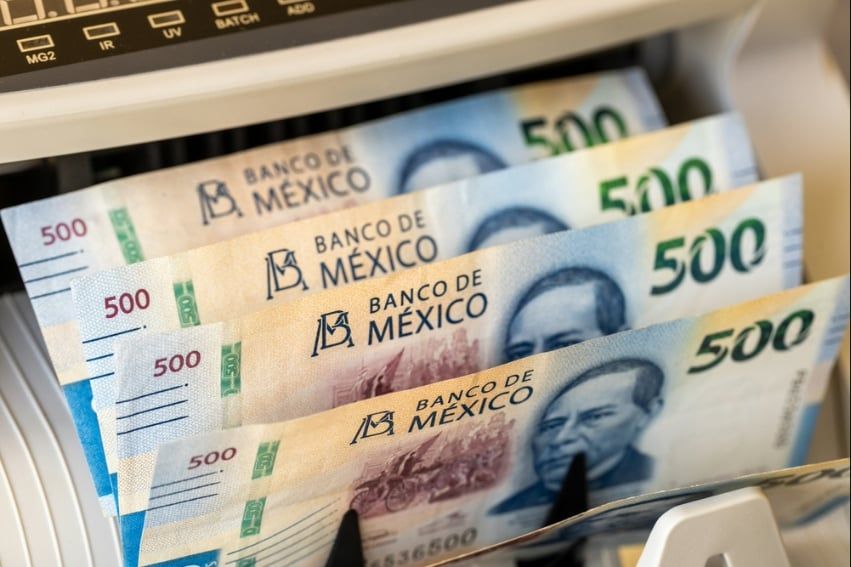
The Mexican peso hits its strongest level against the dollar in 6 months
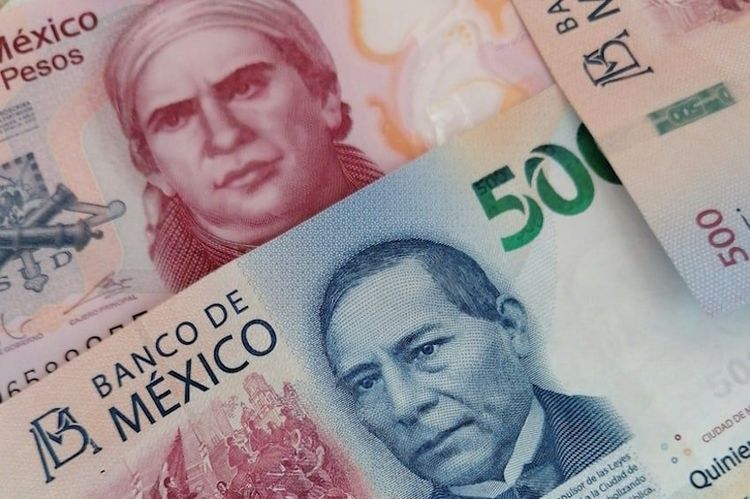
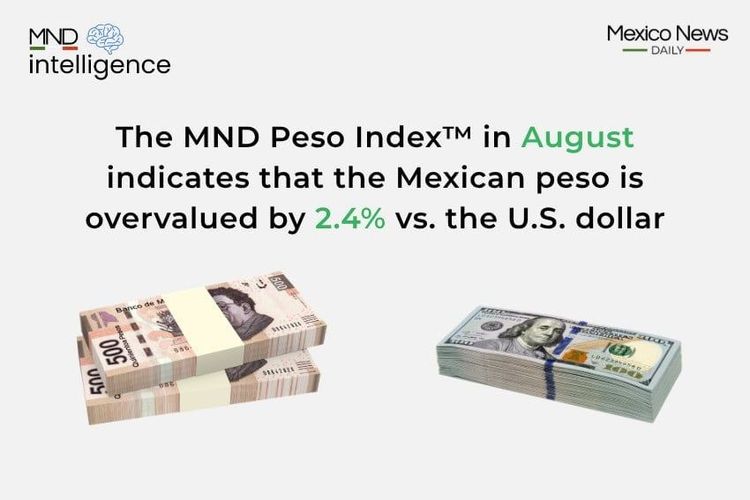
The Mexican peso strengthened to 17.14 per U.S. dollar on Friday morning, marking its most robust level in six months and extending a 10-day rally that began after Mexico's central bank kept interest rates unchanged at its August 6 monetary policy meeting.
After closing Thursday at 17.21 to the dollar with a 0.12% gain, the peso climbed an additional 0.58% in early Friday trading, approaching levels last seen on February 17, when the exchange rate reached 17.132 pesos per dollar. Forbes México projected the currency could appreciate 1.3% by week's end, driven partly by disappointing U.S. jobs data showing nonfarm payrolls fell by 23,000 positions last month.
Central bank maintains cautious stance despite declining inflation
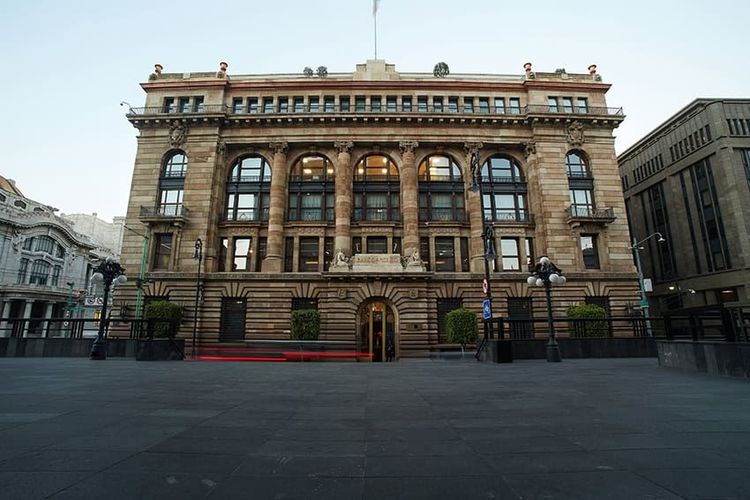
Banco de México's board of governors unanimously voted to hold the benchmark rate at 6.50% for the second consecutive meeting, a level reached in May after an easing cycle that began in March 2024 brought rates down from higher levels to their lowest point since April 2022. The decision came as Mexico's annual inflation rate dropped to 3.12% in July, the lowest level since May 2020 and well within the central bank's target range of 3% plus or minus one percentage point.
In their policy statement, Banxico officials noted that headline and core inflation are expected to decline throughout the forecast horizon, though more gradually than previously anticipated. The central bank pushed back its timeline for inflation to converge to the 3% target, now expecting this to occur in the fourth quarter of 2027 rather than the second quarter as previously projected.
The board also cited renewed conflict in the Middle East as driving volatility in markets and causing international energy prices to rise, adding to uncertainty in the global economic environment. These concerns help explain the cautious approach despite inflation nearing target levels.
Interest rate differential fuels investor demand
A key driver of the peso's strength is the substantial interest rate differential between Mexico and the United States. With Mexico's policy rate at 6.50% and the Federal Reserve maintaining its benchmark at 3.50%-3.75% for the fifth consecutive meeting through July 29, the spread of approximately 275-300 basis points has made Mexican assets increasingly attractive to global investors.
Gabriela Siller, director of analysis at Grupo Financerio BASE, explained that the peso is appreciating due to carry trade activity, whereby investors borrow funds in low-interest-rate currencies such as the dollar and yen, then invest in higher-yielding Mexican assets. According to the Bank for International Settlements, the Mexican peso ranks as the third most traded currency among emerging markets, following the Chinese renminbi and the Indian rupee, with around 82% of peso transactions occurring outside Mexico.
Monex Grupo Financiero said in a statement that the peso's advance against the dollar is driven by dollar weakness and a readjustment of market expectations regarding the Federal Reserve's monetary policy direction at its September meeting. The newspaper El Economista noted that the weak U.S. jobs report prompted markets to reduce bets on U.S. interest rate increases, further supporting the Mexican currency.
Mixed economic signals shape outlook
While the peso has benefited from favorable monetary conditions, Mexico's broader economic picture shows mixed signals. The economy rebounded with 1.5% GDP growth in the second quarter of 2026 after contracting 0.8% in the first quarter, though analysts noted that a portion of the second-quarter expansion stemmed from temporary drivers including World Cup-related activity.
These economic fluctuations, combined with persistent services inflation and external risks, explain why Banxico signaled that interest rates would likely remain at current levels for the foreseeable future, balancing support for economic growth against the need to ensure inflation returns durably to target.