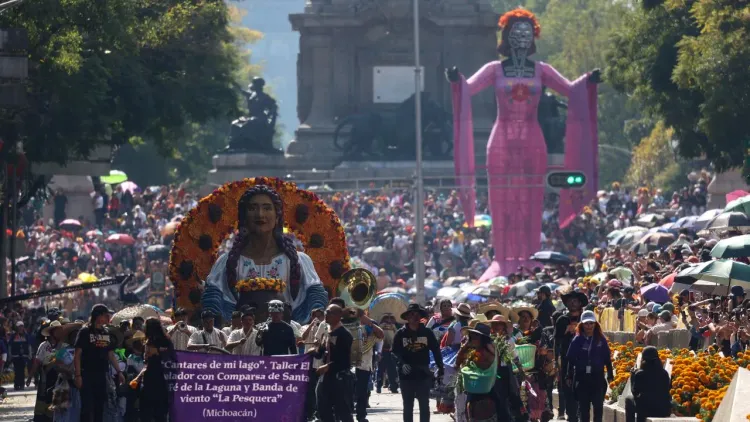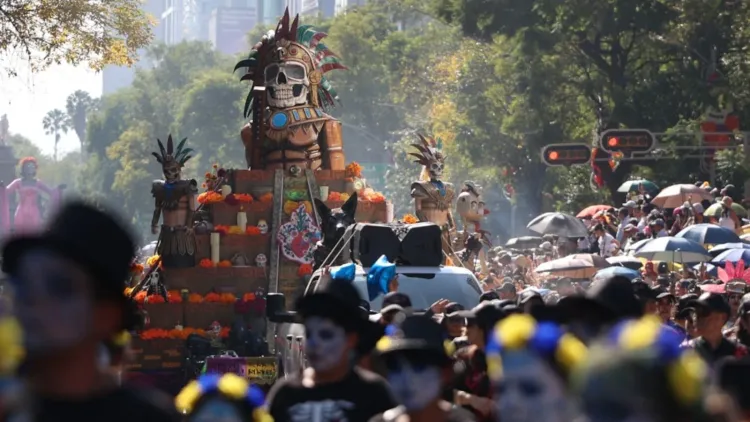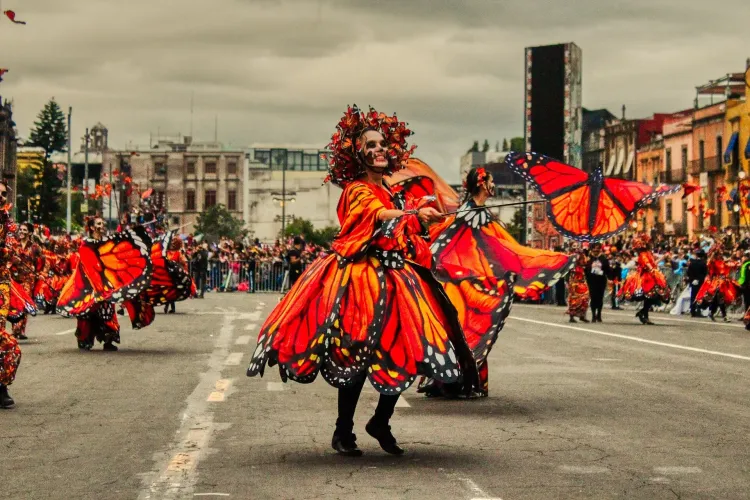
Catrinas on Reforma
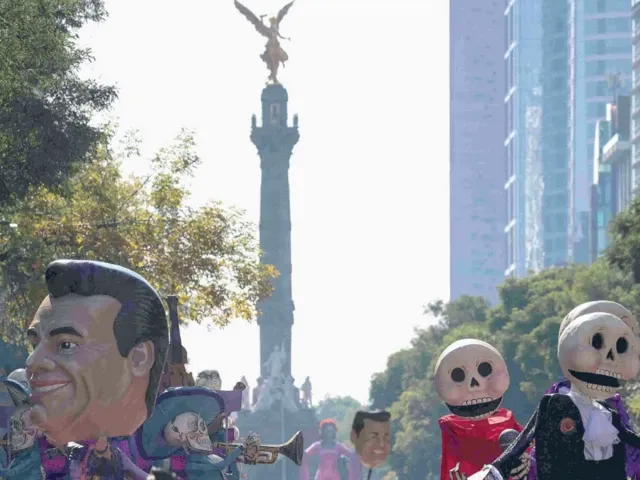
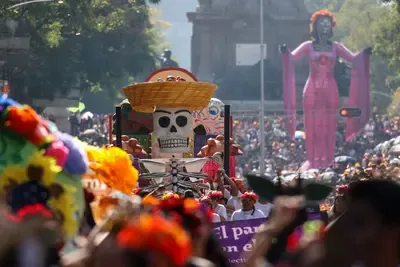
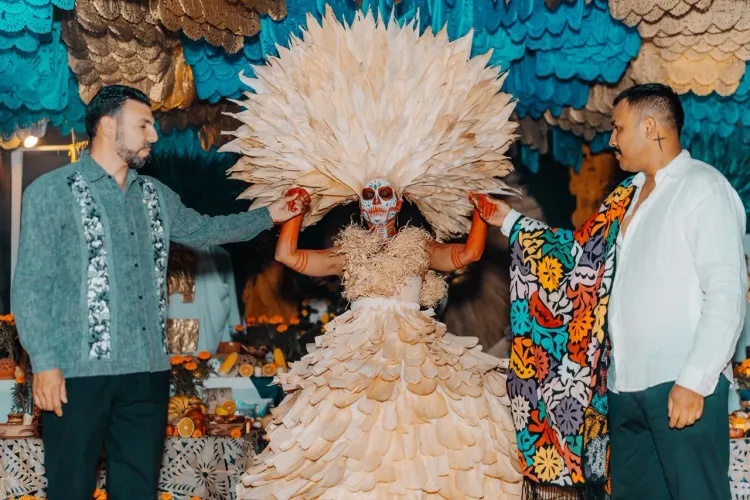
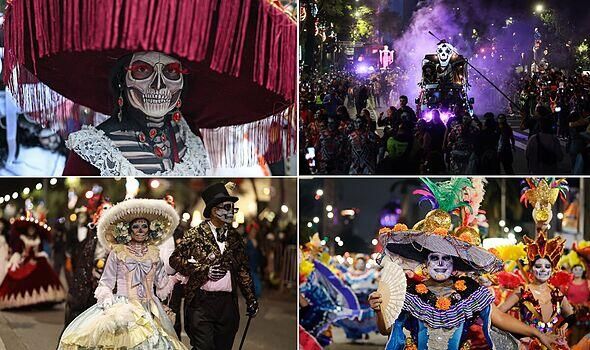
Participants wearing floral costumes and dressed as Catrinas, the traditional Mexican skeletal figures, traveled from the Angel of Independence to the Zócalo. Excélsior reported at least 36 contingents and 102 allegorical floats. Esquivias, director of Mega Body Paint México, provided the estimate of 20,000 participants.
The procession's route represented a passage between the living and the dead, incorporating xoloitzcuintle figures, Catrinas, altars, papel picado (perforated paper) and cempasúchil flowers.
The event began on October 26, 2014, and is organized by Mexico City authorities with the collective Mega Body Paint México. Organizers told El País México that they established it to preserve and strengthen Day of the Dead traditions as Halloween gained a larger presence in Mexico.
The figure behind the costumes
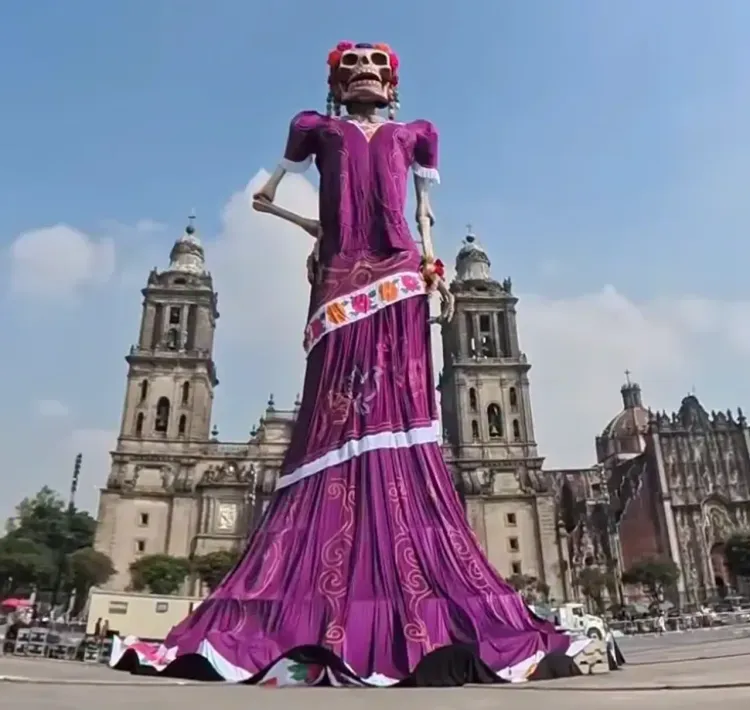
La Catrina, the elegant skeleton created by illustrator José Guadalupe Posada, is described by Express U.S. as the celebration's most popular contemporary symbol. Her origins were satirical: according to Mexico's Instituto Nacional de Bellas Artes y Literatura (INBAL), Posada's engraving "Calavera Garbancera" criticized indigenous Mexicans who abandoned their heritage in favor of European ways.
Diego Rivera later named the figure La Catrina and depicted her in elegant, full-body attire in his 1947 mural "Sueño de una tarde dominical en la Alameda Central," INBAL says. She appears holding hands with a young Rivera and linking arms with Posada.
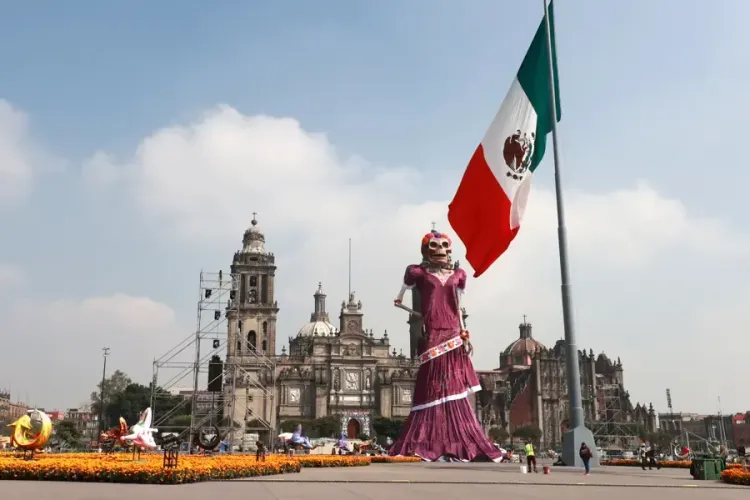
That figure will also be the focus of the Zócalo's 2026 Monumental Ofrenda, running October 29 through November 2. Mexico City's official tourism portal says the offering will include a 32-meter-tall cartonería (papier-mâché) sculpture, sawdust carpets and thousands of cempasúchil flowers.
Flowers, remembrance and cultural heritage
Flowers and colorful displays extend beyond the city center to the capital's canals and cemeteries. Day of the Dead honors deceased loved ones while celebrating memory, identity and the traditions that connect families. The city's tourism portal describes a season spanning October and November, with the main event on October 31.
On Paseo de la Reforma, the Cempasúchil Flower Festival is already underway. Scheduled from October 18 through November 1, 2026, it occupies the stretch between the Angel of Independence and the Ahuehuete. Its 140 floriculturists and agroecological producers come from conservation lands in Tláhuac, Milpa Alta and Xochimilco. The exhibition and sale aims to bring the capital's rural production into urban life, according to the tourism portal.
UNESCO recognized Day of the Dead as practiced by Mexico's indigenous communities with a proclamation in 2003. In 2008, it added the tradition to the Representative List of the Intangible Cultural Heritage of Humanity.
A separate parade on October 31
The Great Day of the Dead Parade is a separate event from Sunday's Catrina procession. It is scheduled to begin at 2 p.m. on Saturday, October 31, 2026, leaving the Glorieta de la Diana Cazadora and following Paseo de la Reforma to the Zócalo, according to the official tourism portal.
The event will feature marching bands, dancers, mojigangas (giant puppets) and dozens of large floats. Express U.S. lists tributes to Juan Gabriel, Emilio "El Indio" Fernández and the Red Queen of Palenque, along with lucha libre-themed vehicles and a special UNICEF show.
The October 31 celebrations will also honor the diversity of Mexican culture and the souls' journey to Mictlán, Express U.S. reports. In Aztec mythology, that underworld is ruled by Mictlantecuhtli and his wife, Mictecacihuatl.
Mixquic's three-night ritual cycle
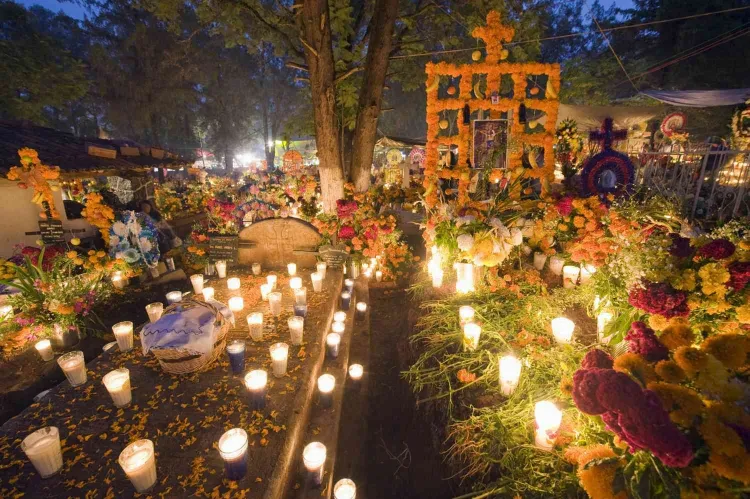
The city's tourism portal describes San Andrés Mixquic, in Tláhuac, as the capital's most traditional Day of the Dead festival. On October 31, white petals and sweets welcome children's souls in a ceremony called "The Whisper of the Little Angels." Adults are welcomed on November 1 during "The Great Reunion."
The cycle ends on the night of November 2 with "La Alumbrada." The colonial cemetery's lights go out, and thousands of candles illuminate the graves.