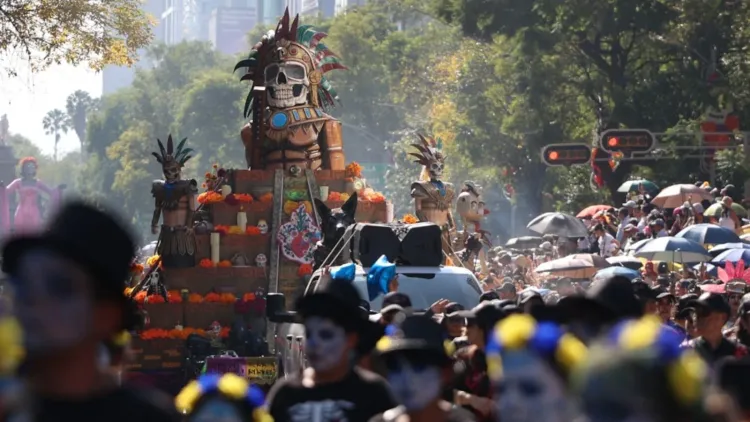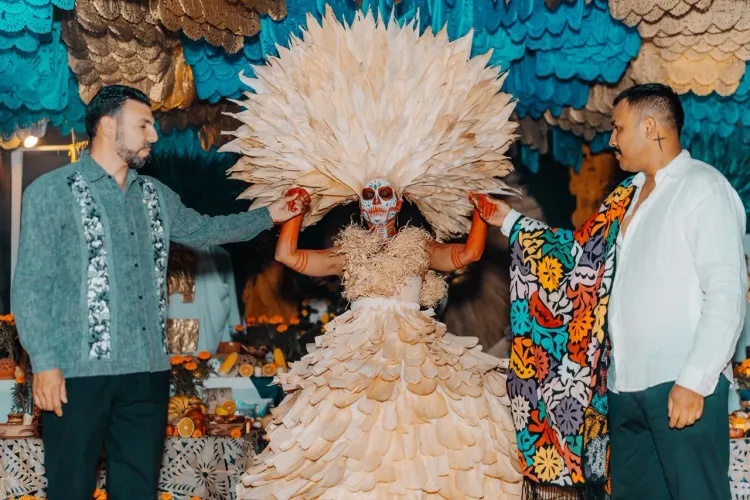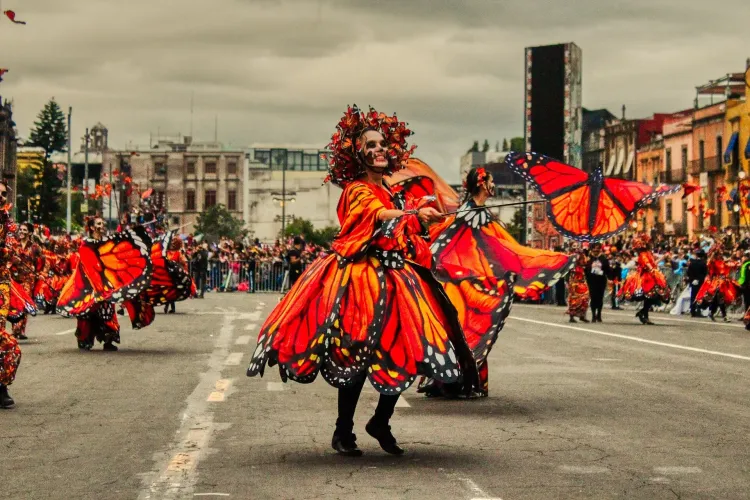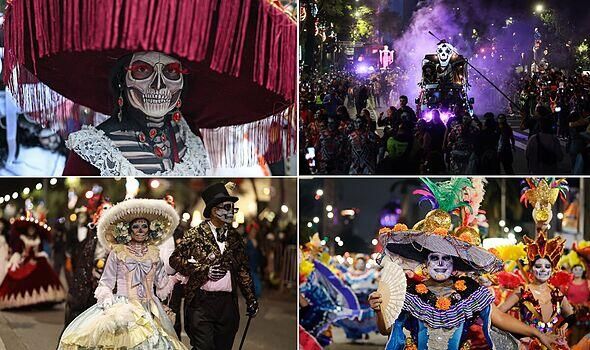
A procession through the capital
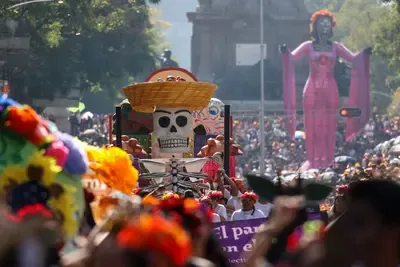
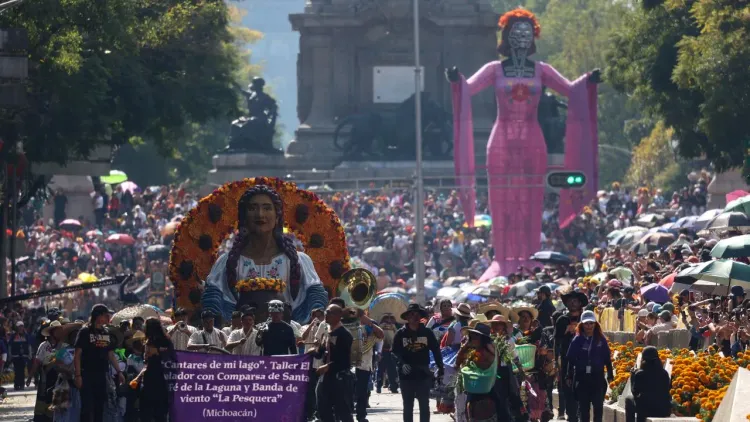
Musicians and acrobats accompanied the floats, while other performers wore masks and feathered headdresses. City officials had expected more than half a million spectators from Mexico and abroad for the parade, which shared the weekend with the city's Formula One Grand Prix.
According to HoyMX, plans for the 10th Gran Desfile de Día de Muertos on October 31, 2026, called for more than 4,000 participants and 12 allegorical floats. The procession was scheduled to begin at 2 p.m. local time and follow Paseo de la Reforma from the Glorieta de la Diana Cazadora to the Zócalo.
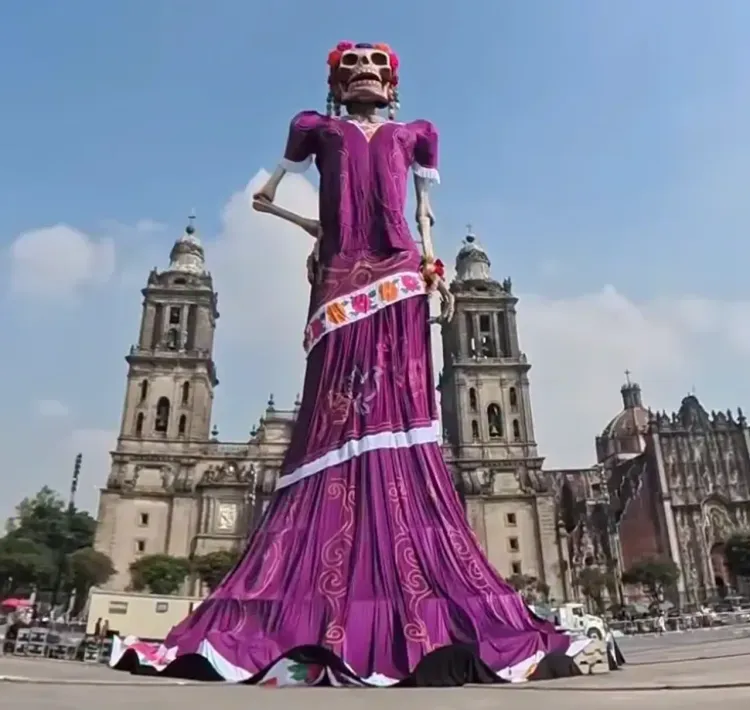
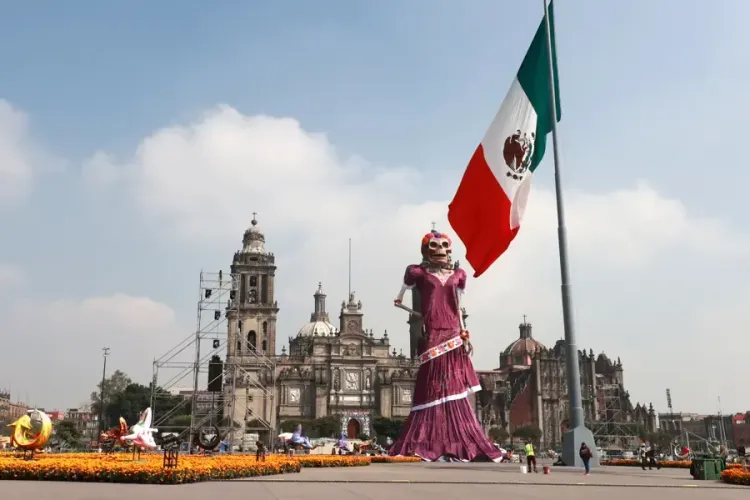
In the Zócalo, the capital's main square, this year's festivities also include an 11-story sculpture of Catrina, the elegantly dressed female skeleton.
Ana Suares, a 32-year-old tourist from Portugal, described the parade as fascinating. "People happy, the costumes, the flowers. It is quite wild! People coming together to remember those who are no longer here but are in our hearts," she told AFP. Isabel Halsey, 37, from the United States, said: "It is colourful, smelly, dramatic, full of people of different nationalities and personalities. I love it!"
How a film scene became an annual event
The opening of "Spectre" follows the British spy through downtown Mexico City amid a crowd dressed as the dead. After the film, Miguel Angel Mancera, the city's mayor from 2012 to 2018, faced questions about a real procession. "Everyone started asking me, 'What about the parade? When's the parade?'" he said.
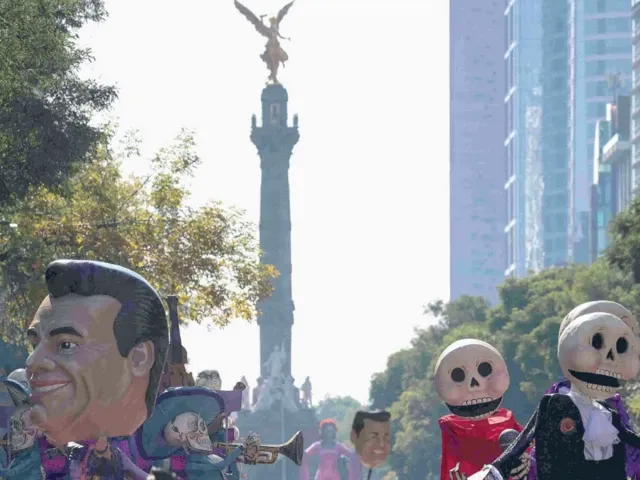
Mancera organized the first parade, held on October 29, 2016, and some of the giant figures from the film appeared in it. "It was an adventure," he said. The inaugural route followed Paseo de la Reforma from the Angel of Independence to the Zócalo. The route has since expanded from the Angel of Independence to the Puerta de los Leones in Chapultepec.
The first event attracted far more people than anticipated. An initial forecast put attendance at 135,000, while the city government's estimate afterward was about 425,000 along the route, according to accounts in Wikipedia and Atlas Obscura. A chamber of commerce separately projected about 1 billion pesos, or US$50 million, in income for city businesses from the 2016 parade and the Formula 1 Grand Prix held that same weekend.
The film production itself had imposed costs on local businesses. Atlas Obscura reported that the opening scenes were shot over 10 days in March 2015. Street closures deprived 6,500 businesses of more than 60% of their revenue, with losses totaling at least 376 million pesos, or about US$20 million.
The COVID-19 pandemic forced the parade's cancellation in 2020; it returned in 2021 with preventive measures. City officials put attendance at the 2025 edition at about 1.5 million. "It's a very, very big thing now," Mancera said. "It's something I'm really proud of."
Celebrations beyond the parade
The procession is one part of a much larger citywide program. Mexico City's government announced more than 5,000 free Day of the Dead events across its 16 boroughs for the 2026 season, with activities broadly scheduled from October 29 through November 2.
For the wider October 25-November 2 period, business chamber Concanaco Servytur forecast related spending of 53 billion pesos, about US$2.8 billion. That projection represented a 7% increase over 2025.
City officials also reported a larger supply of cempasúchil, or marigold, plants: growers produced 10 million for 2026, compared with 6.5 million in 2025, an increase of 53.8%.
A family observance draws crowds
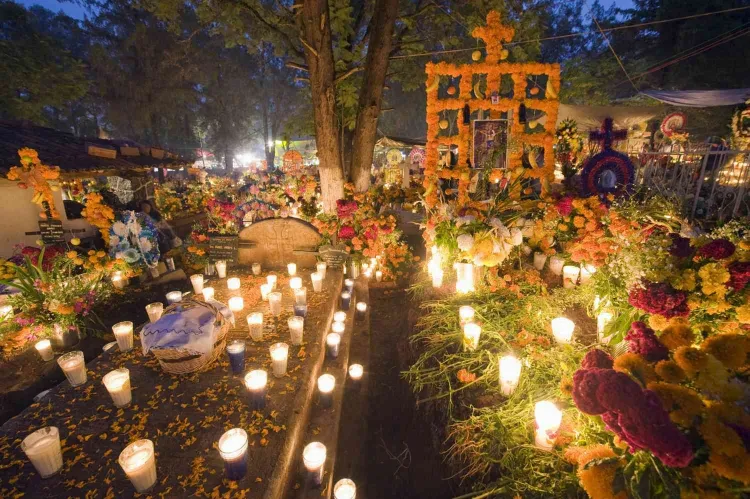
Long before the parade, families observed the Day of the Dead by visiting graves and preparing altars with foods and possessions associated with their deceased relatives. The tradition combines pre-Columbian practices with the Christian All Saints' Day.
Roberto Montalvo, an academic at the Iberoamerican University, described the shift from a "more intimate" celebration to "a mass event". At some cemeteries, tourists now crowd into spaces where families gather to remember their relatives.
"Do we adapt the visit to the ritual, or does the ritual adapt to the visitor?" Montalvo asked.