Arrivals and spending rise at a slower pace
Mexico welcomed 35.97 million international tourists from January through September 2026, a 3.8% increase from the same period in 2025, according to INEGI figures reported by Mexico News Daily. Foreign-currency spending totaled nearly US$26.1 billion, up 1.4%. Both totals were records for the nine-month period.
The pace of growth nevertheless eased. In the first nine months of 2025, international tourist arrivals had risen 6.4% and revenue had increased 6.1%.
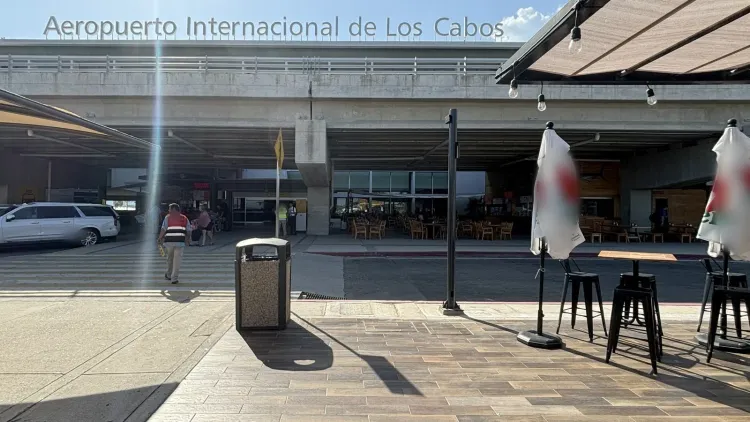
The picture was weaker at some leading coastal destinations. Citing the Center for Advanced Research in Sustainable Tourism (STARC) at Anáhuac University Cancún, Mexico News Daily reported that airports serving Cancún, Los Cabos and Puerto Vallarta handled a cumulative 1.9 million fewer international passengers through October 2026 than in the comparable 2025 period. The figures reflect a two-year decline in air arrivals to Mexico's three main sun-and-beach destinations.
The record year behind the comparison
The slowdown follows a record 2025. Mexico's Ministry of Tourism, known as Sectur, reported 98.2 million international visitors that year, citing INEGI's International Travelers Surveys. The total was 13.6% above 2024 and the highest annual count in the country's history.
Overnight tourists accounted for 47.8 million of those visitors, an increase of 6.1%. International visitors generated US$34.992 billion in foreign-exchange earnings, 6.2% more than in 2024.
The World Travel & Tourism Council's 2026 Economic Impact Research also identified Mexico as North America's strongest Travel & Tourism performer in 2025. Its Travel & Tourism GDP increased 1.8%, compared with 0.9% in the United States and 1.2% in Canada.
In that research, WTTC reported a 3.5% rise in international visitor spending in Mexico, versus declines of 4.6% in the United States and 3.5% in Canada. Mexico's international visitor arrivals increased 6.1%, while the United States recorded a 5.5% decline and Canada a 0.6% decline.
Tourism's role in jobs and regional economies
Tourism generated 8.7% of Mexico's GDP in 2024, according to INEGI's annual tourism satellite account, the latest available as of November 2026. These accounts measure tourism activity across industries rather than relying on international arrival counts alone.
Approximately 5.07 million people worked in the sector in the second quarter of 2026, equivalent to 9.3% of national employment. Visitor spending supports airlines, hotels and restaurants, but also independent guides, local transportation businesses, cultural enterprises and other small operators.
Domestic travelers are another foundation of that activity. Trips by Mexican residents for vacations, family visits, cultural and religious celebrations, and business sustain lodging, bus services, restaurants and regional attractions. That demand helps destinations maintain business when international travel patterns change.
Beyond the coastal resorts
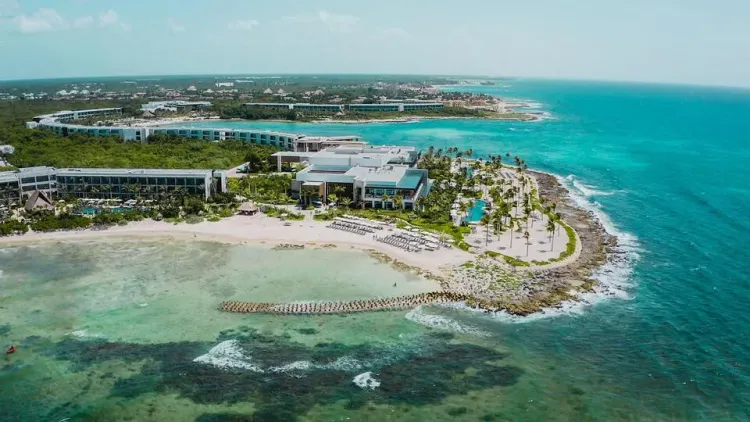
Cancún and the Riviera Maya, Los Cabos and Puerto Vallarta remain prominent international draws, but Mexico's tourism economy also depends on urban and cultural travel. Mexico City attracts business travelers and visitors to its cultural institutions, with spending reaching hotels, restaurants, entertainment venues and transportation services.
Yucatán, Oaxaca and Guanajuato extend that activity beyond the major resorts. Their archaeological heritage, historic architecture, crafts and cultural attractions bring customers to artisans, guides, smaller lodging businesses and other local enterprises.
Developing those destinations also involves infrastructure and environmental decisions. Coastal growth must be balanced against the need to safeguard beaches, marine habitats and freshwater supplies. Transportation, public services and lodging development require planning, while destination managers face shifting international demand and the challenge of extending tourism's benefits to less-established communities.
The 2026 outlook and a tax increase ahead
In its 2026 outlook, WTTC forecast that the FIFA World Cup would boost Travel & Tourism GDP growth across North America. It projected full-year growth of 2.4% for Mexico, 6.4% for Canada and 2.1% for the United States. The council characterized the tournament as an opportunity to support longer-term tourism growth through better connectivity and cross-border cooperation.
For 2027, tourism analyst Humberto Molina of Grupo Empresarial Estrategia expects a higher Non-Resident Tax to weigh on Mexico's tourism sector, according to Mexico News Daily. The tax paid by foreign tourists is set to rise 17.8% to 1,158 pesos in January 2027.