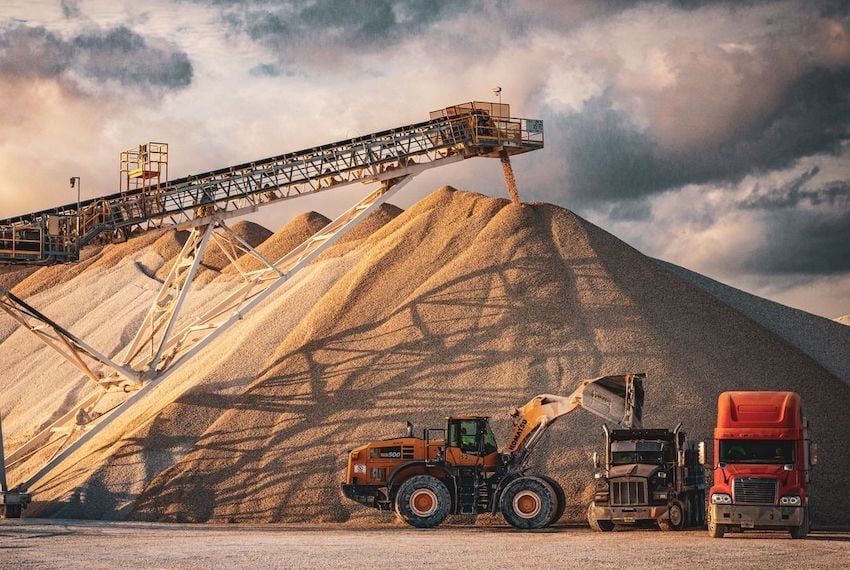
World Bank tribunal delivers mixed ruling in Vulcan-Mexico trade dispute
The International Centre for Settlement of Investment Disputes (ICSID), a World Bank-affiliated arbitration body established in 1966 that has handled over 1,000 international investment cases, issued a mixed ruling in the long-running dispute between Mexico and Birmingham, Alabama-based Vulcan Materials Company. The decision represents a largely favorable outcome for Mexico, though questions remain about next steps in the contentious case.
The tribunal dismissed nearly all claims filed by Vulcan — the largest U.S. producer of construction aggregates, with $7.4 billion in revenue in 2024 and operations across 21 states, the Bahamas and Mexico. However, the panel found that Mexico violated the North American Free Trade Agreement by shutting down quarrying operations managed by Calica, a Vulcan subsidiary, in the state of Quintana Roo.
Minimal damages despite violation finding
Although Vulcan sought $1.53 billion in damages plus interest and costs, the tribunal awarded only negligible monetary compensation. According to Mexico's Economy Ministry, the awarded damages represent less than 1% of the company's original claim — a significant victory for the Mexican government despite the technical violation finding.
The final decision remains confidential pending official release. Vulcan indicated it will address the ruling during its second-quarter earnings call on Wednesday.
Mexico's Economy Ministry stated the government is carefully analyzing the decision to determine available legal options. The ministry emphasized Mexico's commitment to foreign investment that brings innovation, competitive wages and environmental protection, while respecting international treaty procedures to provide legal certainty for economic development.
Decades-old operations at center of dispute
Vulcan commenced quarrying operations in Quintana Roo in 1986 through Calica, operating the site for over three decades before the conflict erupted. The company filed its complaint with the tribunal in September 2018, accusing Mexico of violating NAFTA by repudiating an agreement to unlock aggregates reserves and arbitrarily shuttering quarrying operations.
The dispute originated during the Enrique Peña Nieto administration but escalated significantly during Andrés Manuel López Obrador's presidency. Mexican environmental authorities closed portions of Calica's limestone operations in 2018, with complete shutdown ordered in May 2022 over allegations that underwater limestone extraction was causing environmental damage. The government canceled deepwater port access and shipping privileges despite Vulcan's concession remaining valid until 2037. Navy personnel seized the company's port in March 2023.
Mexico joined ICSID as its 154th member in July 2018, just months before Vulcan filed its arbitration claim — a timing that reflected concerns about investment protection mechanisms amid uncertainty over the future USMCA investment chapter. The case proceeded under NAFTA rather than its successor agreement because USMCA investment protections between Mexico and the United States are significantly more limited, allowing established investors to bring claims only about expropriation and non-discrimination rather than broader concepts like fair and equitable treatment.
Environmental protection versus investment claims
In September 2024, the government designated 53,000 hectares between Playa del Carmen and Tulum — encompassing the port and limestone operations — as a protected natural area. This action fits within Quintana Roo's extensive conservation framework, which includes 20 federally administered protected areas and 11 state-level reserves covering over 7.8 million hectares, with the Sian Ka'an Biosphere Reserve being the largest at 528,147 hectares.
Earlier this month, President Claudia Sheinbaum indicated that any agreement with Vulcan would require the company to relocate operations to an environmentally viable site and fund remediation of the affected zone. The government had been negotiating with Vulcan to permanently end limestone extraction in what is now protected territory.
The case represents one element of a broader pattern facing Mexico, which ranks as the third most-sued country by foreign investors in Latin America and the Caribbean, with 55 arbitration cases total as of 2023. This reality underscores the ongoing tension between environmental protection measures and international investment treaty obligations.