Greer joins USMCA talks in Mexico City to push for stronger automotive rules of origin
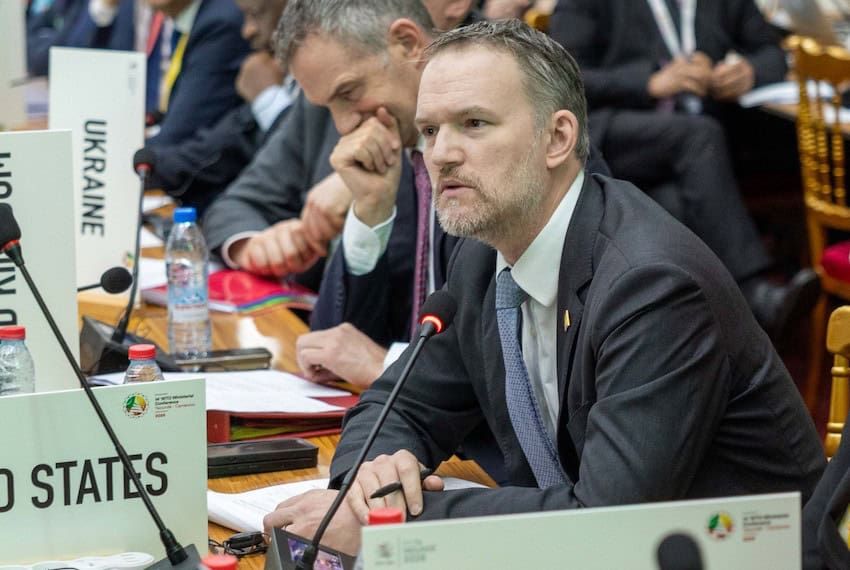
U.S. Trade Representative Jamieson Greer arrived in Mexico City on Wednesday to continue bilateral discussions on the United States-Mexico-Canada Agreement, with strengthening automotive sector rules of origin at the top of his agenda.
Greer, who was confirmed as the 20th U.S. Trade Representative on February 27, 2025, and previously played a critical role in negotiating the original USMCA during President Donald Trump's first term, is meeting with Mexican Economy Secretary Marcelo Ebrard through Friday, July 24. The talks follow the U.S. decision announced July 1 not to renew the USMCA in its current form.
Growing trade deficit drives U.S. concerns
In a report submitted to Congress this month, Greer's office stated that the United States Trade Representative "intends to examine carefully the USMCA's automotive rules of origin to identify areas where stronger rules can directly benefit U.S. manufacturers and workers."
The USTR noted that the United States' trade deficit in autos and parts with Mexico reached $138.2 billion in 2024. The heavy truck deficit alone surged from $3.7 billion in 2019 to $16.7 billion in 2024, a 351% increase.
In 2024, that deficit peaked at $138.2 billion. In recent years, analysis indicates that the share of U.S. content within Mexico's automotive exports to the United States has been declining, while the share of Chinese or other Asian content in those goods has been increasing.
According to the USTR, industry estimates show that U.S.-origin content in vehicles built in Canada dropped from 85% in 2017 to 50% in 2024, while Mexican-assembled vehicles saw U.S. content fall from over 60% to just 35% over the same period.
Existing USMCA rules already among world's strictest
The current USMCA automotive provisions, which were fully phased in on July 1, 2023, are already considered the strictest of any trade agreement globally. The pact raised regional value content requirements to 75% for passenger vehicles and light trucks, compared to 62.5% under the North American Free Trade Agreement.
Beyond regional content thresholds, USMCA introduced a Labor Value Content requirement stipulating that 40% of a passenger vehicle's value or 45% for light trucks must be produced by workers earning at least $16 per hour. The agreement also requires that at least 70% of a vehicle producer's steel and aluminum purchases originate in North America, with a July 2027 deadline mandating that steel used in automotive production must be melted and poured in the region.
The USMCA additionally eliminated NAFTA's "deeming" rule that allowed auto parts not specifically identified in the original agreement to be deemed originating regardless of actual origin.
Mexican newspaper El Economista noted on Wednesday that the U.S. is seeking to strengthen rules that are already "the strictest of any trade agreement in the world."
Mexico's automotive industry at stake
Approximately 90% of Mexico's vehicle production is devoted to exports, with 79.7% of that volume destined for the United States. Mexico ranks as the sixth-largest automobile manufacturer globally, and serves as the largest destination for U.S. auto parts exports, importing $72.2 billion from the United States in 2024.
Despite the United States declining to extend the USMCA until 2042, the free trade pact remains in effect but is now set for annual reviews until 2036. The three signatories can decide at any time to extend it for an additional 16 years.
Bilateral talks address multiple sectors
According to a USTR statement, Greer and Ebrard will discuss "a range of topics including steel and aluminum and derivative products, automobiles, economic security, labor, agriculture, and electronic payment services." Greer is scheduled to meet with President Claudia Sheinbaum at the National Palace on Thursday.
Mexico's primary negotiating objective is securing reduction or elimination of U.S. tariffs currently applied to Mexican vehicles, steel and aluminum. To strengthen its position, Mexico imposed new tariffs on January 1, 2026, affecting 1,463 product categories from China and other countries without free trade agreements, with rates ranging from 5% to 50%. The government reported on Monday that these tariffs reduced imports across the affected categories by 23.2% between January and May.
Speaking before the U.S. Senate Finance Committee on Wednesday prior to his departure for Mexico, Greer called strengthening automotive rules of origin a "key objective," though he acknowledged the issue would "take a little more time" and involve congressional discussions "in the following year." Reuters reported that Greer expressed hope to strike interim trade agreements with Mexico and Canada by year's end.
President Sheinbaum said last Thursday that Mexico aims to "reach some agreements that give us greater stability in the coming years" during this week's talks. The negotiations occur against the backdrop of Trump's 25% tariffs on vehicles made in Mexico and Canada, implemented last year despite USMCA provisions, though U.S. content in those vehicles is exempt from the duty.