Responding before police arrive
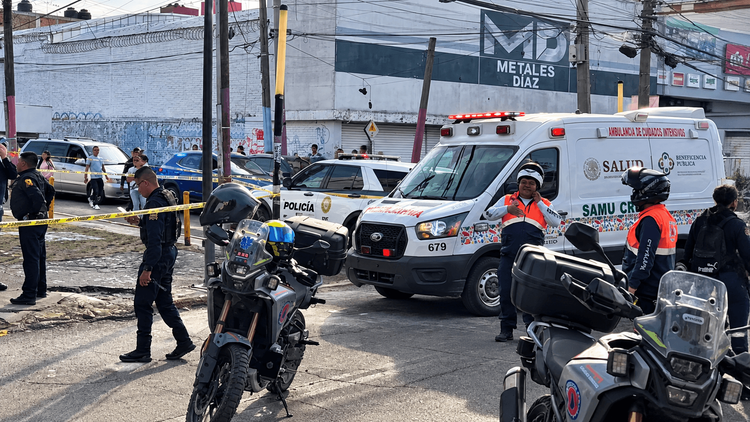
The P.A.C.E.R. model sets out what guards should do at a crime scene while awaiting law enforcement. Its name stands for Proteger vidas, Avisar, Controlar accesos, Evitar alteraciones, Registrar y reportar: protect lives, alert authorities, control access, avoid disturbing the scene, and record and report.
Under the protocol, guards should put human life first, contact authorities through 9-1-1, secure entry points and leave evidence undisturbed. They should also document events in detailed logs for official reports.
State law places a clear limit on that role. Private security personnel may not investigate crimes and must immediately notify the competent authority when they learn of facts that could constitute an offense.
Training and industry participation
Other sessions addressed traditional and digital fingerprint registration to support reliable staff identification. Participants also studied ways to defuse tense encounters through communication and emotional control, while cybersecurity experts discussed protecting employee, client and residential development records against unauthorized access and data leaks.
These subjects sit alongside ongoing legal duties for providers. Yucatán requires operational staff to receive training and refresher courses at least twice a year, including instruction in constitutional and criminal law, human rights and human relations. Companies must notify the SSP about course schedules, delivery and results.
Providers must also register operational staff in the state public security system. Within the first five business days of every month, they must submit an active-personnel list to the SSP showing work locations and schedules, as well as staff additions and removals.
Industry representatives and state officials attended the forum, along with private security leaders from Jalisco and Aguascalientes. Carlos Martín Pacheco Medina, executive secretary of the State Public Security System, led the event on behalf of SSP Commissioner General Luis Felipe Saidén Ojeda. The forum emphasized professional standards and compliance as foundations of public safety.
Speakers call for compliance
María Fernanda Carreño Osorio, from the federal Secretariat of Security and Protection of Citizens (SSPC), delivered the opening remarks. Panelists included Dr. Sergio Arturo Canto Ballote, M.D. Dialy Eunice Dzib Carrillo and M.A. Israel Imán Baquedano.
Also presenting were Zeus José Rodríguez Pavón, the State Judiciary's Tenth Family Orality Judge, and Inspector General Dr. David Gamboa Tello, the SSP's general director of public services.
In his closing remarks, Pacheco Medina urged companies to follow current regulations strictly. He described compliance as a social responsibility that supports Yucatán's wider security system.
Registration requirements and recent enforcement
The state's Ley para la Prestación de Servicios de Seguridad Privada en el Estado de Yucatán, published in 2004 and last amended in 2017, requires individuals and companies offering private security services to obtain SSP authorization and registration. Both are valid for one year and require renewal. Applicants must have at least 20 people across their management, administrative and operational staff.
The law requires the SSP to publish its authorized-company list in the state's Diario Oficial every two months. Those records have documented both growth in registrations and enforcement actions.
According to Diario de Yucatán, citing a Diario Oficial publication, the number of registered companies increased from 83 to 103 in the three months to December 2025, a 24% rise. That update also recorded the suspension of Centro de Soluciones Inalámbricas (CSI) for submitting its renewal application late.
In April 2026, the SSP canceled 24 companies' registrations; 20 of those cancellations involved repeated failures to file monthly reports. Four other companies' registrations had expired by mid-May. SSP lists published in the Diario Oficial on May 8 and May 13, 2026, showed that 98 companies still held valid registrations to operate in the state.
A provider whose registration is canceled has 30 calendar days to end its contracts with customers. Depending on the violation's severity, the SSP will not process another registration application from that provider for five to ten years.