Mexico's economy rebounds 1.5% in second quarter as World Cup lifts spending
Mexico's economy grew 1.5% in the second quarter of 2026 compared with the previous three-month period, according to preliminary data from the national statistics agency INEGI. The figure reversed a 0.6% contraction in the first quarter and was the best quarterly result since the final quarter of 2020.
INEGI, which reported the data on Thursday, also said annual growth reached 2.1% in the second quarter, up from 0.4% in the first. Both the quarterly and annual rates came in above the median forecasts of economists surveyed by Reuters.
World Cup effect behind much of the growth
Gabriela Siller, director of economic analysis at Banco Base, wrote on social media that:
"approximately two-thirds of the quarter-over-quarter growth was due to the World Cup effect, with the remainder the result of a rebound effect following the contraction in the first quarter."
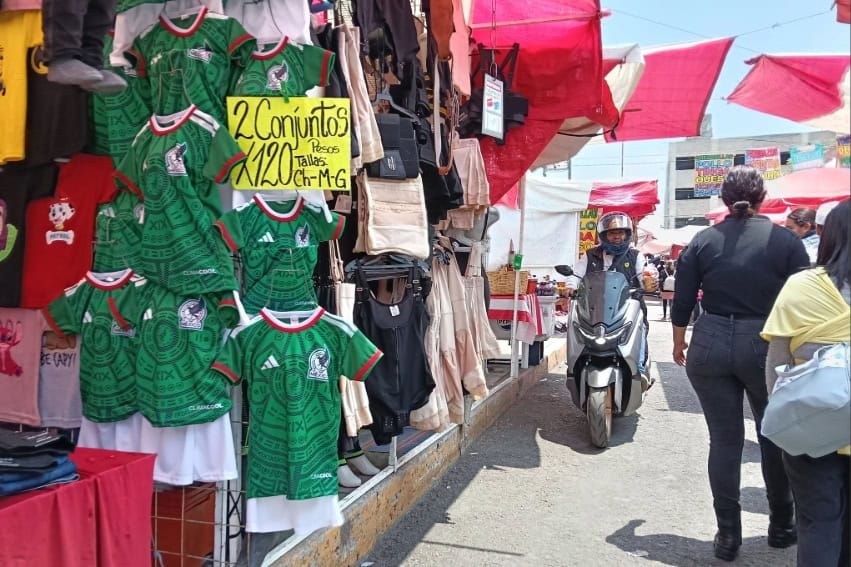
She said the boost came mainly from the secondary sector, driven by construction spending in April and May ahead of the tournament, and from the tertiary sector, because of higher retail and services spending "associated with the event."
Andrés Abadia, chief Latin America economist at Pantheon Macroeconomics, said activity benefited from "temporary supports, such as the boost the World Cup gave to tourism, retail trade and spending on entertainment." Mexico hosted 13 matches at the men's World Cup, 12 of them in June.
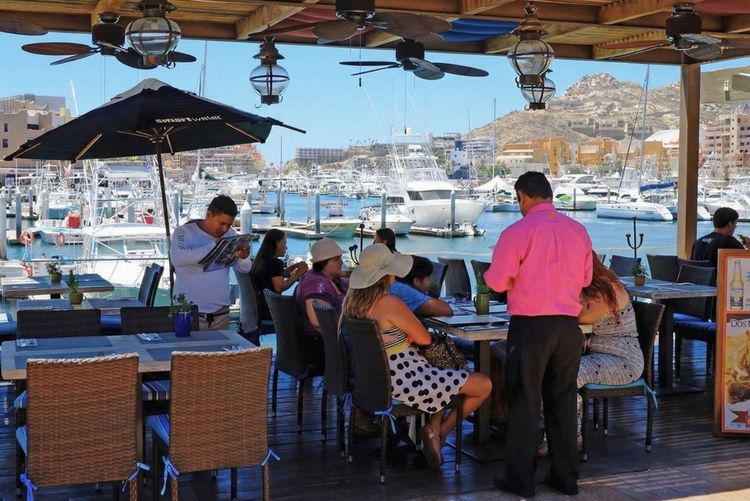
Tourism ministry figures give a sense of the scale. About 7.5 million trips were made to Mexico City, Guadalajara and Monterrey between 8 June and 12 July, against a pre-tournament forecast of 5.5 million. Foreign visitors accounted for roughly 40% of those trips, and estimated tourism spending was about 39.7 billion pesos (around US$2.1 billion). Tourism made up about 8.7% of Mexico's GDP in 2024, according to INEGI figures.
Before the tournament, Moody's Local México had offered a more cautious estimate, projecting about US$1.03 billion in direct economic activity, or roughly 0.13% of GDP, based on an expectation of only 768,000 visitors to the three host cities.
INEGI had published preliminary data the previous week showing the economy grew 0.2% sequentially in June and 1.7% annually.
All three sectors expanded
The primary sector grew 3.3% quarter over quarter and 7.3% annually. The secondary sector expanded 1.6% sequentially and 0.8% annually, while the tertiary sector grew 1.5% sequentially and 2.5% year over year.
Although the primary sector posted the strongest growth, Siller noted that it represents very little of GDP.
"Of the 1.5% quarter-over-quarter growth, primary activities contributed 0.12 percentage points, while secondary activities contributed 0.49 pp and tertiary activities 0.90 pp," she wrote.
Why the rebound matters
The first-quarter contraction was initially reported at 0.8%, worse than the 0.5% economists had forecast, with all three sectors shrinking. It was later revised to 0.6%, still the sharpest drop since 2014. The weakness had raised concerns about a technical recession, defined as two consecutive quarters of negative growth. The second-quarter rebound meant that did not happen.
Outlook and later developments
In July, the International Monetary Fund lowered its 2026 growth forecast for Mexico to 1.2% from 1.6%. Finance Minister Édgar Amador expressed confidence the economy would outperform that projection, and the Finance Ministry forecast annual growth of between 1.8% and 2.8%. President Claudia Sheinbaum predicted activity would pick up in the second half of the year as new public and private investment projects begin.
Siller, however, anticipated a sequential contraction in the third quarter. After the World Cup, whose final match in Mexico was on July 5, she said "a downward correction in Mexico's GDP is expected," explaining that GDP measures the flow of goods and services produced during a period and that production in construction, retail trade and services, particularly tourism and leisure, would likely be lower. Her pessimistic scenario was a 1.2% sequential contraction in the third quarter. Abadia said the second-quarter pace "won't be sustainable," and Alberto Ramos, head of Latin American economics at Goldman Sachs, said household consumption would likely keep facing obstacles from internal and external uncertainty and weak consumer confidence.
Subsequent data showed no such contraction. INEGI's preliminary estimate, published on 30 October, put third-quarter growth at 0.9% sequentially and 3.2% annually, the fastest annual pace in about three years and above the 0.7% sequential growth economists had forecast. Services grew 1.1% and the secondary sector 0.8%, while the primary sector fell 0.4%. The same estimate showed GDP up 1.9% over the first nine months of 2026 compared with the same period of 2025. Full third-quarter figures are due around 23 November and may differ.
INEGI's revised data also put second-quarter sequential growth at 1.4%, slightly below the preliminary 1.5%.
In October, the IMF raised its 2026 forecast for Mexico to 1.5% from 1.2%, crediting a stronger second quarter, while cutting its 2027 projection to 1.8% and saying the growth would depend on fiscal consolidation.
Monetary policy also shifted over the year. Banxico cut its benchmark rate by 25 basis points to 6.50% in May by a 3-2 vote, citing the first-quarter contraction, and held in June and August. On 5 November it unexpectedly cut again, to 6.25%, when most analysts had expected a hold.
With reports from El Economista and Reuters