A procession through the historic center
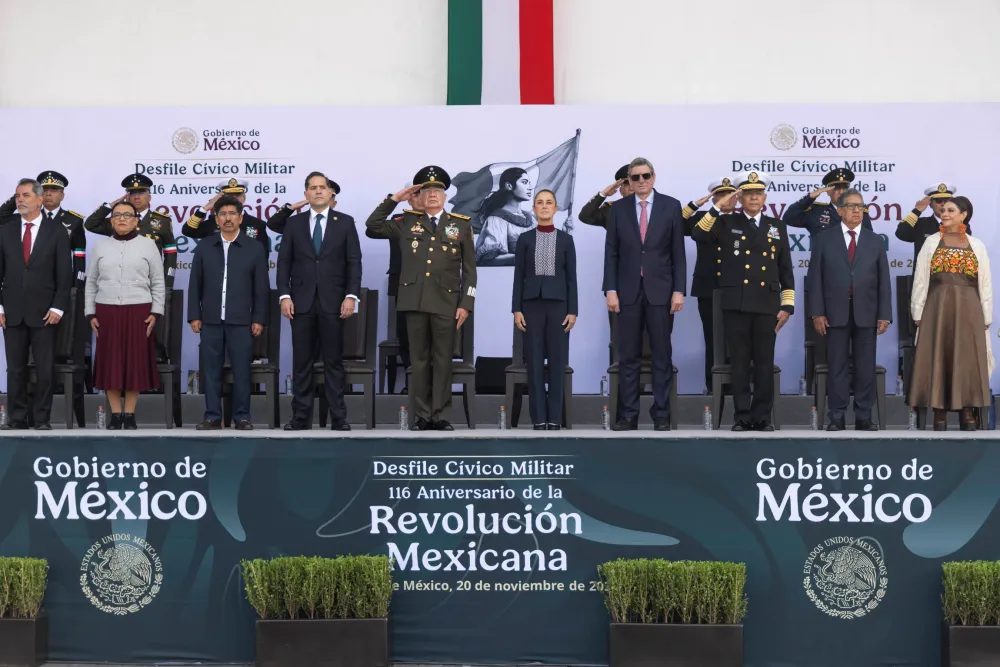
Cabinet members and representatives of Mexico's branches of government joined Sheinbaum for the ceremony, which brought together military personnel and civilian participants. According to Mexico News Daily, the president had returned just hours earlier from a five-day official visit to China, where she attended the Asia-Pacific Economic Cooperation forum.
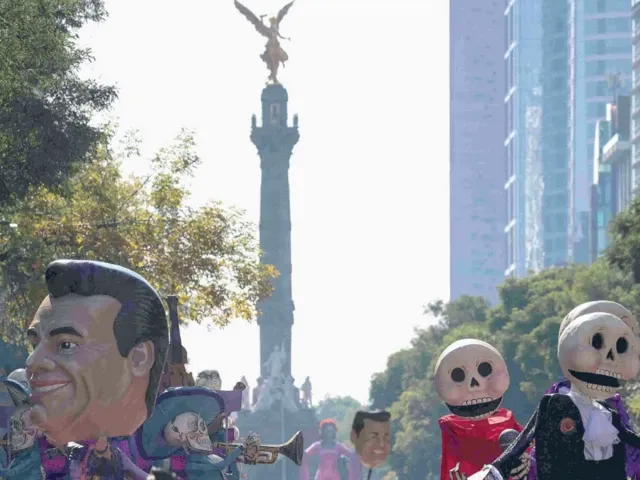
From the Zócalo, also known as Plaza de la Constitución, the procession traveled along Calle 5 de Mayo, Eje Central Lázaro Cárdenas, Avenida Juárez and Avenida de la República. Its destination was the esplanade of the Monument to the Revolution, Latin Times reported.
The commemoration fell on the anniversary itself, rather than the statutory public holiday. Mexico observed that holiday on Nov. 16 in 2026, in keeping with its schedule on the third Monday of November.
Revolutionary figures and scenes
Performers portrayed Francisco Villa and Emiliano Zapata in scenes tracing the 1910 uprising, the fall of Porfirio Díaz's regime and the rise of new political leaders. The anniversary recalls Francisco I. Madero's call for armed rebellion against Díaz's government.
Representations of the Adelitas honored women's roles in the conflict, including accompanying armies, fighting and carrying out other wartime duties. Traditional dancing and choreography inspired by the period were also part of the program. La Jornada Estado de México reported that organizers revived the revolutionary-era tricolor armband to identify members of the parade contingents.
Floats illustrated the Cananea and Río Blanco strikes, the Plan of San Luis and the promulgation of the 1917 Constitution. A separate display depicted the armed forces' disaster-relief work.
Other floats explored the 1908 Creelman interview, during which Díaz hinted at democratic liberty after 34 years in power, according to Mexico News Daily. The displays also covered the 1913 Plan de Guadalupe, which rejected the coup following the Decena Trágica, and the 1914 Aguascalientes Convention's effort to bring rival revolutionary factions together.
Mounted units, military contingents and flyovers
Horses and riders shared the route with vintage vehicles, evoking how revolutionary troops traveled. The post-parade tally counted 486 horses and 100 charros. Above the capital, Mexican Air Force aircraft crossed the sky in Mexico's colors.
The official report recorded 2,969 personnel from the Army, Air Force and National Guard. Equipment included 62 ground vehicles, 16 vintage vehicles, six motorcycles and 14 aircraft; three dogs and three eagles also participated. Fireworks and artistic performances closed the event in the city center.
This was Sheinbaum's third consecutive year leading the procession as supreme commander of the armed forces, Latin Times reported. Her first, on Nov. 20, 2024, came weeks after she took office and made her the first woman to preside over the event.
During the ceremony, Defense Minister Gen. Ricardo Trevilla recognized Sheinbaum as Mexico's first female commander-in-chief and pledged the military's loyalty to the Constitution and civilian leadership. According to Mexico News Daily, he attributed the armed forces' social character to the Revolution's roots among workers and campesinos.
Photography competition remains open
SEDENA also launched the Concurso Fotográfico Desfile Cívico-Militar 2026, a public photography competition, Latin Times reported. Its three age categories are Junior for entrants under 15, Aficionado for those ages 15 to 30, and Master for those over 30.
Entries remain open through Nov. 29, 2026, with winners scheduled to be announced on Dec. 3.